← Archive

2026-10-29

October 29, 2026

The morning file for this date: Today's Five, then the wider set. Headlines open the original article.

Today's Five picks filed on this morning

Image: University of Bristol

Nearly seven in ten people in a large British survey could remember a hug for the comfort it gave

The University of Bristol said on 28 October that a study just published in PLOS One is the first to look at hug memories in a large group of adults in the UK. Honorary researcher Anna Lena Dueren led the work, using the Touch Test, a survey of more than 15,000 people. About 70 percent remembered a hug for the good feeling it left, most often comfort, support, or a sense of being understood. People who scored higher on empathy, and people more attuned to their own bodies, were more likely to keep that kind of memory. People less at ease with emotional closeness were less likely to. Men and women also differed in what they found most memorable about the moment. Dueren said affectionate contact can stay in a personal memory because it communicates care, and that personality shapes which hugs remain.

A hug kept for the comfort in it is a gentle reminder that ordinary closeness can still be the part of a day that lasts.

The survey cannot show that empathy causes the memory, or the reverse. Women were about 75 percent of the people who answered. Answers were gathered from January through March 2020, before most UK stay-at-home rules, and the researchers say the pattern may not carry to places with different habits around touch. The release's "nearly seven in ten" matches the paper's 69.5 percent.
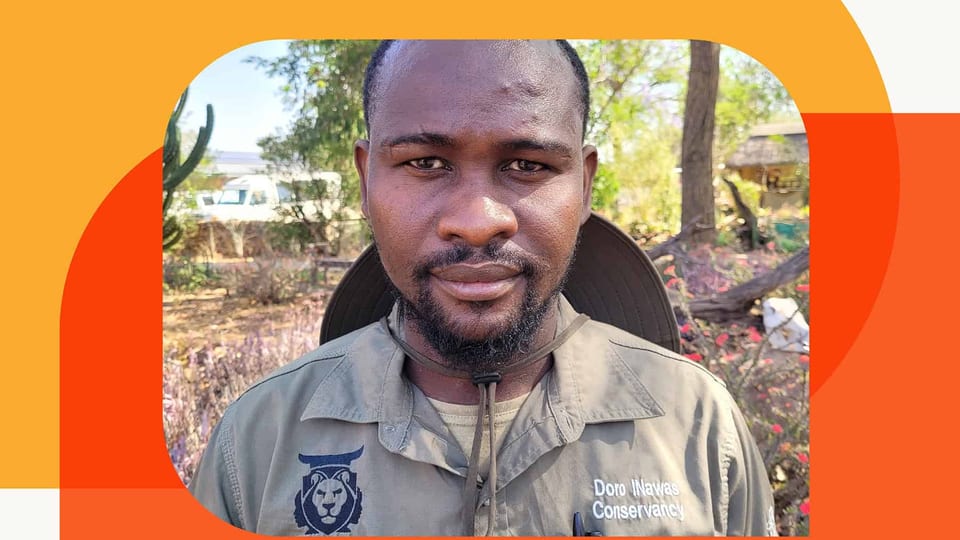

Image: Positive News

Namibian rangers pair old tracking skills with phones so farmers hear about lions in time

Positive News reported on 29 October on Namibia's Lion Rangers, a community programme in 11 conservancies in the arid Kunene region. Field coordinator Benjamin Kordom, whose family first met lions at the edge of their farm in 2018, now oversees more than 40 rangers, patrol leaders, and rapid-response drivers. They walk as far as 40 kilometres a day, noting tracks, scat, kills, and how the cats are holding up, across about 40,000 square kilometres from the Skeleton Coast toward Etosha. Since 2021 they have logged that work on smartphones with a free tool called SMART, instead of notebooks that could take days to reach anyone able to act. With camera traps and GPS collars on 44 lions, the reports tell a patrol where to walk and when to warn a remote farm. In one 18-month stretch the rangers covered almost 280,000 kilometres, 88,000 of them on foot. Coordinator Mathilde Brassine said illegal killings have stopped in six of the conservancies, and that the desert lion population now stands at 60, which the programme considers stable. Text alerts and 16 early-warning towers also tell some herders when a collared lion crosses a virtual fence. Kordom said the phone still loses to a footprint: once, a collar's coordinates sat empty for 12 hours until the team stepped off the vehicle, found fresh tracks, and a pride on a giraffe kill.

A warning that arrives before the goats are in the open is how a farm and a lion can share the same dry country.

The counts of rangers, kilometres, collars, towers, and lions are the programme's, as Positive News reports them. The population rebounded from about 20 adults in 1997 to about 180 by 2015, then fell; 60 is not that earlier peak. Conflict incidents were down by a third as of 2023 and have risen since, which the programme ties in part to better detection and to prey moving with the rains. This is not a claim that conflict is over.

Positive News ↗· Oct 29, 2026

Image: Reasons to be Cheerful

New graduates spend a week in an unfamiliar American town, then host the return visit

Reasons to be Cheerful reported on 29 October on the American Exchange Project, which sends students who have just finished high school on a week in a United States community unlike their own. Those students later host a group from the place they visited. Alden Swanson, from Chestertown, Maryland, spent his week in Orem, Utah, and said the point of the time together was to talk about large things, which turned up differences and also shared beliefs. Sunny Beam, from Ilwaco, Washington, had never stayed in a place of more than 10,000 people before the Bronx. She said strangers there were welcoming in a way her small town was not always. Andrew Wood, from Kilgore, Texas, also sent to New York, started a game of UNO the day the group arrived and said that was enough to get people talking. The programme says the trips are not built to change anyone's politics. They are a chance to live for a week inside a different American everyday.

A week of ordinary meals and a card game can make a far-off town feel like a place with people in it.

The article is built from three students' accounts. It does not say how many young people have taken part, or whether the visits change anyone's views once they are home. A figure it cites, about voters clustered in landslide counties, comes from Bill Bishop's book and stops at 2016. It is not a new count.

Image: Anthropocene Magazine

A compostable plastic with a little enzyme inside broke down on the deep-sea floor

Anthropocene Magazine wrote on 29 October about a Nature paper from a team in Japan. Compostable plastics are made to break down in a hot, humid compost heap. In cold seawater they can linger. The researchers melted four of them, PBS, PBSA, PCL, and PBAT, and folded in freeze-dried enzymes, a lipase and a cutinase, at very low doses, from 0.1 to 3 percent by weight. Films and tiny beads then went into mesh and into the sea off Tokyo, from a few metres down to 5,503 metres, for between a month and 18 months. At 757 metres, films of PBS, PBSA, and PCL that held 3 percent cutinase nearly disappeared within five months. At a tenth of a percent, those three lost 27.4 percent, 100 percent, and 85.5 percent of their mass in a month. PBAT lost just over 12 percent in the same test. Samples with no enzyme barely changed. Even on the cold floor of the deepest site, the enzyme plastics showed some breakdown. Beads with 0.1 percent cutinase grew visible pores and cracks within two weeks in coastal water. The team wrote that the embedding did not spoil the materials' strength.

A wrapper that can come apart in deep water is a design for the plastic that gets away, not a promise that the sea will tidy itself.

This is a field test of new materials, published in Nature on 21 October, not a product in shops and not a way to clear plastics already drifting. PBAT, one of the four, barely moved. The percentages are for specific films, depths, and enzyme doses. "Within weeks" fits the coastal beads, not every sample at every depth.

Image: City of Apache Junction

Apache Junction's library opens a reading garden facing the Superstition Mountains

The City of Apache Junction lists a ribbon-cutting on 29 October for the Superstition Reading Garden at the public library, 1177 North Idaho Road. The city calls it a new outdoor reading garden of 20,000 square feet, reaching from the library toward a view of the Superstition Mountains. The ceremony starts at 4 p.m. and runs until 6. After the ribbon, the city plans food trucks, rock painting, giveaways, and free activities for families. The listing says the Arizona State Library, Archives and Public Records, a division of the Secretary of State, supported the project with money appropriated by the state legislature.

A garden just outside the stacks is a soft reason to stay a little longer with a book and a neighbor.

This is the city's calendar listing for a celebration set for 4 to 6 p.m. on 29 October. It does not say whether the ribbon has been cut, how many people came, or what is planted in the beds. A local paper's earlier writeup, which described a weather delay and a greenhouse, is not the page linked here.

Also that morning

Image: The Better India

A Palakkad lawyer turned 100 and the Kerala High Court named him a senior advocate

The Better India reported on 28 October that P. Balasubramanian Menon, of Palakkad in Kerala, was designated a senior advocate by the Kerala High Court on 9 October, six days before his 100th birthday on 15 October. Chief Justice Soumen Sen began the move. Menon studied at Madras Law College and started work in 1950 at the Madras High Court. Civil cases have been his focus since 1952. Bar and Bench said the court may be giving this rank for the first time to a lawyer whose practice is in the mofussil courts, the trial courts below the High Court. In September 2023 Guinness World Records verified his career at 73 years and 60 days, then the longest it had recorded for a man, passing a mark held by Gibraltar lawyer Louis Triay. Bar and Bench put his practice, by the designation, at more than 76 years. In a 2023 interview, in his 98th year, he said he was not thinking of retirement.

A century of Tuesdays in the same town's court is a quiet case that a working life can stay interesting.

The birthday honour is 9 October; this is a 28 October profile of that decision, drawing on Bar and Bench, LiveLaw, PTI, and a 2023 interview. The "first time" for a mofussil practitioner is what Bar and Bench reported as a possibility, not a check against every past designation. The Guinness measurement is from 11 September 2023. Descriptions of his daily office routine come from that year's reporting, not from a count of days in court this month.

The Better India ↗· Oct 28, 2026

Image: Seoul Economic Daily

A diner in Incheon paid a welfare group's whole lunch, and the extra beef, then left

Seoul Economic Daily, following Yonhap News Agency, reported on 19 October that a diner in Incheon paid a restaurant bill of 600,000 won, about $420, for 27 people from the Jemulpo-gu Hanmaum Community Welfare Center and left without a name. The group, people who use the center and the staff with them, had spent the morning of 15 October on a city tour of Cheongna, including a wildflower garden at Dream Park and Cheongna Lake Park, then stopped at a barbecue restaurant in Seohae-gu. Volunteer Kim said an employee whispered that a customer who had just gone had paid for everything, including seven orders of raw beef. The meal had been 410,000 won and the beef 190,000. The center asked for a name so they could say thank you. The diner was already gone. Kim was told the person had wanted to do something meaningful after seeing a welfare group come in to eat, and had heard the diner had lived in Hawaii. The owner, who said the customer comes in from time to time, handed over a bottle of wine. The restaurant had already planned to discount part of a group bill. Kim said what they received was not only a meal, but a reminder that warmhearted people are still nearby.

A lunch already paid for lets a day out stay a day out, instead of turning into a bill to split.

The figures and the quotations are the volunteer's, as Yonhap reported them and Seoul Economic Daily retold them in English on 19 October. The lunch was 15 October. The note about Hawaii is what restaurant staff passed along, not something the diner told the group. The paper does not name the restaurant or the diner.

Image: Agence France-Presse

Pamarawan is slowing Manila Bay's waves with bamboo poles and bags of oyster shells

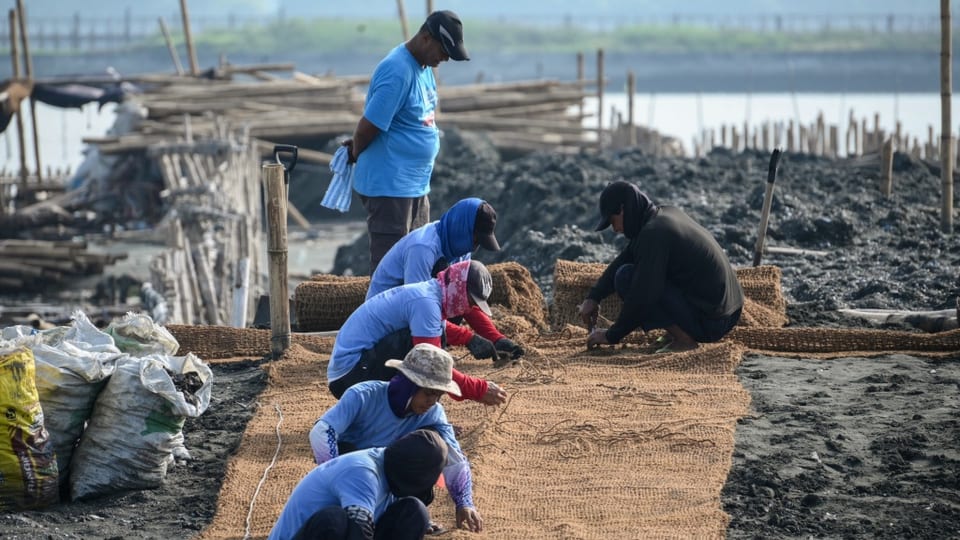
Agence France-Presse reported on 29 October from Pamarawan, a flood-prone island of about 3,000 people in Malolos, on Manila Bay. Residents have long stacked concrete under their houses, then watched the water come back. With the city and a Dutch engineering consultancy, they are trying bamboo poles packed with brushwood, and a breakwater of discarded oyster shells in coconut-fibre bags, to weaken waves and catch sediment so the seabed can rise and, later, hold mangroves. Work with bamboo began in May 2025. The first phase was done in late 2025. When AFP visited, crews, many of them islanders, were still building an oyster-shell barrier about 100 metres offshore. Project manager Lyana Galang said that barrier's job is to take the force out of a wave before it reaches the houses. Fisherman Edgar Javier, who once lost a concrete wall to the sea, said this year's typhoons and monsoon rains felt weaker at the shore. Arsenia Cabigao, 58, who dries fish for a living, said her feet are dry in places that used to flood. Mayor Christian Natividad put the installations, about 14 hectares including upkeep, at 70 million pesos, about $1.1 million, against about 90 million pesos for a concrete seawall.

A barrier the tide can pass through, made from what the island already has, is a way to stay home without fighting the water quite so hard.

Javier's account of weaker waves is his, not a measured drop in wave height. Natividad said a scientific assessment next year will decide whether mangroves can be planted, and that the fuller effect is a decade of piled-up sediment away. Scientist Antonio Contreras told AFP that bamboo and shells are not a stand-in for every flood, and that both have to be sourced with care because bamboo wears out. The peso figures are the mayor's.