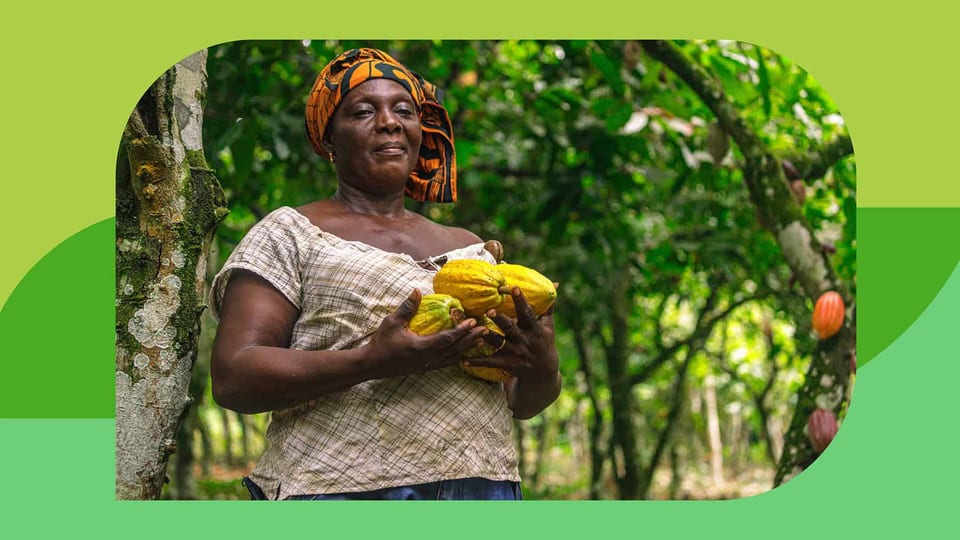
Positive News reported on 22 October on Susana Afrifa Ankrah, 62, a cocoa farmer, mother, and grandmother on the Atewa Range in south-eastern Ghana. She told the magazine the forest cools the land, brings the rain the crops need, shelters fish along the banks, and supplies local herbalists. She is vice-chair of the management board for the Atewa hotspot under the Ghana Cocoa Forest REDD+ Programme, run by the Forestry Commission and the Cocoa Board, which trains farmers to raise cocoa without clearing new forest and pays for measurable progress against forest loss through World Bank climate finance. She joined soon after the programme began in 2019. She said her village had already looked after the forest, and that the change she can point to is what she calls circular farming: they used to clear and burn, and now they compost and use organic fertiliser so the same land yields more beans. Hybrid seed grows under a canopy. She plants African mahogany between the cocoa, along with mango, avocado, and coconut, and says her plants do better out of the full sun. Asked how much her margins improved, she paused and said about 80 percent. With advice from the programme she has also opened a daycare and a bakery that employ 17 people. The programme has supplied tools, from cutlasses to boots. The piece is one portrait in a series, and it also describes rangeland work in southern Kenya, mangrove restoration in Senegal's Saloum Delta, and a World Food Programme project in southern Zambia that are not her farm.
Cocoa left under the canopy is a harvest that does not begin by cutting the hill bare.
The 80 percent and the 17 jobs are Susana's own account to the reporter, not an audit. The programme launched in 2019, so this is a portrait of work already underway, not a new result published this week. Positive News notes the series was supported by a storytelling grant from Jamma Conservation & Communities, and that the views are the writer's. Shade-grown yields "as good or better" are the article's general claim about the method, with Susana's plants as her own experience. Some farmers, the piece says, remain sceptical.