← Archive

2026-10-23

October 23, 2026

The morning file for this date: Today's Five, then the wider set. Headlines open the original article.

Today's Five picks filed on this morning

Image: BBC News

North Yorkshire libraries are lending light lamps before the clocks go back

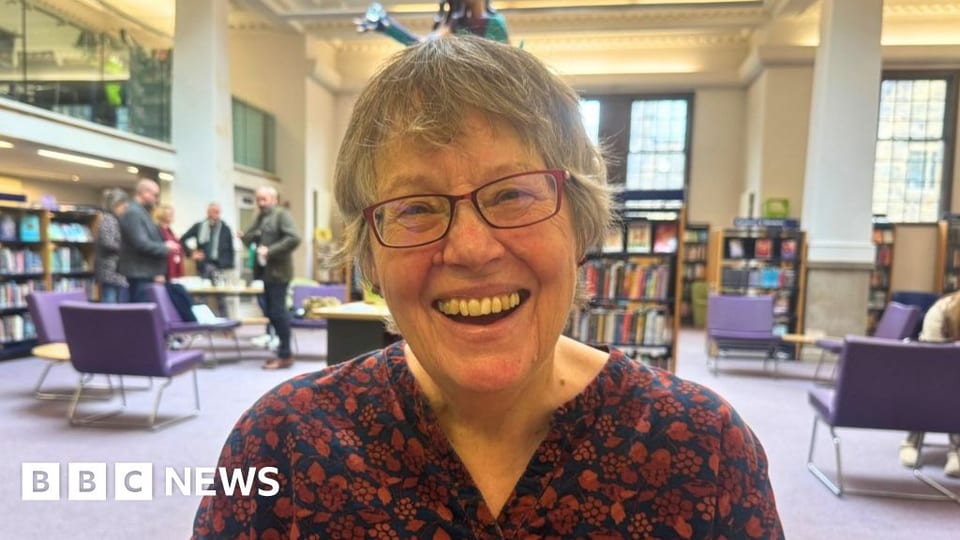
North Yorkshire libraries are lending 150 Wintering Well boxes as the clocks change. Each holds a therapeutic light lamp, a guidebook for a winter routine, and a free online course on seasonal affective disorder. Researchers at the Universities of Glasgow and Edinburgh developed the boxes with people who live through the short days. Sixteen library services in England, Wales, Northern Ireland, and Scotland will share 600 of them this year. North Yorkshire is the first service in England, and so far the only one there, to put them on loan. Jenny Barrie, 73, who chairs Bedale Community Library, has had a lamp for about ten days. She makes tea at six in the morning and switches the light on with the kettle. She wants to keep swimming, learn chess, and skip what she calls hedgehog mode at four in the afternoon. Professor Hester Parr of the University of Glasgow, at a launch in Harrogate Library on Wednesday, said the boxes are for small changes a person can keep. The Royal College of Psychiatrists estimates that more than a million people in the UK live with seasonal affective disorder in the winter months.

A lamp and a few pages of ordinary advice, borrowed like a book, give someone a way to meet the dark afternoons.

Jenny has not been diagnosed with seasonal affective disorder, and ten days with a lamp is her own sense of it, not a trial. The million-person figure is the Royal College's estimate, not a count of people using these boxes.

BBC News ↗· Oct 23, 2026

Image: BBC News

More than 100 choirs arrive in Derry, with singing in care homes and community halls

The City of Derry International Choir Festival, in its 14th year, has a record field this week. More than 100 choirs are taking part, with singers from Sweden, Estonia, France, Germany, the UK, and Ireland beside local voices of every age. Festival director Dónal Doherty said 60 of those choirs are in the community programme, spread through Derry, Limavady, Strabane, and Donegal, including pop-up performances, community centres, care homes, and concerts in Letterkenny. The festival opened Thursday at the Millennium Forum with the Ulster Orchestra and Festival Chorus under Anna Handler, conducting there for the first time, in a Beethoven programme with soloists Gemma Summerfield, Ryan Vaughan Davies, and Alex Birkus. Friday brings the ensemble Tenebrae to the Guildhall and a late concert at St Columb's Cathedral. Saturday is the Oak Tree of Derry competition, and Sunday closes with a gala and awards. Handler said a room of people singing is something headphones cannot hold. Doherty said visiting choirs now write Derry October into calendars two or three years ahead, and that the welcome has been the same message since the first festival in 2013, when Derry was UK City of Culture.

A festival that sends visiting singers into care homes and church halls is something a neighbor can walk to.

The festival runs through Sunday, so this is the opening, not a tally of who came. The record field and the count of community choirs are the organisers' figures.

BBC News ↗· Oct 22, 2026

Image: New Zealand Department of Conservation

New Zealand releases more than 200 rare knobbled weevils raised on carrot

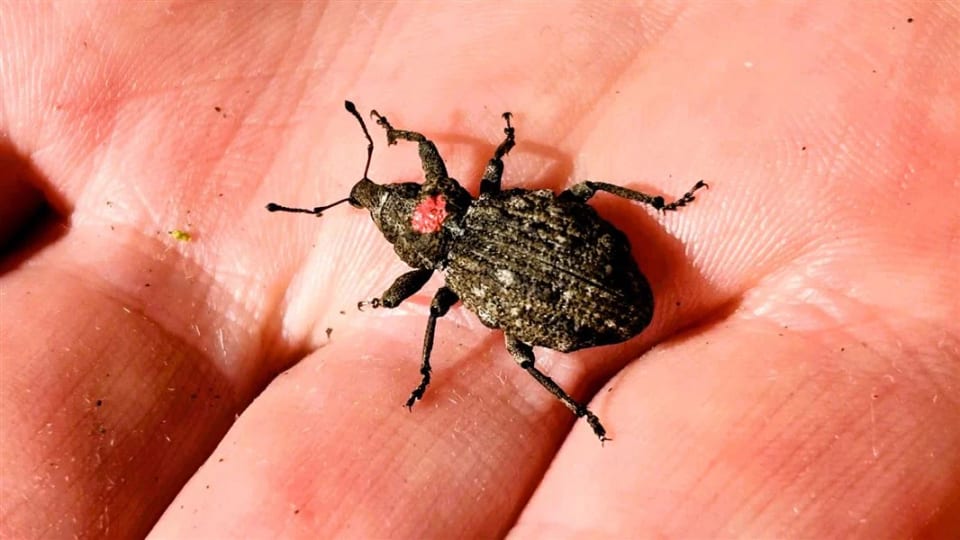
The Canterbury knobbled weevil, a critically endangered beetle described as a living fossil, was thought to be extinct until a small population turned up in 2004 at Burkes Pass, near Takapō/Tekapo. After another pocket was found in Mid-Canterbury late in 2024, the Department of Conservation and Te Rūnanga o Arowhenua tried raising the beetles with weevil specialist Barbara Barratt at the Bioeconomy Science Institute at Invermay. Senior science advisor Tara Murray said they started with six, tried experimental foods that included chunks of carrot, and now have more than 200. The team has put weevils back at Ōtūwharekai/Ashburton Lakes, onto Aciphylla, the spear grass they favor. It is a soft release: protective covers stay over the plants for about a week while the beetles are watched. Spear grass has been cleared from many landscapes, which is one reason the weevil declined. If this week holds, the partners plan to collect more wild weevils and start further populations, so a fire cannot wipe out every animal at once. Monitoring continues at Burkes Pass.

A beetle that nearly vanished can be given a second patch of spear grass, so its whole future is not one valley.

This is a first soft release, not proof the weevils will breed at the lakes. The covers are still on, and any wider release depends on how this week goes.

A personalized mRNA vaccine cut the risk of melanoma returning or death by 42%

In a phase III trial, the personalized mRNA vaccine intismeran, given with the immunotherapy pembrolizumab, was tied to a 42% lower risk of melanoma returning or the patient dying than pembrolizumab with a placebo. Nature reports that 1,137 people with moderate to advanced melanoma enrolled at 157 centres, after surgery to remove their tumours. Trial leader Georgina Long, of the Melanoma Institute Australia, said participants have been followed for about 25 months and will be watched for years to see whether the vaccine lengthens life. She said the therapy did not produce any major harmful side effects. Each dose is built from mutations in that person's tumour, so the immune system has a chance to recognize proteins the cancer cells make. The vaccine is meant to stop a return, not to keep someone from developing melanoma in the first place. Merck and Moderna released the figures after the data leaked on October 22. The full results are due at the European Society for Medical Oncology meeting in Madrid on October 24. Cancer geneticist Jessamy Tiffen said some people did not respond, and that two years is not the whole story.

For someone who has already had a melanoma removed, a vaccine made from their own tumour is a new way to ask the immune system to watch for a return.

The 42% figure combines recurrence and death. It is not a cure rate, and overall survival is still being counted. The conference presentation is Saturday, and some patients did not benefit. Nothing here shows the same vaccine would work in other cancers.

Nature ↗· Oct 23, 2026

Image: Boise State Public Radio

A nearly 50-acre park on Boise's old horse track opens along the river

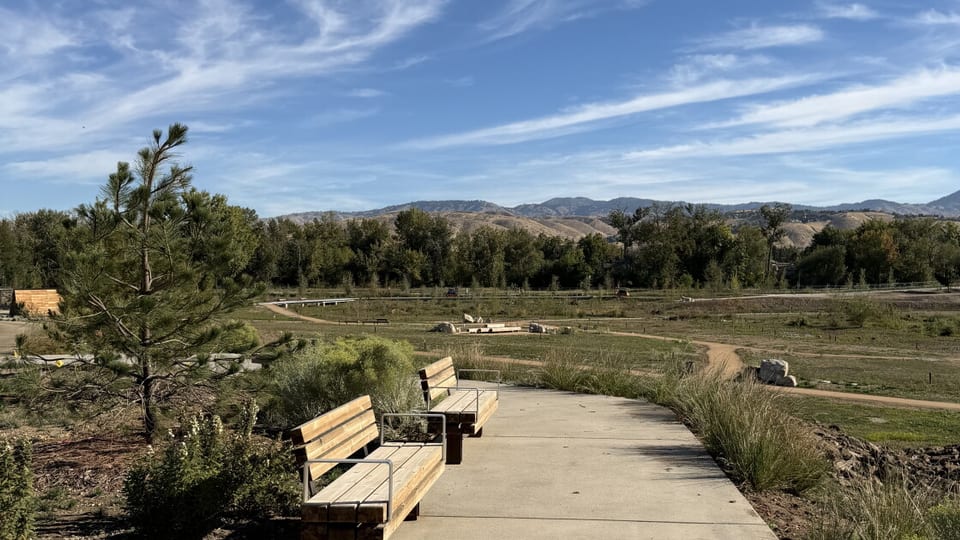
Ada County's Park at Expo Idaho, nearly 50 acres along the Boise River in Garden City, opens Friday, October 23, on the site of Les Bois Park. The horse track had sat quiet after wagering was banned in 2015. Boise State Public Radio walked the grounds with senior project manager Josh Brown while crews finished the last work. About a million plants and plugs went in by hand. Only about a third of an acre is turf. The rest is native planting, laid out so the floodplain can still take the river, a requirement of the U.S. Army Corps of Engineers. The paths run 3.4 miles. The skate park runs from beginner bowls to features taken from the Olympics, and a public bathroom there used 750,000 pounds of concrete, with a walkway that can be skated. The playground's swing hangs from a single post, like a track rail, and the tallest climb is 36 feet. The pace was tied to $42 million in American Rescue Plan Act money that had to be spent by the end of this year. Brown, who asked for bird habitat from the start, stopped mid-tour for a kestrel hunting over the new wetland, the first he had seen there, with a kingfisher chasing it off. He has also logged ducks, sandpipers, killdeer, a great heron, an egret the crew named Gary, plus fish, frogs, and salamanders. The ribbon cutting is at 10 a.m. on the plaza by the greenbelt. He said opening day is the worst the park will look, because the plants are meant to grow in.

A racetrack that had nothing to do for a decade is now a wetland and a place to skate, a short walk from the river path.

The report is from before Friday's ribbon cutting, while concrete crews were still on the skate park. The plantings, the path length, and the wildlife list are the project manager's account.

Also that morning

Image: BBC News

A Southampton man spends his spare hours freeing pigeons from tangled string

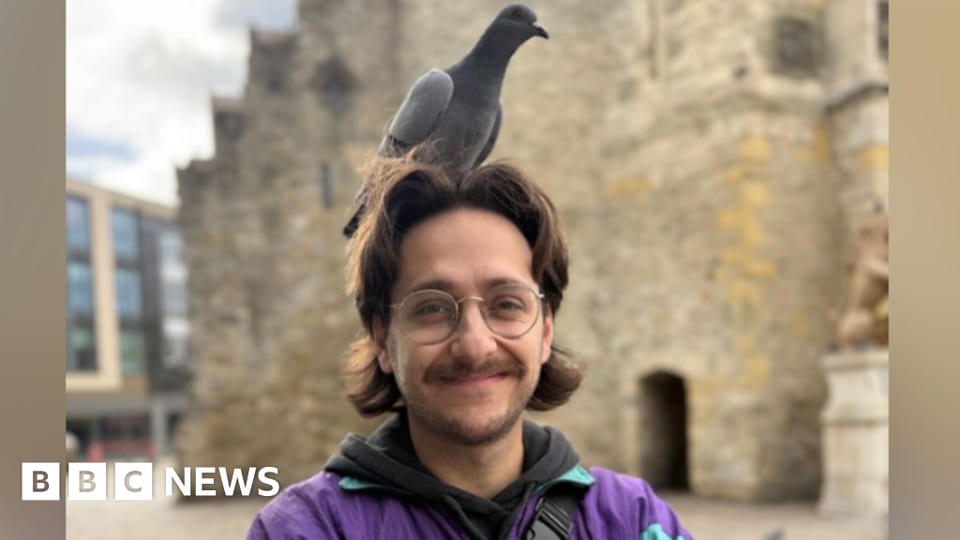
Dexter Mathurine, known online as Dexter the Pigeon Guy, lives in Southampton and uses his spare time on pigeons with stringfoot, the injury that comes when hair, thread, or twine wraps a bird's toes and can cost it a foot. He began by posting what to look for. The first bird took several tries. He cut the string, let it go, and cried. Now, if someone in Southampton finds an injured pigeon, they can message him and he will come or talk them through the next step. He also shows people, in person, how to snip a tangle with nail scissors, and he tells them not to handle a bird unless they know how. Outside the Bargate the pigeons come to him. On the day the BBC met him, none of them needed help. Rebecca Machin of the RSPCA said the charity sees a great deal of cruelty toward pigeons and is glad more volunteers are stepping in. For someone without that practice, she said, the better errand is a vet. Dexter's account is that the birds were kept for messages, including in wartime, and then left on the street once they were no longer useful.

A few careful minutes with scissors can give a street bird its feet back, and show a neighbor that the same kindness is possible.

The article does not count how many pigeons he has helped. It also notes a separate June incident in Southsea, where volunteers found a dozen pigeons dead after an apparent catapult attack. That case is not his rescue work.

BBC News ↗· Oct 23, 2026

Image: BBC News

Neighbors spent two days cutting invasive shrubs out of an eight-acre Greenham wood

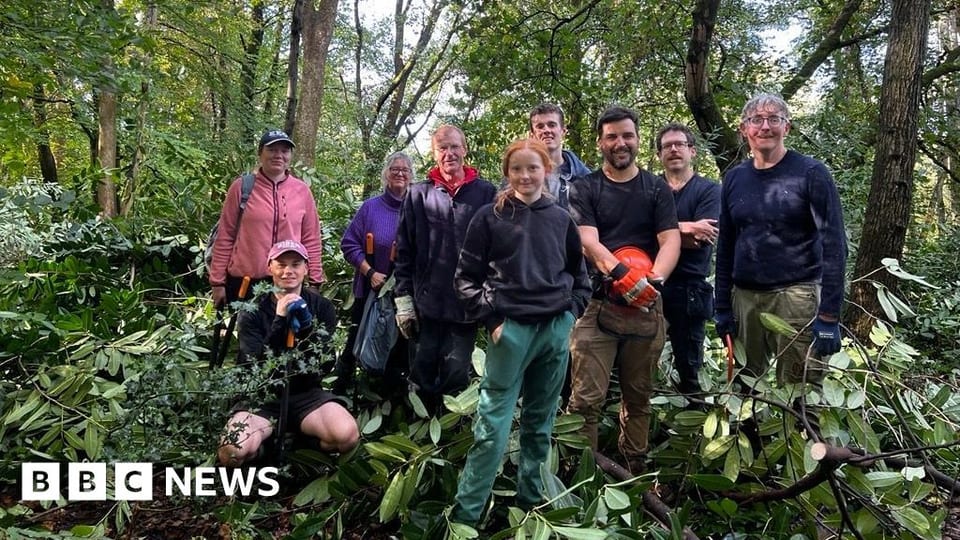
Volunteers spent two days in a wood at Greenham, near Newbury, cutting out rhododendron and cherry laurel, garden plants that shade a woodland floor once they escape. The charity Protect Earth organized the work on an eight-acre site that Simon Rance bought a year ago. He said the shrubs had suffocated the wood over many years. Neighbor Greg Loxton said much of it is still overgrown, and that the cutting is meant to leave open woodland. Phil Sturgeon of Protect Earth said the plants take over by blocking light, and that some British woods are heading toward what he called the biodiversity of a car park. Tom Walker used volunteer leave from a desk job and said it felt good to get his hands dirty for the place. The tools were loppers, bow saws, and pole-mounted machetes. Rance hopes the clearing will eventually open paths to the public and give a nearby school somewhere for outdoor lessons.

Two days with loppers can hand a shaded wood back to the plants that were there before the garden shrubs arrived.

The public paths and the school visits are hopes, not openings. The article describes the work party, not a count of what has grown back.

BBC News ↗· Oct 23, 2026

Image: Island Conservation

A year after rats and pigs left, Nu'utele is growing food and nesting birds again

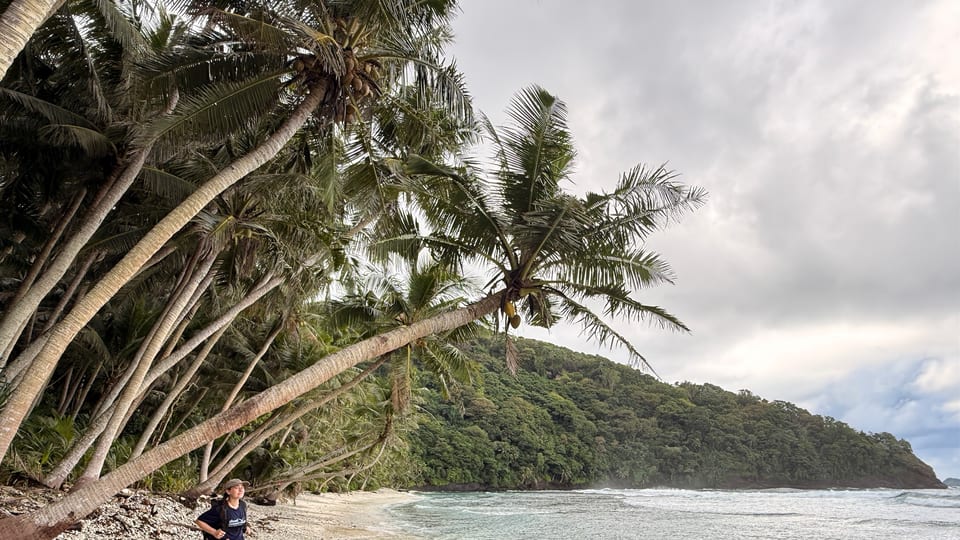
Nu'utele, a Samoan island that still holds some of the country's best-preserved tropical forest, is showing new growth a year after invasive rats and feral pigs were removed. Island Conservation, Samoa's Ministry of Natural Resources and Environment, the Pacific Regional Invasive Species Management Support Service, and people from Aleipata did the work. Between March 2025 and May 2026, field teams made 12 trips and spent more than 130 days on the steep ground. Project manager Paul Jacques said native seedlings are carpeting the floor, knee-high where regeneration had been held down, and that people are harvesting giant taro in places where crops had failed. A local family is growing bananas, pineapples, papayas, and taro. The project says sea turtles are nesting after decades away, and a land crab not previously recorded on the island has turned up. One month after the removal, researchers found shy ground dove nests with eggs in bird's-nest ferns, a nest of the endemic Samoan starling, and breeding by the Samoan flycatcher and whistler. Nu'utele holds Samoa's largest remaining population of the shy ground dove. A later move of the threatened mao, a forest bird, is planned and has not happened. The island sits inside a marine protected area and was never cleared.

When the animals eating eggs and seedlings are gone, a forest can feed both the birds and the people who harvest from it.

These are early observations from the groups that did the removal, not an independent census. The mao has not been moved, and the decades without nesting turtles are the project's account. Long-term monitoring is still ahead.