← Archive

2026-10-28

October 28, 2026

Published this day

Image: Mongabay

A Thai rescue center is teaching burned leopard-cat cubs to hunt before they return to the forest

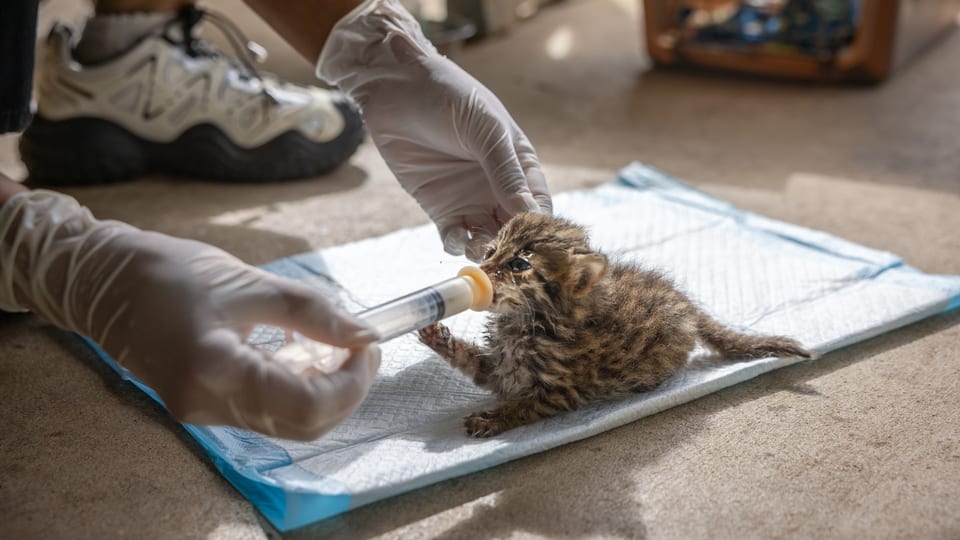
A government wildlife rescue center in Khon Kaen, in northeastern Thailand, is taking in far more leopard-cat cubs than it used to. Mongabay reported on 28 October that admissions rose from about 10 a year before 2023 to as many as 65. Staff tie that rise to habitat broken into smaller pieces, fires in sugarcane fields, and more people using a wildlife hotline. From January through August this year the center took in more than 60 kittens, and more than half came out of burned fields with burn injuries. Keepers treat burns, infections, and poor nutrition, then move the cats into rehabilitation pens of about 24 square meters. For about two months the cubs practice climbing and hunting live prey, including mice and chicks, and learn to keep their distance from people. Veterinarian Warisara Thomas said some cubs are afraid of the chicks at first. Mortality at the center fell to about 33 percent in 2026, from about 60 percent in earlier years. Thomas said many of the cubs that died had first been kept at home, which is illegal and can expose them to diseases from pets. Before release, the cats are tested for several viruses and given a microchip. Those that clear the checks go to Phu Pha Man National Park nearby. Head veterinarian Nuntita Ruksachat said that forest can take only a few more releases, and that the team is looking at other ground. Jim Sanderson of the Small Wild Cat Conservation Foundation called this kind of soft release vital.

A cub that has practiced hunting in a pen has a better chance of feeding itself once the gate opens.

The admission counts, the share found in burned fields, and the mortality rates are the center's, as Mongabay reports them from Ana Norman Bermúdez's reporting. The lower death rate is among cubs at the center, not a count of how many live after release. More rescues also means more cubs are being displaced.


Mongabay ↗· Oct 28, 2026

Image: University of Bristol

Nearly seven in ten people in a large British survey could remember a hug for the comfort it gave

The University of Bristol said on 28 October that a study just published in PLOS One is the first to look at hug memories in a large group of adults in the UK. Honorary researcher Anna Lena Dueren led the work, using the Touch Test, a survey of more than 15,000 people. About 70 percent remembered a hug for the good feeling it left, most often comfort, support, or a sense of being understood. People who scored higher on empathy, and people more attuned to their own bodies, were more likely to keep that kind of memory. People less at ease with emotional closeness were less likely to. Men and women also differed in what they found most memorable about the moment. Dueren said affectionate contact can stay in a personal memory because it communicates care, and that personality shapes which hugs remain.

A hug kept for the comfort in it is a gentle reminder that ordinary closeness can still be the part of a day that lasts.

The survey cannot show that empathy causes the memory, or the reverse. Women were about 75 percent of the people who answered. Answers were gathered from January through March 2020, before most UK stay-at-home rules, and the researchers say the pattern may not carry to places with different habits around touch. The release's "nearly seven in ten" matches the paper's 69.5 percent.

Image: The Better India

A Palakkad lawyer turned 100 and the Kerala High Court named him a senior advocate

The Better India reported on 28 October that P. Balasubramanian Menon, of Palakkad in Kerala, was designated a senior advocate by the Kerala High Court on 9 October, six days before his 100th birthday on 15 October. Chief Justice Soumen Sen began the move. Menon studied at Madras Law College and started work in 1950 at the Madras High Court. Civil cases have been his focus since 1952. Bar and Bench said the court may be giving this rank for the first time to a lawyer whose practice is in the mofussil courts, the trial courts below the High Court. In September 2023 Guinness World Records verified his career at 73 years and 60 days, then the longest it had recorded for a man, passing a mark held by Gibraltar lawyer Louis Triay. Bar and Bench put his practice, by the designation, at more than 76 years. In a 2023 interview, in his 98th year, he said he was not thinking of retirement.

A century of Tuesdays in the same town's court is a quiet case that a working life can stay interesting.

The birthday honour is 9 October; this is a 28 October profile of that decision, drawing on Bar and Bench, LiveLaw, PTI, and a 2023 interview. The "first time" for a mofussil practitioner is what Bar and Bench reported as a possibility, not a check against every past designation. The Guinness measurement is from 11 September 2023. Descriptions of his daily office routine come from that year's reporting, not from a count of days in court this month.

The Better India ↗· Oct 28, 2026

Coral Harbour hunters and Elders see healthy calves in Southampton Island's caribou herd

Nunavut News reported on 28 October on a Government of Nunavut study of Inuit knowledge about the Southampton Island caribou herd. The island's original caribou were gone by the mid-1950s; at Coral Harbour's request, 48 animals were brought from Coats Island in 1967. The herd grew to nearly 30,000, then crashed in the 2000s from brucellosis, hard winters, and heavy harvesting. After commercial hunting ended and a harvest limit began, aerial surveys counted 12,054 in 2019 and 12,651 in 2023. In 15 interviews in May 2025, hunters, Elders, and other knowledge-holders described healthy animals, strong calf survival, and far less disease. Researcher Andrew Kadykalo said such knowledge can help track the herd between costly flights.

When the people who live with a herd are asked what they see, the count becomes a shared watch rather than a distant number.

These are observations from 15 interviews alongside earlier aerial counts, not a new population survey. Participants raised freezing rain as a growing threat, and views differ on whether harvest limits should change; the department is not recommending any change.

Nunavut News ↗· Oct 28, 2026

The edition Today's Five, then the rest of the file

This morning's file includes stories published earlier in the week. Headlines open the original article. Open the issue page.

Image: Mongabay

A Thai rescue center is teaching burned leopard-cat cubs to hunt before they return to the forest

A government wildlife rescue center in Khon Kaen, in northeastern Thailand, is taking in far more leopard-cat cubs than it used to. Mongabay reported on 28 October that admissions rose from about 10 a year before 2023 to as many as 65. Staff tie that rise to habitat broken into smaller pieces, fires in sugarcane fields, and more people using a wildlife hotline. From January through August this year the center took in more than 60 kittens, and more than half came out of burned fields with burn injuries. Keepers treat burns, infections, and poor nutrition, then move the cats into rehabilitation pens of about 24 square meters. For about two months the cubs practice climbing and hunting live prey, including mice and chicks, and learn to keep their distance from people. Veterinarian Warisara Thomas said some cubs are afraid of the chicks at first. Mortality at the center fell to about 33 percent in 2026, from about 60 percent in earlier years. Thomas said many of the cubs that died had first been kept at home, which is illegal and can expose them to diseases from pets. Before release, the cats are tested for several viruses and given a microchip. Those that clear the checks go to Phu Pha Man National Park nearby. Head veterinarian Nuntita Ruksachat said that forest can take only a few more releases, and that the team is looking at other ground. Jim Sanderson of the Small Wild Cat Conservation Foundation called this kind of soft release vital.

A cub that has practiced hunting in a pen has a better chance of feeding itself once the gate opens.

The admission counts, the share found in burned fields, and the mortality rates are the center's, as Mongabay reports them from Ana Norman Bermúdez's reporting. The lower death rate is among cubs at the center, not a count of how many live after release. More rescues also means more cubs are being displaced.
Mongabay ↗· Oct 28, 2026

Image: WVTM

Birmingham Zoo's wooden carousel of endangered animals is ready to turn again

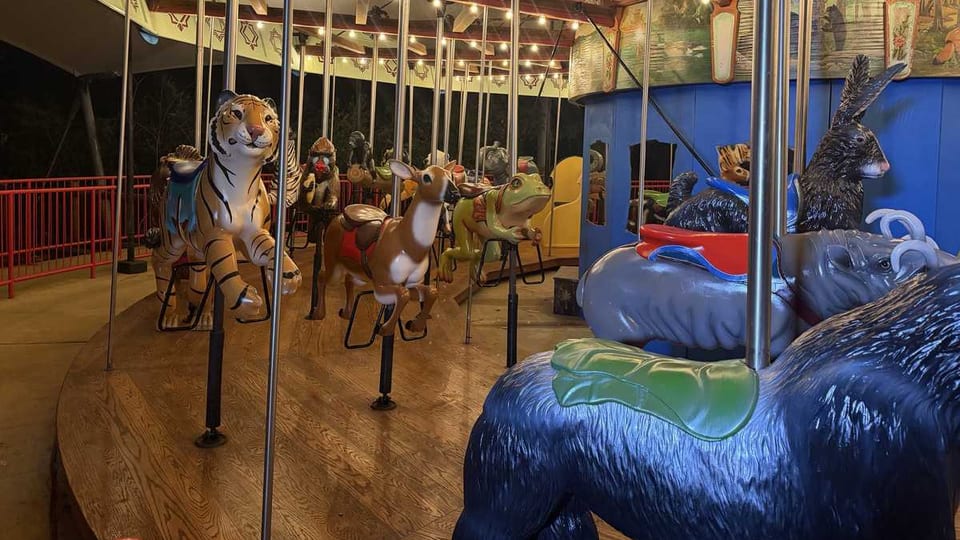
WVTM reported on 27 October that the Birmingham Zoo's Protective Carousel, which the station called the zoo's most popular attraction, would open to riders again on Wednesday after three years of renovation. A ribbon-cutting was set for Tuesday, when the ride would be unveiled. The carousel has been at the zoo since 2002. Its animals are wood, and they stand in for endangered species. President and CEO Chris Pfefferkorn said people who rode it as children are now bringing their own children, and that visitors kept asking where the ride had gone while the figures were away being repaired. Years of riders had stressed the wood. Each animal was taken down to the bare wood, repaired, then given new lacquer and paint. Zoo leaders also told of a boy with autism and cerebral palsy who especially loves the ostrich, and of a couple who, after infertility treatment, brought their child to the zoo to ride.

A painted animal a child already knows is a gentle way back into a place a family has been missing.

WVTM's account, updated on 27 October, describes the public reopening planned for the next day and a ribbon-cutting that Tuesday. It does not report how many people rode once the carousel opened. The three years, the 2002 opening, and the repair of the wood are the zoo's account.

WVTM ↗· Oct 27, 2026

Image: NYC Mayor's Office

New York City pantries will hand out dog and cat food with the groceries

On 15 October the NYC Mayor's Office said the city would, for the first time, put free dog and cat food in 22 city-funded food pantries across all five boroughs, starting 19 October. The pet-food money is $500,000, beside $78 million the administration and the City Council set aside for food distribution in fiscal year 2027. Earlier this year the city tripled baseline funding for the Department of Social Services' Community Food Connection program, which supports more than 700 pantries. Mayor Zohran Mamdani said no New Yorker should have to choose between feeding themselves and feeding their pets. Social Services Commissioner Erin Dalton said people will skip their own meals before they let an animal go hungry, and that a family can now pick up pet food on the same trip as groceries. The Mayor's Office of Animal Welfare said the aim is to keep a hard month from separating people from the animals they live with. The release names pantries in the Bronx, Queens, Brooklyn, Manhattan, and Staten Island.

A bag of food for the dog, picked up with the groceries, is a small way to keep a pet in the home.

This is the city's announcement of a program set to begin on 19 October. It does not say how many households have collected pet food since then, or whether fewer animals have been given up. The dollar figures and the count of 22 pantries are the city's.

NYC Mayor's Office ↗· Oct 15, 2026

Image: University of York

Neighbors in three British regions drew the futures they want for the places they live

The University of York said on 27 October that researchers at its Leverhulme Centre for Anthropocene Biodiversity, working with WWF, have published the Good Anthropocene report. It comes from workshops with residents and partner groups in three of WWF's Wholescape areas: Pembrokeshire, Norfolk, and the Firth of Forth. People were asked to picture hopeful futures for their own landscapes, and artists turned those pictures into images. In Pembrokeshire they imagined floating renewable energy and closer monitoring of the environment beside sea allotments, farming adapted to a changed climate, and a renewed tie to the Welsh language and to seasonal gatherings. In Norfolk, with higher seas in mind, they pictured buildings on higher ground and on islands, vertical farming, and seafood from restored marine habitats. Around the Firth of Forth they pictured oyster reefs that could support lobster and herring, and shores restored with boardwalks and coastal parks that might soften storms and give people a place to walk. Across the rooms, people described lives that felt less precarious, kept at a slower pace, with more time outside. Professor Lindsey Gillson, the centre's director, said the work is about choosing what kind of Anthropocene to shape, and about a sense of stewardship where a person already lives.

A future a neighbor can describe out loud is easier to care for than one that arrives unnamed.

These are hopes from workshops, illustrated by artists, not projects the university says are funded or being built. Recoveries of tigers, turtles, and tuna, and the note on solar power, are drawn from WWF's 2026 Living Planet Report, which the university cites. They were not measured in these workshops.

University of York ↗· Oct 27, 2026

Image: WHYY

Morris Plains station hangs photographs and murals where commuters already wait

WHYY reported that NJ Transit and the New Jersey State Council on the Arts are extending the TRANSITional Art Project, temporary exhibitions by New Jersey artists inside stations. The latest installment, announced Tuesday, is at Morris Plains Rail Station. The show is called Tracks Through Time: Movement, History and Human Connection. It looks at 250 years of American life through railroads and the people who ride them. On view are photographs by Beyti Barbaros, murals by Jonathan Yumi, and a three-panel mural by Catherine Thurston. NJ Transit president and CEO Kris Kolluri said in a statement that a station is where that history and an ordinary weekday meet. The project began as a pilot in 2019 at Newark Penn Station. Shows have since gone up at the Atlantic City bus and rail terminals, the Walter Rand bus terminal and light rail station in Camden, the Trenton Transit Center, New Brunswick Rail Station, and the Summit and Rahway rail stations.

A picture in a place someone already has to stand can make the wait feel a little more like a room.

WHYY's story, updated on 21 October, is about the announcement of the Morris Plains show. It does not say how long the work will stay up or how many riders have stopped to look. The list of earlier stations is the one WHYY gives.

WHYY ↗· Oct 21, 2026

Image: Reasons to be Cheerful

Neighbors in Akron are paid to write up the school board so the rest of the city can read it

Reasons to be Cheerful reported on 26 October on Documenters, a program that pays residents a stipend to sit in on public meetings and write a summary anyone can read. In Akron, Ohio, Jackie Jantzi takes notes at school board meetings for the local site Signal Akron. She is not one of its six reporters. She is part of a pool of more than 400 trained Documenters. Community editor Kevin Dilley said the newsroom assigns about a dozen meetings a week and pays about $90 a meeting. The writers range in age from 19 to 84, and every zip code in greater Akron is represented. Dilley said the idea is that people trust their neighbors. The model began at City Bureau in Chicago, when editors asked residents to help read a large police file, and it now runs in 25 communities, each hosted by a local news or civic group. Max Resnik, who is helping that network grow, calls the work a civic side hustle. The article also cites research by Johanna Dunaway of Syracuse University: about 40 local journalists for every 100,000 Americans in 2002, and about 7.8 now; nearly 40 percent of local newspapers closed since 2005; about one in seven Americans lives in a county with one local news source or none.

A neighbor's notes from a Tuesday night meeting are a way back into decisions that actually change a block.

The journalist counts and the newspaper closures are from the research the article cites, not a new count of Akron. The pay, the ages, and the number of meetings are Signal Akron's, as the magazine reports them. The piece does not claim Documenters has narrowed political division.

Image: ScienceDaily (University of Michigan)

A liquid painted on a baby tooth stopped decay in more than half of the cavities in a large trial

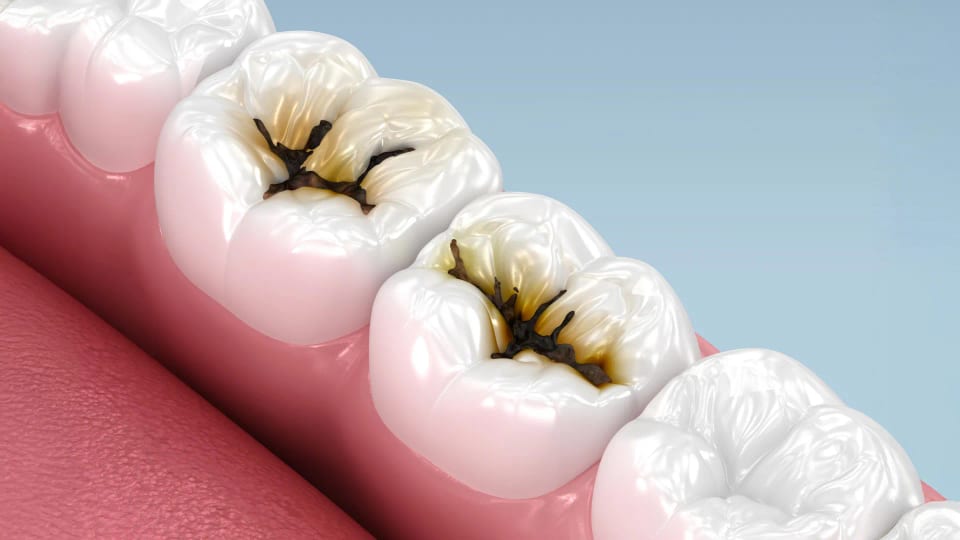
ScienceDaily wrote on 25 October about a phase 3 trial of silver diamine fluoride, a liquid a dentist paints onto a cavity in seconds, with no drill, no injection, and no sedation. Researchers led by the University of Michigan enrolled 830 children younger than 6, through dental clinics, pediatric offices, and Head Start programs in Michigan, New York, and Iowa. Applied at six-month intervals, a 38 percent solution stopped decay in more than half of the treated baby teeth. Lead investigator Margherita Fontana called the treatment effective and safe even for children as young as 1. The silver stains the decayed part of the tooth black, which shows most on front teeth. It does not rebuild what has already been lost. It is meant to keep the damage from spreading. In the United States the FDA cleared the liquid in 2014 as a device for tooth sensitivity, and dentists have used it off label for cavities. Co-principal investigator Amr Moursi said the trial gives a manufacturer evidence for an application asking the FDA to approve it as a drug that arrests decay. That approval is not in hand.

A few seconds with a tiny brush can spare a small child a drill, if a family can live with a dark spot on a tooth that will fall out.

ScienceDaily's page is dated 25 October. The paper is in JAMA Pediatrics; the National Institutes of Health dates that publication to 27 July 2026, so this is a later writeup of the same trial. More than half is not every cavity, and the black stain is permanent on the decayed part. This is not an FDA approval for treating cavities, and it is not something a person paints on at home.

Image: Good News Network

Dartmouth High's baseball team has gone six seasons without a win, and the players are glad to be out there

Good News Network retold a CBC News visit to the Dartmouth High School Spartans in Nova Scotia, a baseball team that has not won a game in six seasons. Captain Curtis Snelgrove said that when they lose they usually get "mercied," which he described as giving up 10 runs within a set number of innings, and that this happens about 80 percent of the time. He also said that even through those losses, everyone on the team has a great time. Many of the players had never had a chance to play organized baseball. There is no performance bar to making the team, so a beginner can be on the field even when the score is already lopsided by the third inning. Alex Ansems, who had never played before he joined, said he makes up for that by being a "vibes guy" and keeping the others up. The boys' side used to share a co-ed team. The girls later formed their own squad, joined a women's league, and won the school's first baseball game. Benjamin Boehner said it was pretty awesome to see Spartans baseball win a game, even though it was not his team.

A team that lets a beginner play is a soft place to learn that losing a game is not the same as being finished.

The six seasons, the 80 percent, and the quotations are what the players told CBC, as Good News Network retells them. The article does not print a season-by-season record. It describes the girls' win as the school's first and does not give the date of that game.

Good News Network ↗· Oct 27, 2026