← Archive

2026-10-23

October 23, 2026

Published this day

Image: BBC News

North Yorkshire libraries are lending light lamps before the clocks go back

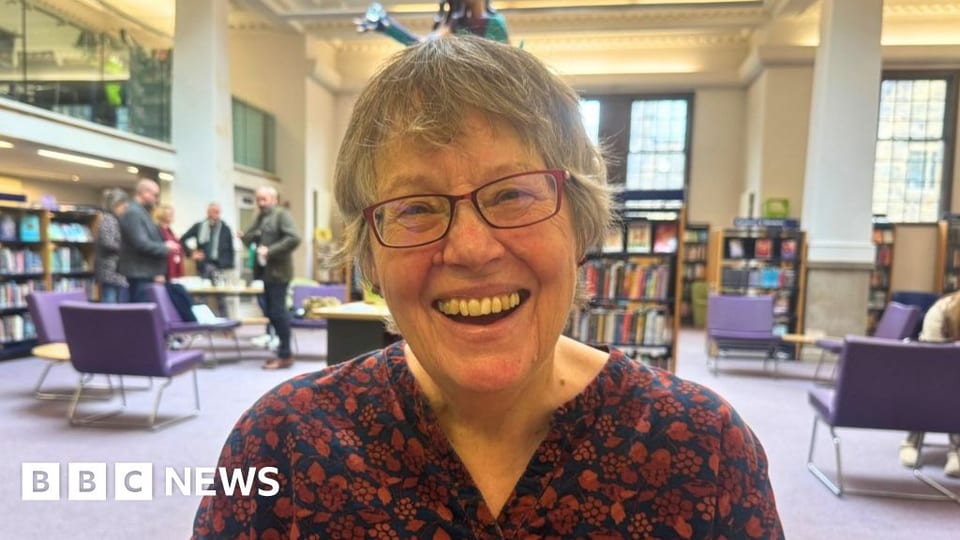
North Yorkshire libraries are lending 150 Wintering Well boxes as the clocks change. Each holds a therapeutic light lamp, a guidebook for a winter routine, and a free online course on seasonal affective disorder. Researchers at the Universities of Glasgow and Edinburgh developed the boxes with people who live through the short days. Sixteen library services in England, Wales, Northern Ireland, and Scotland will share 600 of them this year. North Yorkshire is the first service in England, and so far the only one there, to put them on loan. Jenny Barrie, 73, who chairs Bedale Community Library, has had a lamp for about ten days. She makes tea at six in the morning and switches the light on with the kettle. She wants to keep swimming, learn chess, and skip what she calls hedgehog mode at four in the afternoon. Professor Hester Parr of the University of Glasgow, at a launch in Harrogate Library on Wednesday, said the boxes are for small changes a person can keep. The Royal College of Psychiatrists estimates that more than a million people in the UK live with seasonal affective disorder in the winter months.

A lamp and a few pages of ordinary advice, borrowed like a book, give someone a way to meet the dark afternoons.

Jenny has not been diagnosed with seasonal affective disorder, and ten days with a lamp is her own sense of it, not a trial. The million-person figure is the Royal College's estimate, not a count of people using these boxes.
BBC News ↗· Oct 23, 2026

Image: New Zealand Department of Conservation

New Zealand releases more than 200 rare knobbled weevils raised on carrot

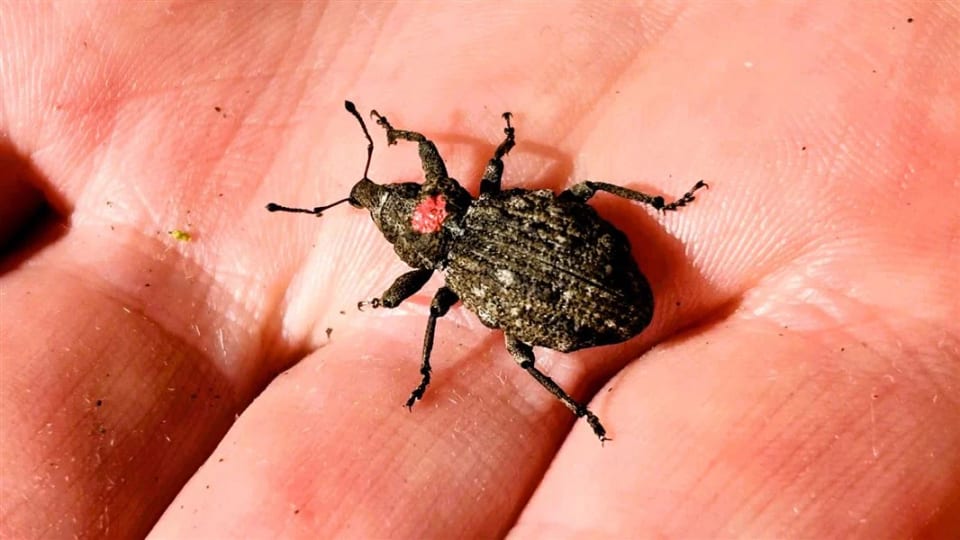
The Canterbury knobbled weevil, a critically endangered beetle described as a living fossil, was thought to be extinct until a small population turned up in 2004 at Burkes Pass, near Takapō/Tekapo. After another pocket was found in Mid-Canterbury late in 2024, the Department of Conservation and Te Rūnanga o Arowhenua tried raising the beetles with weevil specialist Barbara Barratt at the Bioeconomy Science Institute at Invermay. Senior science advisor Tara Murray said they started with six, tried experimental foods that included chunks of carrot, and now have more than 200. The team has put weevils back at Ōtūwharekai/Ashburton Lakes, onto Aciphylla, the spear grass they favor. It is a soft release: protective covers stay over the plants for about a week while the beetles are watched. Spear grass has been cleared from many landscapes, which is one reason the weevil declined. If this week holds, the partners plan to collect more wild weevils and start further populations, so a fire cannot wipe out every animal at once. Monitoring continues at Burkes Pass.

A beetle that nearly vanished can be given a second patch of spear grass, so its whole future is not one valley.

This is a first soft release, not proof the weevils will breed at the lakes. The covers are still on, and any wider release depends on how this week goes.

A personalized mRNA vaccine cut the risk of melanoma returning or death by 42%

In a phase III trial, the personalized mRNA vaccine intismeran, given with the immunotherapy pembrolizumab, was tied to a 42% lower risk of melanoma returning or the patient dying than pembrolizumab with a placebo. Nature reports that 1,137 people with moderate to advanced melanoma enrolled at 157 centres, after surgery to remove their tumours. Trial leader Georgina Long, of the Melanoma Institute Australia, said participants have been followed for about 25 months and will be watched for years to see whether the vaccine lengthens life. She said the therapy did not produce any major harmful side effects. Each dose is built from mutations in that person's tumour, so the immune system has a chance to recognize proteins the cancer cells make. The vaccine is meant to stop a return, not to keep someone from developing melanoma in the first place. Merck and Moderna released the figures after the data leaked on October 22. The full results are due at the European Society for Medical Oncology meeting in Madrid on October 24. Cancer geneticist Jessamy Tiffen said some people did not respond, and that two years is not the whole story.

For someone who has already had a melanoma removed, a vaccine made from their own tumour is a new way to ask the immune system to watch for a return.

The 42% figure combines recurrence and death. It is not a cure rate, and overall survival is still being counted. The conference presentation is Saturday, and some patients did not benefit. Nothing here shows the same vaccine would work in other cancers.

Nature ↗· Oct 23, 2026

Image: BBC News

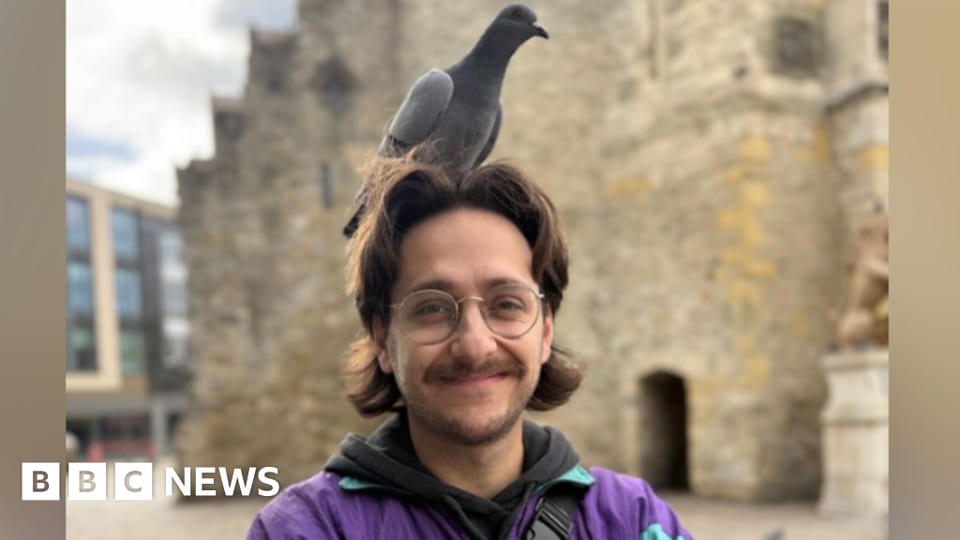
A Southampton man spends his spare hours freeing pigeons from tangled string

Dexter Mathurine, known online as Dexter the Pigeon Guy, lives in Southampton and uses his spare time on pigeons with stringfoot, the injury that comes when hair, thread, or twine wraps a bird's toes and can cost it a foot. He began by posting what to look for. The first bird took several tries. He cut the string, let it go, and cried. Now, if someone in Southampton finds an injured pigeon, they can message him and he will come or talk them through the next step. He also shows people, in person, how to snip a tangle with nail scissors, and he tells them not to handle a bird unless they know how. Outside the Bargate the pigeons come to him. On the day the BBC met him, none of them needed help. Rebecca Machin of the RSPCA said the charity sees a great deal of cruelty toward pigeons and is glad more volunteers are stepping in. For someone without that practice, she said, the better errand is a vet. Dexter's account is that the birds were kept for messages, including in wartime, and then left on the street once they were no longer useful.

A few careful minutes with scissors can give a street bird its feet back, and show a neighbor that the same kindness is possible.

The article does not count how many pigeons he has helped. It also notes a separate June incident in Southsea, where volunteers found a dozen pigeons dead after an apparent catapult attack. That case is not his rescue work.

BBC News ↗· Oct 23, 2026

Image: BBC News

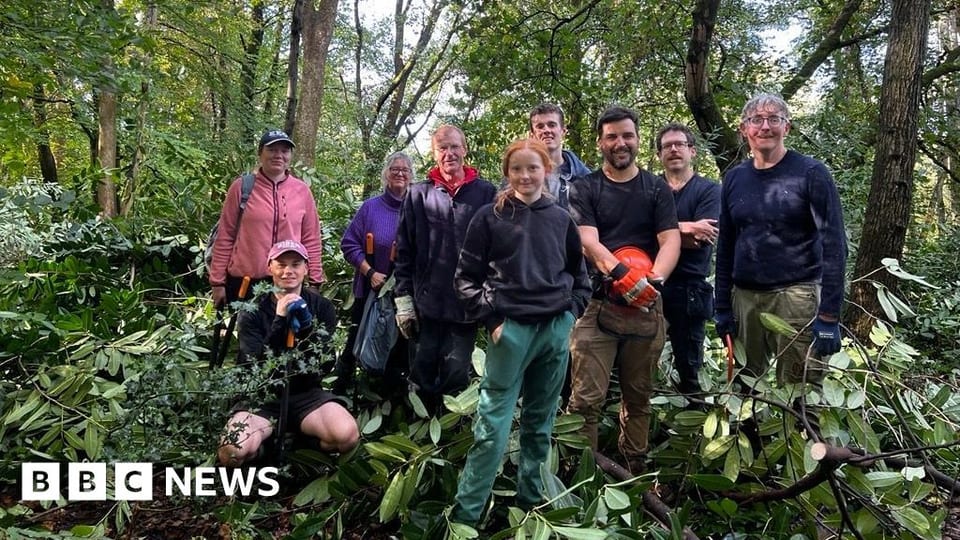
Neighbors spent two days cutting invasive shrubs out of an eight-acre Greenham wood

Volunteers spent two days in a wood at Greenham, near Newbury, cutting out rhododendron and cherry laurel, garden plants that shade a woodland floor once they escape. The charity Protect Earth organized the work on an eight-acre site that Simon Rance bought a year ago. He said the shrubs had suffocated the wood over many years. Neighbor Greg Loxton said much of it is still overgrown, and that the cutting is meant to leave open woodland. Phil Sturgeon of Protect Earth said the plants take over by blocking light, and that some British woods are heading toward what he called the biodiversity of a car park. Tom Walker used volunteer leave from a desk job and said it felt good to get his hands dirty for the place. The tools were loppers, bow saws, and pole-mounted machetes. Rance hopes the clearing will eventually open paths to the public and give a nearby school somewhere for outdoor lessons.

Two days with loppers can hand a shaded wood back to the plants that were there before the garden shrubs arrived.

The public paths and the school visits are hopes, not openings. The article describes the work party, not a count of what has grown back.

BBC News ↗· Oct 23, 2026

Image: BBC News

Retired hens in Hereford are heading for garden homes, and one street already sells their eggs

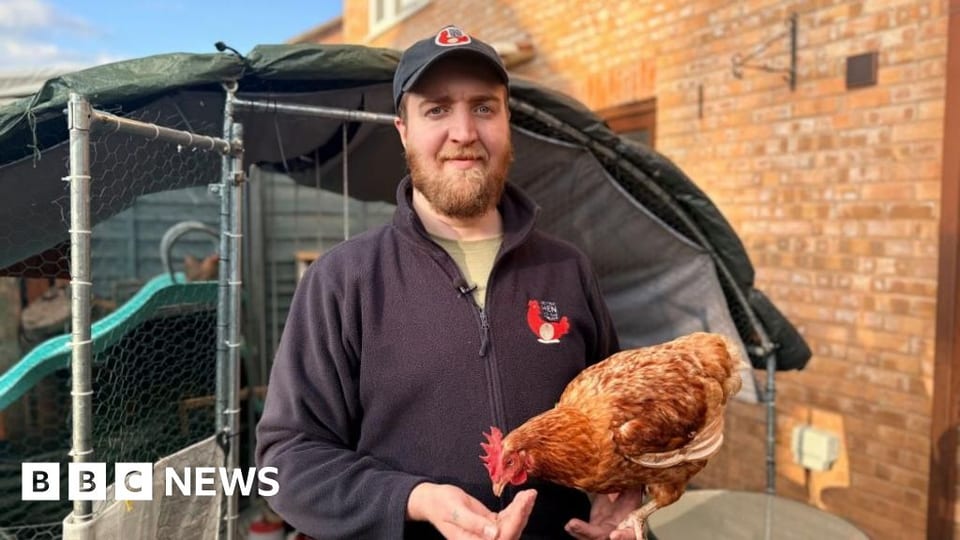
The British Hen Welfare Trust is holding an adoption day on Sunday at Rotherwas Industrial Estate in Hereford, one of about 50 similar events across the UK. Fifty-seven hens there are looking for gardens. The birds leave commercial egg farms at about 18 months, when laying slows, an age when many used to go for slaughter. Since 2005 the trust says it has rehomed more than a million hens, including 40,682 this year, and it estimates the year will finish above 50,000. James Bartlett, a volunteer in Belmont, and his wife Charlie already keep eight. Charlie sells the eggs from a stall in the front garden for a donation, and she says children knock to ask for them. Carol Wall, in Tenbury Wells, calls hers pets and says she can lose hours watching them scratch. Would-be adopters are asked to register ahead. The trust says the scheme depends on farmers, planning, and biosecurity.

A hen that would have been culled at a year and a half can spend the rest of her life scratching in a garden, and the eggs become a reason for neighbors to stop and talk.

Sunday's Hereford event has not happened yet. The figure of hundreds of hens finding homes this weekend is the scale of the national round of events, not a count of birds already placed. The million-hen total, this year's 40,682, and the year-end estimate above 50,000 are the trust's figures.

BBC News ↗· Oct 23, 2026

Image: BBC News

Fifteen teddy bears are hidden around Guernsey to start conversations about fostering

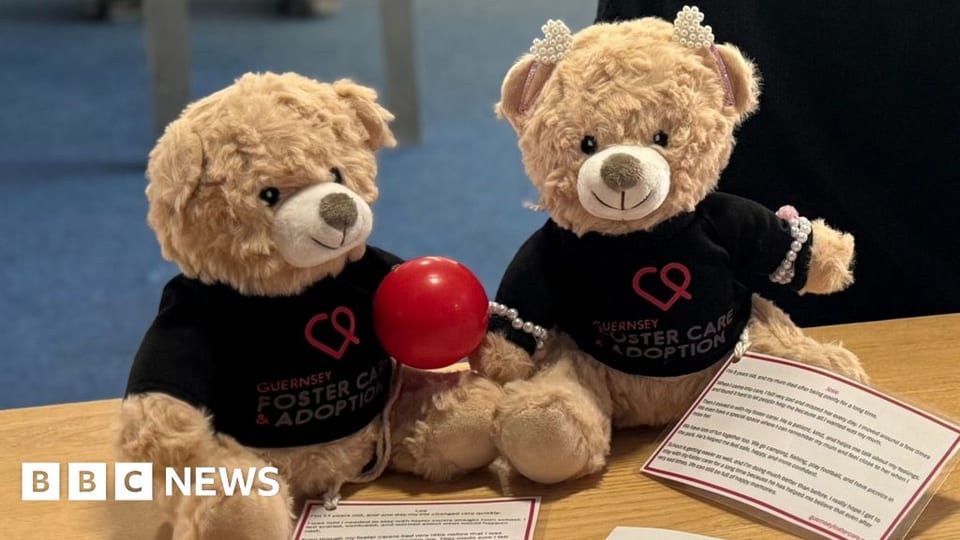
Guernsey's Family Placement Service has put 15 teddy bears in businesses around the island for a hunt called Hidden Bears Hidden Heroes, starting Saturday. Each bear carries a card with a short story and information about fostering. People are asked to find them, photograph them, and tag Guernsey Foster Care and Adoption. Clue sheets are at Beau Sejour, the Guille-Alles Library, and Mim's Kiosk at Cobo, or on the service's Facebook page. The bears come down on 1 November. Vicky Tellen of the service said the island will keep needing foster carers, and that the cost of living can make people assume it is not for them. She said the point of the hunt is a first phone call, and that some form of care could fit more households than people expect.

A bear in a shop window is a small way to let someone ask about fostering before they have decided it is too hard.

This is the start of an awareness hunt, not a report of new carers approved. The article does not say how many children on Guernsey are waiting for a placement.

BBC News ↗· Oct 23, 2026

A mother cougar and three kittens are leaving tracks again in northern Minnesota

Minnesota Star Tribune reporter Greg Stanley went into the woods north of Orr with Tom Gable of the University of Minnesota's Voyageurs Wolf Project. In late March a GPS-collared deer turned up cached under leaves, the way a cat hides a kill. Cameras over the carcass recorded about four hours of a female cougar and three kittens eating, growling, and being groomed. John Erb of the state Department of Natural Resources estimated the kittens at seven to nine months, born in late summer 2025, so they had already lived through a winter. The project and the department then set about 100 more cameras around that site. After a quiet stretch, July footage showed the family again, with a male of more than 120 pounds nearby. DNA from scat pointed to a father related to Black Hills cougars in South Dakota and a mother related to a small population in northwestern Nebraska. Mark Elbroch of Panthera put each journey at more than 700 miles. Two of the three kittens tested as male. On the August trip the paper describes, after a long day of empty cameras, one animal too small to be the adult male walked the road, and a clear print sat in mud from the night's rain.

A cat that was hunted out of the state can find enough deer and quiet woods to raise young, without anyone trucking animals in.

The Minnesota DNR first released the March footage on April 30. This October feature adds the genetics and later sightings. It is one family, not a counted population. Erb has said the kittens might still be lost, and the state has not yet set out how it will handle livestock conflicts. Cougars are protected in Minnesota, and ranchers may not shoot one that threatens stock.

An experimental drug stalled most treatment-resistant solid tumors in an early trial

The first human trial of invikafusp alfa, called invika, is reported in Nature Medicine by researchers at the National Cancer Institute, Mass General Brigham, and Memorial Sloan Kettering. The protein is built to stir only two narrow groups of tumor-infiltrating T cells, rather than T cells across the board. Most of the people enrolled had solid tumors that had already done poorly on immune checkpoint drugs such as pembrolizumab. In phase 1 the team varied the dose, given every two weeks. Flu-like side effects showed up and were generally handled with extra medicine and supportive care. At the dose they then carried into phase 2, 16 of 27 people had no further progression, and 4 of the 27 saw targeted tumors shrink by more than 30 percent. Two of those four had metastatic colorectal cancer and were on invika as a seventh treatment. Another had stage 4 non-small cell lung cancer that had already turned away several drugs. People on lower doses did not show a clear benefit. The authors tied the four shrinkages to the biggest shifts in the T cells the drug is meant to reach, and they note that immune activity did not always become a measurable change in the cancer. The sponsor, Marengo Therapeutics, has an FDA Fast Track designation for the drug in certain solid tumors after checkpoint therapy. The trial is still enrolling.

For someone whose tumor has already outlasted standard immunotherapy, a drug aimed at a smaller set of T cells is another thing to test, with the side effects so far looking more like a flu than a broad immune collapse.

These are early phase 1 and phase 2 results in 27 people at one dose, not a cure rate. Sixteen without progression is not the same as sixteen in remission. The trial is ongoing, and the authors say the next questions include combining invika with other treatments.

Image: Roger Williams Park Zoo

Nantucket's reintroduced burying beetles produced a record late-summer count

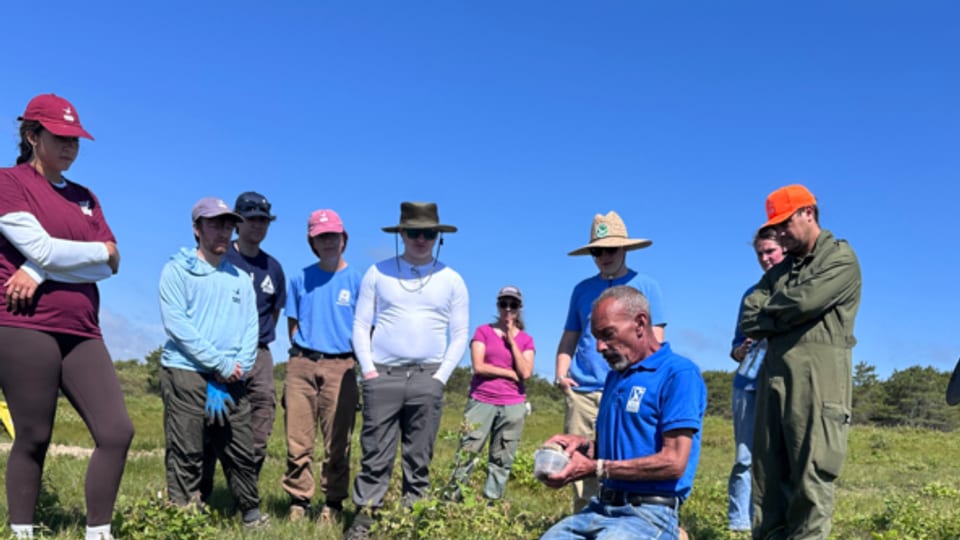
Roger Williams Park Zoo in Providence says this is the fifth year it has sent American burying beetles from its breeding program back to Nantucket. With wild beetles trapped for the work as well, the team provisioned 320 animals with carrion so they had a carcass to bury and raise young on. When researchers dug up 30 percent of those pairs, they counted 1,274 larvae. Later in the summer, over four nights, they processed 490 newly emerged beetles and 191 they had seen before, which the zoo calls a record for the project. Partners include the U.S. Fish and Wildlife Service, the Nantucket Conservation Foundation, and The Nature Conservancy's Block Island office, which supplies wild founders. Volunteers came from the Nantucket Land Bank, the Maria Mitchell Association, and the Linda Loring Nature Foundation. The beetle is federally protected. It buries small dead animals, which the zoo describes as returning nutrients to the soil and keeping flies and ants from taking every carcass. The same season includes new research on how much carrion is available and how climate affects breeding. The stated aim is a population that can continue without being restocked.

A beetle that buries the dead is a sign the island still has the quiet food chain those beetles need.

The counts and the word "record" come from the zoo that runs the breeding. The larvae figure is from 30 percent of the provisioned pairs, not every nest. The release does not show that the island population can hold without further releases.

A photograph of pin mould and hibernating bats wins Europe's wildlife photo prize

Hungarian photographer Imre Potyó is European Wildlife Photographer of the Year 2026, named by the German Society for Nature Photography from more than 26,000 entries in the 26th year of the contest. His picture, Hidden Worlds, was made in a restricted mine tunnel in Hungary's Börzsöny Mountains during a controlled count of lesser horseshoe bats. He has been photographing hibernating bats in those tunnels for 13 years. The bats sometimes wake, hunt insects that come into the dark, and leave droppings that build into a dark layer. In a torch beam a whitish pin mould shows on that layer. Potyó put the mould in sharp focus with a macro lens and left the bats soft behind it. He says the long exposure, with a shift of focus, was made without disturbing the animals. Jury member Tom Gilks said the frame holds a relationship most people never see, among bats, fungi, and the smaller life around them. The same announcement includes the category winners, among them a nighttime portrait of urban beavers by Jan Wieczorek that also took the Rewilding Europe award.

A prize for mould on a cave floor is a reminder that a careful look, taken without waking the bats, can make a hidden place matter to people who will never go in.

PetaPixel's introduction calls the mould bioluminescent. Potyó's own account, quoted in the same article, describes a whitish pin mould seen by torchlight during a controlled count. The entry total is the competition's figure.

PetaPixel ↗· Oct 23, 2026

Image: Good News Network

A Haysville first grade ends the day by saying they are kind and can do hard things

At Rex Elementary in Haysville, Kansas, first-grade teacher Tyler Richards has his class say a few plain sentences before they leave, including "I am kind" and "I can do hard things." Principal Shane Paulus, speaking to KSN News 3 in an account carried by Good News Network, said he loves the practice because the children leave feeling welcomed. Richards said the hope is that the day ends in a safe, positive place, whether the next stop is home or another activity. Paulus said other teachers have started versions of their own, and that children are offering ideas for how to keep it going. Richards said it is one way the students feel more connected to the adults at school.

A few sentences at the door can send a child out of the building with a kinder line to take home.

This is Good News Network's report of a local television interview. It does not say how many classrooms joined, how long the practice has run, or whether anyone measured a change in how the children feel.

Good News Network ↗· Oct 23, 2026

Image: MPR News

A St. Paul shop worker stopped a school bus after the driver had a medical emergency

On Monday afternoon, Ebro Ahmed, 27, was outside his family's corner store, Ya Bricks Snacks and Tobacco, in St. Paul's Dayton's Bluff neighborhood, kicking a soccer ball on a slow shift. A school bus rolled past with the door open and the crossing arm out. He said the driver appeared to be having a medical emergency. Store video shows him running for the bus. He had never driven one. He told MPR News he first put it in reverse, then into neutral, and pulled the parking brake. A student called the police. Ahmed counted 19 students who looked like middle schoolers. St. Paul police said there were no reported injuries. Paramedics took the driver, who was resting at home as of Wednesday, the school district said. Another bus took the remaining students. The school's mental health team checked in with them the next day. On Thursday, media maker Sheletta Brundidge brought Ahmed a $1,000 check at the shop. He said he plans to put it toward a window-tinting venture, and that he hopped on because of a line from his Muslim faith: saving one life is like saving the world.

Fifteen seconds from someone on a break was enough to stop a bus full of children and stay with the driver until help arrived.

The 19 students and the sequence of reverse, neutral, and the parking brake are Ahmed's account, backed by the store video as MPR describes it. Some other reports put the number of children at 18. The district confirmed no reported injuries and that the driver was home by Wednesday. It did not release a medical diagnosis.

MPR News ↗· Oct 23, 2026

A pancreatic cancer vaccine woke an immune response in nearly every patient who could be measured

Mayo Clinic researchers report a phase 2 trial of an experimental vaccine aimed at seven common mutations in KRAS, a gene altered in about 90 percent of pancreatic ductal adenocarcinomas. Unlike a vaccine built from one person's tumor, this one is made in advance for anyone whose cancer carries a mutation it targets. The study, published in Nature Medicine, enrolled 144 people with stage 1 to 3 disease who had already had surgery and chemotherapy and had no cancer visible on scans. Ninety-six received the vaccine and 48 were observed. The trial missed its main goal. Median time before the cancer returned was 23.8 months with the vaccine and 21.2 months without it, a gap that was not statistically significant. Of 90 vaccinated patients who could be checked, 89 showed a stronger T-cell response against mutated KRAS. In an exploratory look, people with the stronger responses stayed free of disease longer. Signals also showed up in people with no tumor DNA detectable in the blood at the start, and in people who had not had radiation. Lead author Ben George said the immune response is a clue for a larger phase 3 trial, which is planned. Overall survival is not in yet.

Pancreatic cancer often returns after surgery. A vaccine the immune system can actually notice is a next experiment, even before anyone can say it changes how long people stay well.

The study did not show that the vaccine kept cancer away longer for the group as a whole. The link between a stronger immune response and longer disease-free survival is exploratory. Some findings apply only to subgroups. This is not a treatment available outside a trial.

Mayo Clinic ↗· Oct 23, 2026

Image: ABC News (Australia)

New South Wales passed the law for a national park built around koala forest

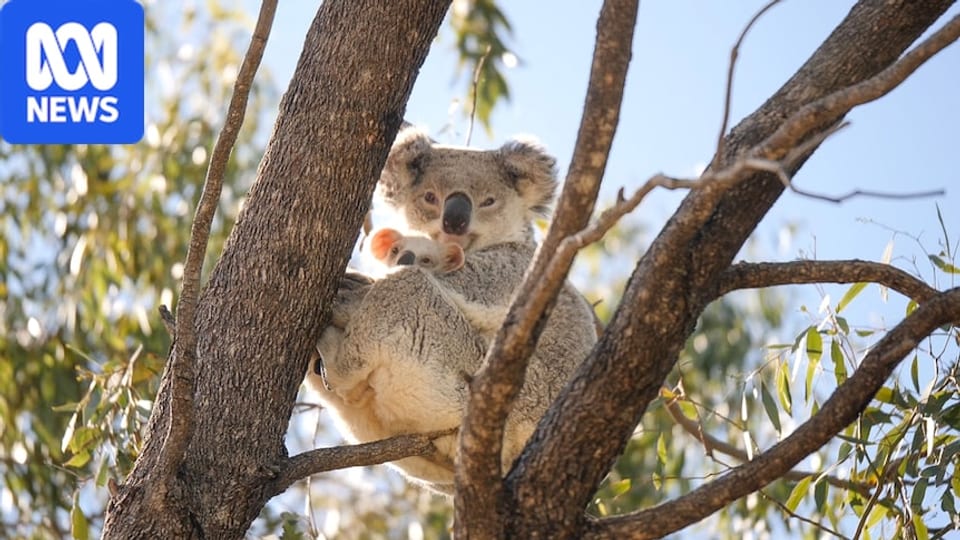
After more than 14 hours of debate and about 160 amendments, the New South Wales parliament passed the law creating the Great Koala National Park. It takes in 478,000 hectares between Kempsey and Grafton on the Mid North Coast, which the state government calls the state's second-largest national park. The area mixes existing parks with more than 178,000 hectares of state forest and Crown land. Environment Minister Penny Sharpe said it would protect more than 100 species of plants and animals. Conservationist Ashley Love, who has campaigned for the park for more than a decade, called it a big step and also said the forest is fragmented, with gaps between sections. The day before the vote, the federal Clean Energy Regulator registered a carbon project covering more than 117,000 hectares tied to ending native-forest logging there. A logging moratorium on the proposed area began last year. Timber NSW president Andrew Hurford said mills in the region are running out of wood and that layoffs have already spread to suppliers. In July the Forestry Corporation of NSW said it would cut more than 30 jobs in Coffs Harbour. The government said affected staff would be offered suitable roles with the National Parks and Wildlife Service.

A forest where koalas still live can be taken out of the logging rotation, so the next argument is about connecting the pieces rather than whether to cut them.

The law has passed. The article does not say the new boundaries are fully signed, staffed, or closed to every remaining logging operation. Love says surrounding forest was left out. Job losses in the timber industry are part of the same decision. The species count is the minister's.

An extra year of secondary school in Britain lined up with fewer dementia diagnoses decades later

A 1972 law in England, Wales, and Scotland raised the age when a student could leave school from 15 to 16, for people born after 1 September 1957. Staying on until 16 became 14 percent more common. Researchers at the University of Wisconsin–Madison and the University of Southern California looked at medical records for more than 100,000 people in the UK Biobank and compared those the law kept in school with those it did not. In a paper in Proceedings of the National Academy of Sciences, they report that the extra year lined up with a 0.88 percent lower rate of Alzheimer's and related dementias over the following 50 years. The difference was largest for people whose genes put them at higher risk. Diagnoses were counted only through December 2022, when the oldest people in the comparison turned 65, using hospital records, medical histories, and death registries. The National Institute on Aging, which funded the work, called the effect profound. Lead author Silvia Barcellos said the point is less the exact figure than the finding that schooling can offset inherited risk. She and her colleagues also tied the reform to later differences in income and other health, and they warn that the gap may grow or shrink as the group ages and dementia becomes more common.

A year that looks ordinary at 16 can still be one of the few things, decades on, that sits between a person and a diagnosis.

The 0.88 percent figure is the one in the NIH release. Dementia was still uncommon in this group because follow-up stops at age 65, so a small change can look large. The authors say the difference may not hold in the same way as people get older. The study is about one schooling law, not a prescription for any single student.

Image: McGill University Health Centre

A low-calorie diet plus supervised exercise put early type 2 diabetes into remission for 27 of 50 younger adults

The McGill University Health Centre wrote on 23 October about RESET for Remission, a trial led by Kaberi Dasgupta at the centre's research institute and Tom Yates at the University of Leicester, published in The Lancet Regional Health – Americas and presented at the European Association for the Study of Diabetes meeting in Milan. The trial enrolled 96 adults aged 18 to 45 who had type 2 diabetes and obesity and were not using insulin, at centres in Montreal, Edmonton, and Leicester. For 12 weeks, 50 of them ate 800 to 900 calories a day, mostly meal-replacement shakes and bars, and did aerobic and strength work twice a week with a supervisor and once on their own. For the next 12 weeks they moved to ordinary food meant to hold the loss, and kept exercising on their own. Remission meant blood sugar below the level used to diagnose diabetes, with no diabetes medicine for at least 12 weeks. Twenty-seven of the 50, 54 percent, reached that mark. Two of the 46 people in usual care did, about 4 percent. The centre said the programme group lost about 7.5 kilograms more than usual care, and that the loss was fat while fat-free mass held. Fitness rose about 10 percent relative to body weight, grip got stronger, and blood pressure and resting heart rate fell. They also reported fewer symptoms of low mood, less distress tied to diabetes, and a better quality of life. Early side effects, including constipation, headache, dizziness, and fatigue, eased. The paper, as the centre describes it, recorded no serious adverse events.

A few months of structured meals and someone counting the repetitions is a route back that does not start in an operating room.

This is six months in 96 people, not a cure and not a result for everyone with type 2 diabetes. There was no diet-only group, so the trial cannot separate the exercise from the calories or from the extra time with staff. It was open-label. People who needed insulin were not included. Follow-up stopped at 24 weeks, so the centre cannot say the remission lasts once the structure ends. The 7.5 kilogram figure is the centre's account of the adjusted difference.

A Texas school district names its new elementary school after a custodian of 39 years

WFAA reported that the Aubrey Independent School District in north Texas asked Marilyn Hampton, 76, to a board meeting on the pretext of giving a short speech. Superintendent Shannon Saylor then asked her to unroll a small red carpet, which carried the name Marilyn Hampton Elementary School. Hampton worked 39 years as a district custodian before retiring in 2022, and she now helps care for babies and toddlers at the district's Early Bird Learning Center. Saylor said she bought and delivered school supplies, helped students study for tests, and ran the football ticket booth. Hampton, the only one of eight siblings to finish high school, told the station she had long thought of herself as a failure for not going to college, and that she no longer does. The school, now under construction, is due to open next August.

A name over a school door can tell children that the person who kept the halls clean was one of their teachers too.

The school is still being built and opens in August 2027. The account of her work comes from the superintendent and from Hampton herself.

WFAA ↗· Oct 23, 2026

The edition Today's Five, then the rest of the file

This morning's file includes stories published earlier in the week. Headlines open the original article. Open the issue page.

Image: BBC News

North Yorkshire libraries are lending light lamps before the clocks go back

North Yorkshire libraries are lending 150 Wintering Well boxes as the clocks change. Each holds a therapeutic light lamp, a guidebook for a winter routine, and a free online course on seasonal affective disorder. Researchers at the Universities of Glasgow and Edinburgh developed the boxes with people who live through the short days. Sixteen library services in England, Wales, Northern Ireland, and Scotland will share 600 of them this year. North Yorkshire is the first service in England, and so far the only one there, to put them on loan. Jenny Barrie, 73, who chairs Bedale Community Library, has had a lamp for about ten days. She makes tea at six in the morning and switches the light on with the kettle. She wants to keep swimming, learn chess, and skip what she calls hedgehog mode at four in the afternoon. Professor Hester Parr of the University of Glasgow, at a launch in Harrogate Library on Wednesday, said the boxes are for small changes a person can keep. The Royal College of Psychiatrists estimates that more than a million people in the UK live with seasonal affective disorder in the winter months.

A lamp and a few pages of ordinary advice, borrowed like a book, give someone a way to meet the dark afternoons.

Jenny has not been diagnosed with seasonal affective disorder, and ten days with a lamp is her own sense of it, not a trial. The million-person figure is the Royal College's estimate, not a count of people using these boxes.
BBC News ↗· Oct 23, 2026

Image: BBC News

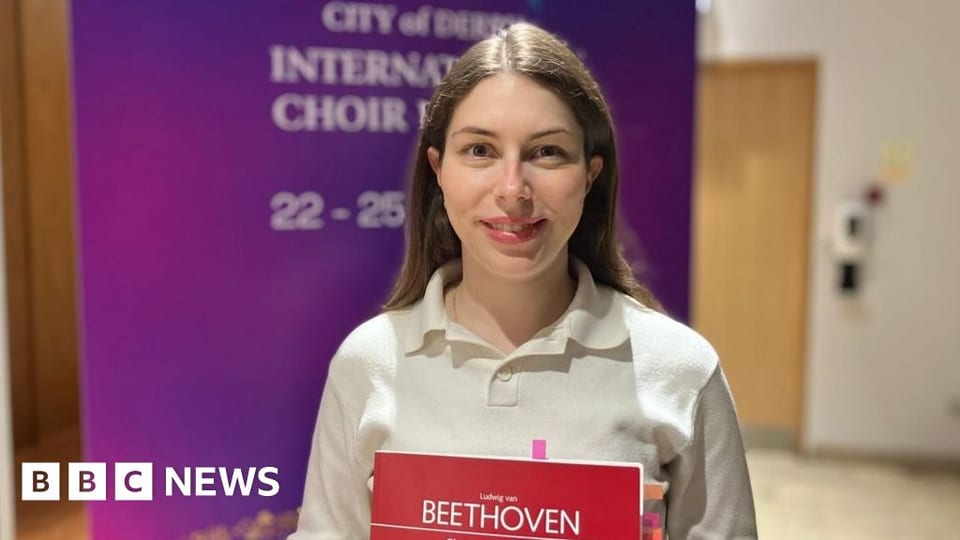
More than 100 choirs arrive in Derry, with singing in care homes and community halls

The City of Derry International Choir Festival, in its 14th year, has a record field this week. More than 100 choirs are taking part, with singers from Sweden, Estonia, France, Germany, the UK, and Ireland beside local voices of every age. Festival director Dónal Doherty said 60 of those choirs are in the community programme, spread through Derry, Limavady, Strabane, and Donegal, including pop-up performances, community centres, care homes, and concerts in Letterkenny. The festival opened Thursday at the Millennium Forum with the Ulster Orchestra and Festival Chorus under Anna Handler, conducting there for the first time, in a Beethoven programme with soloists Gemma Summerfield, Ryan Vaughan Davies, and Alex Birkus. Friday brings the ensemble Tenebrae to the Guildhall and a late concert at St Columb's Cathedral. Saturday is the Oak Tree of Derry competition, and Sunday closes with a gala and awards. Handler said a room of people singing is something headphones cannot hold. Doherty said visiting choirs now write Derry October into calendars two or three years ahead, and that the welcome has been the same message since the first festival in 2013, when Derry was UK City of Culture.

A festival that sends visiting singers into care homes and church halls is something a neighbor can walk to.

The festival runs through Sunday, so this is the opening, not a tally of who came. The record field and the count of community choirs are the organisers' figures.

BBC News ↗· Oct 22, 2026

Image: New Zealand Department of Conservation

New Zealand releases more than 200 rare knobbled weevils raised on carrot

The Canterbury knobbled weevil, a critically endangered beetle described as a living fossil, was thought to be extinct until a small population turned up in 2004 at Burkes Pass, near Takapō/Tekapo. After another pocket was found in Mid-Canterbury late in 2024, the Department of Conservation and Te Rūnanga o Arowhenua tried raising the beetles with weevil specialist Barbara Barratt at the Bioeconomy Science Institute at Invermay. Senior science advisor Tara Murray said they started with six, tried experimental foods that included chunks of carrot, and now have more than 200. The team has put weevils back at Ōtūwharekai/Ashburton Lakes, onto Aciphylla, the spear grass they favor. It is a soft release: protective covers stay over the plants for about a week while the beetles are watched. Spear grass has been cleared from many landscapes, which is one reason the weevil declined. If this week holds, the partners plan to collect more wild weevils and start further populations, so a fire cannot wipe out every animal at once. Monitoring continues at Burkes Pass.

A beetle that nearly vanished can be given a second patch of spear grass, so its whole future is not one valley.

This is a first soft release, not proof the weevils will breed at the lakes. The covers are still on, and any wider release depends on how this week goes.

A personalized mRNA vaccine cut the risk of melanoma returning or death by 42%

In a phase III trial, the personalized mRNA vaccine intismeran, given with the immunotherapy pembrolizumab, was tied to a 42% lower risk of melanoma returning or the patient dying than pembrolizumab with a placebo. Nature reports that 1,137 people with moderate to advanced melanoma enrolled at 157 centres, after surgery to remove their tumours. Trial leader Georgina Long, of the Melanoma Institute Australia, said participants have been followed for about 25 months and will be watched for years to see whether the vaccine lengthens life. She said the therapy did not produce any major harmful side effects. Each dose is built from mutations in that person's tumour, so the immune system has a chance to recognize proteins the cancer cells make. The vaccine is meant to stop a return, not to keep someone from developing melanoma in the first place. Merck and Moderna released the figures after the data leaked on October 22. The full results are due at the European Society for Medical Oncology meeting in Madrid on October 24. Cancer geneticist Jessamy Tiffen said some people did not respond, and that two years is not the whole story.

For someone who has already had a melanoma removed, a vaccine made from their own tumour is a new way to ask the immune system to watch for a return.

The 42% figure combines recurrence and death. It is not a cure rate, and overall survival is still being counted. The conference presentation is Saturday, and some patients did not benefit. Nothing here shows the same vaccine would work in other cancers.

Nature ↗· Oct 23, 2026

Image: Boise State Public Radio

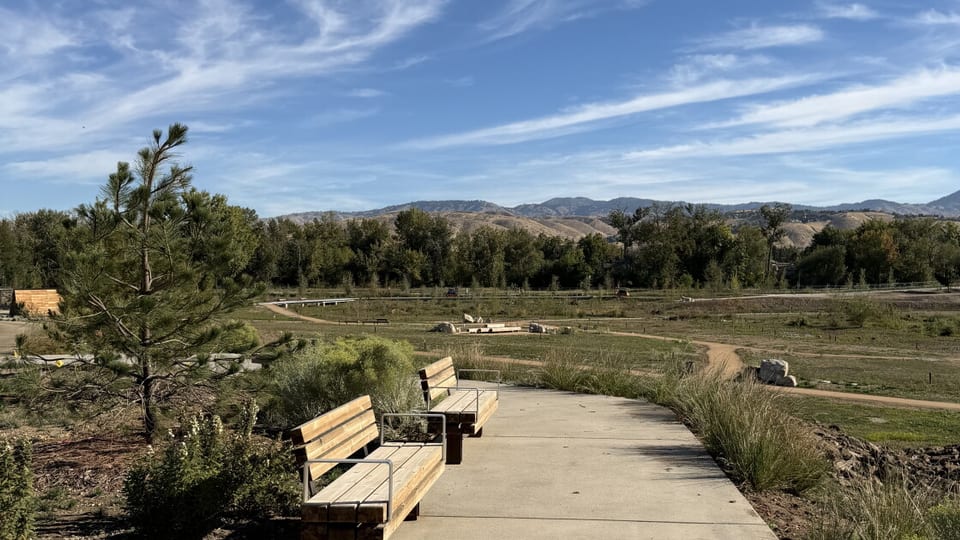
A nearly 50-acre park on Boise's old horse track opens along the river

Ada County's Park at Expo Idaho, nearly 50 acres along the Boise River in Garden City, opens Friday, October 23, on the site of Les Bois Park. The horse track had sat quiet after wagering was banned in 2015. Boise State Public Radio walked the grounds with senior project manager Josh Brown while crews finished the last work. About a million plants and plugs went in by hand. Only about a third of an acre is turf. The rest is native planting, laid out so the floodplain can still take the river, a requirement of the U.S. Army Corps of Engineers. The paths run 3.4 miles. The skate park runs from beginner bowls to features taken from the Olympics, and a public bathroom there used 750,000 pounds of concrete, with a walkway that can be skated. The playground's swing hangs from a single post, like a track rail, and the tallest climb is 36 feet. The pace was tied to $42 million in American Rescue Plan Act money that had to be spent by the end of this year. Brown, who asked for bird habitat from the start, stopped mid-tour for a kestrel hunting over the new wetland, the first he had seen there, with a kingfisher chasing it off. He has also logged ducks, sandpipers, killdeer, a great heron, an egret the crew named Gary, plus fish, frogs, and salamanders. The ribbon cutting is at 10 a.m. on the plaza by the greenbelt. He said opening day is the worst the park will look, because the plants are meant to grow in.

A racetrack that had nothing to do for a decade is now a wetland and a place to skate, a short walk from the river path.

The report is from before Friday's ribbon cutting, while concrete crews were still on the skate park. The plantings, the path length, and the wildlife list are the project manager's account.

Image: BBC News

A Southampton man spends his spare hours freeing pigeons from tangled string

Dexter Mathurine, known online as Dexter the Pigeon Guy, lives in Southampton and uses his spare time on pigeons with stringfoot, the injury that comes when hair, thread, or twine wraps a bird's toes and can cost it a foot. He began by posting what to look for. The first bird took several tries. He cut the string, let it go, and cried. Now, if someone in Southampton finds an injured pigeon, they can message him and he will come or talk them through the next step. He also shows people, in person, how to snip a tangle with nail scissors, and he tells them not to handle a bird unless they know how. Outside the Bargate the pigeons come to him. On the day the BBC met him, none of them needed help. Rebecca Machin of the RSPCA said the charity sees a great deal of cruelty toward pigeons and is glad more volunteers are stepping in. For someone without that practice, she said, the better errand is a vet. Dexter's account is that the birds were kept for messages, including in wartime, and then left on the street once they were no longer useful.

A few careful minutes with scissors can give a street bird its feet back, and show a neighbor that the same kindness is possible.

The article does not count how many pigeons he has helped. It also notes a separate June incident in Southsea, where volunteers found a dozen pigeons dead after an apparent catapult attack. That case is not his rescue work.

BBC News ↗· Oct 23, 2026

Image: BBC News

Neighbors spent two days cutting invasive shrubs out of an eight-acre Greenham wood

Volunteers spent two days in a wood at Greenham, near Newbury, cutting out rhododendron and cherry laurel, garden plants that shade a woodland floor once they escape. The charity Protect Earth organized the work on an eight-acre site that Simon Rance bought a year ago. He said the shrubs had suffocated the wood over many years. Neighbor Greg Loxton said much of it is still overgrown, and that the cutting is meant to leave open woodland. Phil Sturgeon of Protect Earth said the plants take over by blocking light, and that some British woods are heading toward what he called the biodiversity of a car park. Tom Walker used volunteer leave from a desk job and said it felt good to get his hands dirty for the place. The tools were loppers, bow saws, and pole-mounted machetes. Rance hopes the clearing will eventually open paths to the public and give a nearby school somewhere for outdoor lessons.

Two days with loppers can hand a shaded wood back to the plants that were there before the garden shrubs arrived.

The public paths and the school visits are hopes, not openings. The article describes the work party, not a count of what has grown back.

BBC News ↗· Oct 23, 2026

Image: Island Conservation

A year after rats and pigs left, Nu'utele is growing food and nesting birds again

Nu'utele, a Samoan island that still holds some of the country's best-preserved tropical forest, is showing new growth a year after invasive rats and feral pigs were removed. Island Conservation, Samoa's Ministry of Natural Resources and Environment, the Pacific Regional Invasive Species Management Support Service, and people from Aleipata did the work. Between March 2025 and May 2026, field teams made 12 trips and spent more than 130 days on the steep ground. Project manager Paul Jacques said native seedlings are carpeting the floor, knee-high where regeneration had been held down, and that people are harvesting giant taro in places where crops had failed. A local family is growing bananas, pineapples, papayas, and taro. The project says sea turtles are nesting after decades away, and a land crab not previously recorded on the island has turned up. One month after the removal, researchers found shy ground dove nests with eggs in bird's-nest ferns, a nest of the endemic Samoan starling, and breeding by the Samoan flycatcher and whistler. Nu'utele holds Samoa's largest remaining population of the shy ground dove. A later move of the threatened mao, a forest bird, is planned and has not happened. The island sits inside a marine protected area and was never cleared.

When the animals eating eggs and seedlings are gone, a forest can feed both the birds and the people who harvest from it.

These are early observations from the groups that did the removal, not an independent census. The mao has not been moved, and the decades without nesting turtles are the project's account. Long-term monitoring is still ahead.