 Image: Frontiers
Young giant manta rays keep to Central American shallows until they are large enough to roam
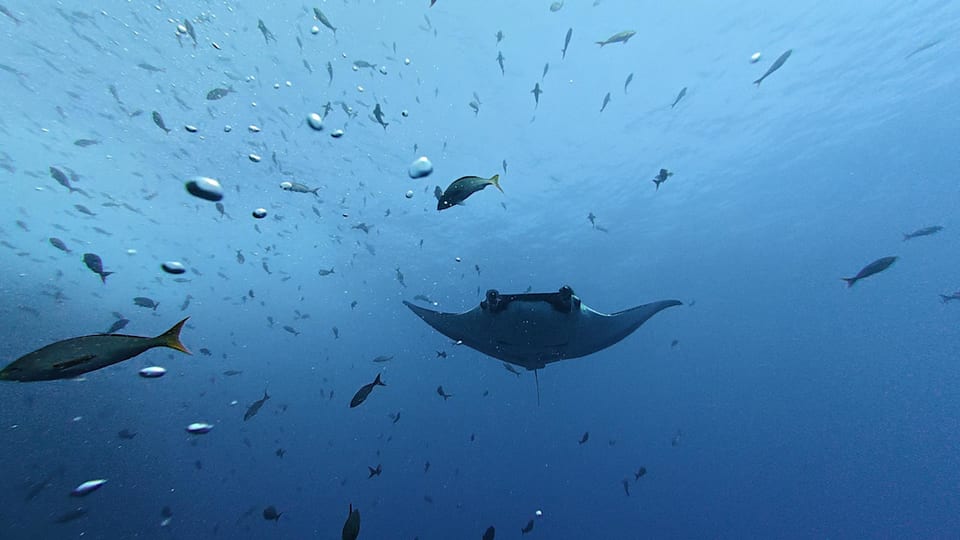
A Frontiers in Fish Science study, the first to track giant manta rays across Central America at this scale, finds that young animals stay in shallow coastal water while most of the tagged adults travel long distances along the shelf break. From 2018 to 2025 the team worked at five sites, with acoustic tags on 59 rays, satellite tags on 12, and photographs to tell individuals apart. More than 12,000 detections showed mantas with a disc of about three metres or less remaining in nearshore refuges, close to food, hiding places, and reef cleaning stations, and away from open-ocean predators. Nine mature rays made those longer trips. One adult, nicknamed Mickey Mouse for the spots on his underside, returned to the same coastal shelf years after he was first tagged.
The shallows where young mantas linger are a different place to protect than the routes adults use once they are big enough to leave.
The pattern comes from tagged animals at five sites, not a census of the species. The authors also note that adult routes cross waters with fisheries and ship traffic.