← Archive

Today

November 1, 2026

This morning's file is also the home page. Headlines open the original article.

Today's Five picks filed on this morning

Two Florida teachers put a bench and a little library where a girl waits for her bus

People reported that Maren Douglass, 44, and her husband, both teachers in Florida, were in hospital for his cancer treatment in early September when their security camera showed a high schooler sitting at the edge of their driveway each morning, waiting for her school bus beside a busy road. They ordered a bench from the hospital, put it together when they got home, and chained it to a basketball pole so nobody would think it was rubbish. The girl gave a little jump of joy when she saw it, then left a handwritten note saying she no longer had to worry about dirt and bugs. Because she was often reading, Douglass built and painted a small library box beside the bench, and other neighbourhood children now borrow and return books. The couple have since added an umbrella for rainy mornings and some of her favourite snacks; she replied with two homemade cookies.

A seat, a shelf of books, and a note back: a whole friendship built at the end of a driveway.

The account comes from Douglass and the couple's own videos; the girl and her family are not named or quoted. Some retellings call her a middle schooler, but People says she is in high school.
People ↗· Oct 25, 2026

Image: The Better India

Villages along a Madhya Pradesh stream cleared its banks and filtered its drains, and fish are back

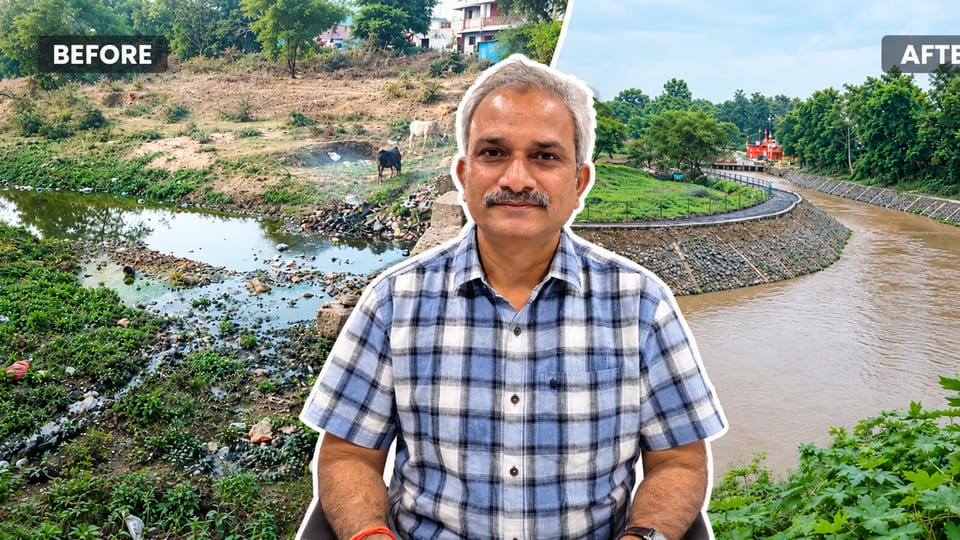
The Better India reported on the Singri, a 39.6 km tributary of the Narmada that runs past Narsinghpur in central India and had become a sewage drain. Starting in February 2026, IAS officer Gajendra Singh Nagesh routed the work through village councils rather than government departments: 26 small projects, about Rs 4.8 crore in all, finished in four months before the monsoon. Villagers joined in voluntary labour, banks were cleared and stone-pitched along about 2,000 metres, and simple gravity-fed filters with gravel, sand, and plants now catch waste where village drains meet the river. Households sort their rubbish, and self-help groups lend out sets of steel plates so festivals skip disposables. Nagesh says fish have returned after decades, and older residents now sit along a 600-metre riverfront with a hall, a cafe, and an open-air theatre.

When the people who live beside a river do the work, they are also the ones who keep it clean afterwards.

Nagesh says the water is not yet within safe limits; only some of the six planned filters are working, and drains are still connected. The 80% cut in waste and the return of fish are his estimates, not independent measurements.

The Better India ↗· Nov 1, 2026

Image: Mongabay
NatureNew3

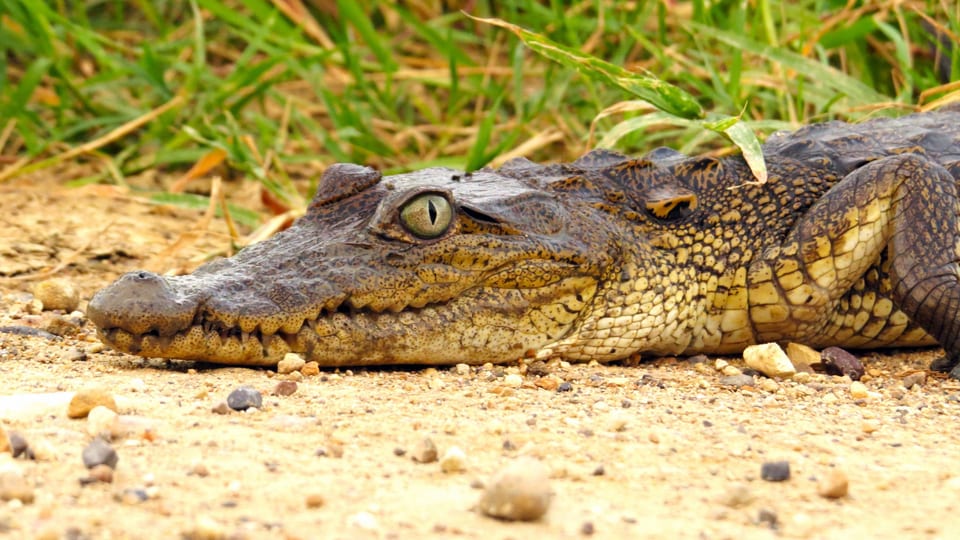
In Veracruz, mangroves planted on Aztec-style mounds grew into forest, and crocodiles came back too

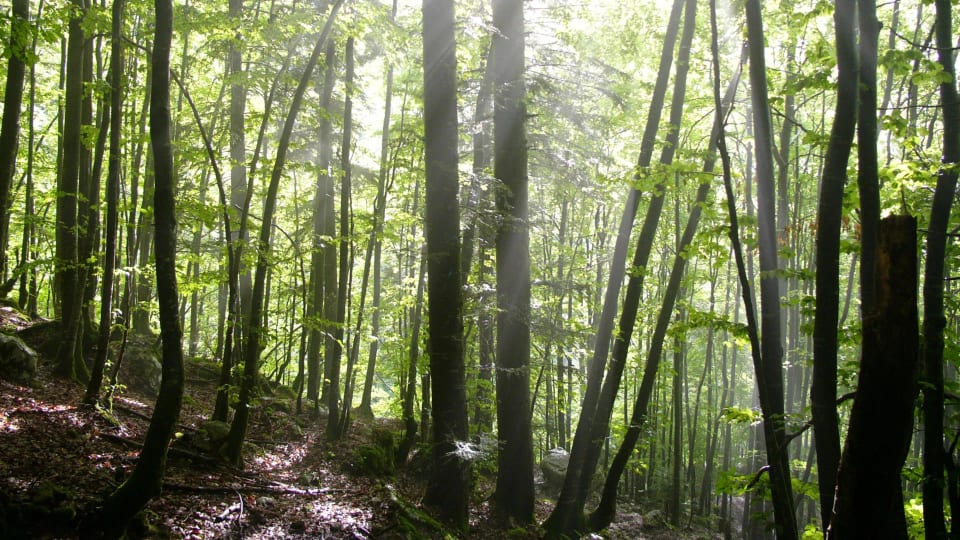
Mongabay reported on REVIVE, a nonprofit restoring mangroves in the Alvarado lagoons of Veracruz, Mexico. Biologist Aníbal Ramírez Soto watched seedlings planted in rows die, then noticed that wild mangroves grew on raised clumps. He began building small soil mounds, which he calls chinampas after the Aztec farming islands. About 2,000 trees were planted on the first mounds; when the team returned, more than 4,000 had taken root, as seedlings floated in on the tide. By the eighth year the canopy covered 80%, and the work has grown to 15,000 mounds over 40 hectares. Since 2017 the team has also released about 80 Morelet's crocodiles, learning from a Colombian project, in the hope that they keep water channels open.

Putting the soil back the way it was let the forest do most of the replanting itself.

The 17 years of results are in a preprint that has not been peer reviewed. A crocodile specialist told Mongabay there is no solid evidence that crocodiles are needed for mangrove health, and the released crocodiles are not formally monitored.

Mongabay ↗· Oct 30, 2026

Image: Smithsonian Magazine
JoyNew4

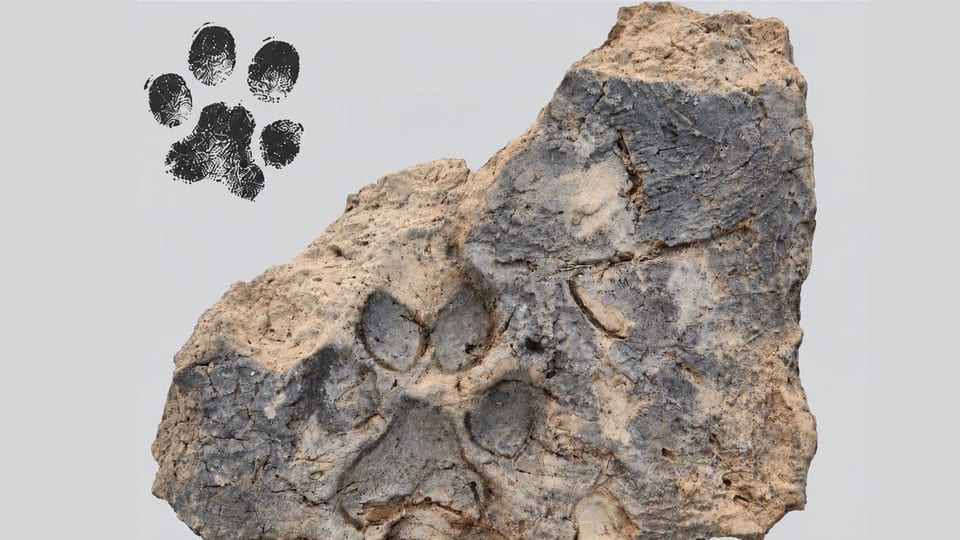
A dog stepped on a drying mud brick 4,000 years ago, and archaeologists in Turkey found the print

Smithsonian Magazine reported that archaeologists from Bilecik Şeyh Edebali University, digging at Tavşanlı Höyük in western Turkey, found a dog's paw print in a mud brick from a Bronze Age house that burned down around 1700 BCE. Builders made such bricks from water, soil, and straw, poured them into moulds, and left them to harden in the sun; as this one dried, a dog walked across it and left four round toe pads behind. Turkish officials announced the find on 26 October. Excavation director Erkan Fidan said dogs were already part of everyday life in Anatolian settlements by then, and called the print a direct and touching glimpse of that bond.

Somebody's dog walked on the wet brick, and four thousand years later it still makes people smile.

The excavation director says nobody can tell whether this dog was a pet in the modern sense. The site was destroyed in an attack, so the house that held the brick has a grim end.

Image: The University of Sydney

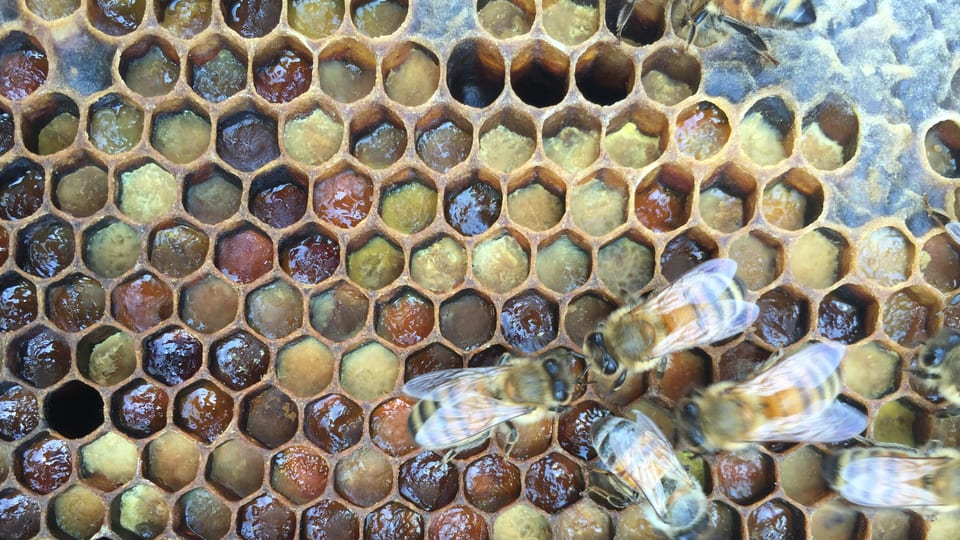
A honey bee hive arranges its honey, wax, pollen and propolis in layers that guard the young

The University of Sydney said researchers led by Kenya Fernandes sampled honey, pollen, beeswax, and propolis, the sticky plant resin bees use to seal cracks, from 24 colonies across five apiaries at Tocal College in New South Wales, and also studied the bees themselves. Writing in ISME Communications, they report that these materials are not scattered at random. The parts of the hive most exposed to the outside hold the strongest broad defences, such as hydrogen peroxide in honey and flavonoids in propolis. Closer to the centre, the wax comb, stored pollen, and the bees' own bodies become more selective, keeping out harmful bacteria and fungi while letting helpful ones live, much as a gut does. The strength of those defences tracked the plants around each apiary, so bushland and farmland hives differed.

A hive keeps its youngest safe with what the flowers nearby provide, which makes the case for a varied landscape.

Calling the hive an immune system is the researchers' comparison. The study covered European honey bees in one region of Australia; it shows how defences are arranged, not that more flowers would cure sick hives.

Also that morning

The Hirshhorn's sunken sculpture garden on the National Mall reopens after a four-year renovation

Smithsonian Magazine previewed the 1.3-acre Hirshhorn Sculpture Garden in Washington, D.C., which reopened to the public on Saturday, 31 October after work that began in 2022. Japanese artist and architect Hiroshi Sugimoto redesigned it as a quiet place for contemplation, with trees and flowers, a reflecting pool, a stage, and ramps for wheelchair users. The way in is lined with steel panels whose funhouse reflections drop from adult height to child height. Henry Moore's King and Queen and Rodin's Burghers of Calais, now set low as Rodin wanted, sit among chocolate cosmos. A 28-foot steel swimming pool stood on end, by Elmgreen & Dragset, greets visitors from the Mall, and Yoko Ono's Wish Tree is back, with tags for visitors' wishes in the warmer months.

A shaded garden in the middle of a busy city gives anyone a place to slow down among great sculpture.

This is the museum's own magazine writing about a Smithsonian site, so it reads partly as a preview tour. The wish tags return in the warmer months, not now.

Image: ScienceDaily (INRAE)

Young poplars straighten their bent stems by growing a second set of muscle-like wood

ScienceDaily carried a release from INRAE, France's national agricultural research institute, on a study in New Phytologist. Plants can sense their own shape, but it was not clear how that sense becomes movement. Researchers laid young poplars on their sides until the stems curved upward, then moved them onto a slowly turning platform inside a sphere lit evenly from all sides, so the trees had no steady cue from gravity or light. The stems straightened over the following weeks. The pulling wood on the upper side stopped forming, and the same kind of wood began to grow on the opposite side, working like a pair of opposing muscles. The team says this could help breed straighter trees and cereals that are less likely to flatten before harvest.

Even a sapling has a quiet way of knowing when it is leaning and setting itself right.

This was a lab study on young poplars in an artificial setup. The uses for timber and crops are possibilities the researchers suggest, not results yet.

Image: Greater Good Magazine

Researchers find people who show more love day to day also tend to feel more loved

In Greater Good Magazine, Zita Oravecz of Penn State and Joachim Vandekerckhove of UC Irvine wrote about their research on felt love, the warm sense of being cared for. When they asked 495 Americans which situations would make most people feel loved, being shown compassion in a hard time came out on top, and a pet being happy to see you ranked high too. In a recent study, 52 people reported several times a day for 28 days how loved they felt and how much love they had shown. Those whose warm feeling lasted longer had better mental health, and the more love people expressed, the more loved they tended to feel. The authors also cite a 2024 experiment in which children who had a nine-minute open, personal talk with a parent felt more loved than those who made small talk.

If you are short on warmth, a small act of care for someone else may be one way to feel some yourself.

The authors are describing their own work, and the 28-day study was small. It shows an association, not that expressing love causes the feeling, and the parent and child result still needs to be repeated.