← Archive

2026-11-03

November 3, 2026

Published this day

Image: ScienceDaily (NASA's Jet Propulsion Laboratory)

Voyager 1 is about to become the first human-made object one light-day from Earth

ScienceDaily carried a NASA Jet Propulsion Laboratory release saying Voyager 1, launched in 1977, should reach 16.09 billion miles from Earth on 18 November, a full light-day away, so a radio command will take 24 hours to arrive. No other spacecraft has gone so far. In September engineers finished a months-in-the-making swap, nicknamed the 'Big Bang', replacing three heating devices with ones that use less power, which should keep its remaining instruments running longer. The probe also gave the team a scare: its signal went missing on 18 and 19 October, then came back on 20 October after it switched itself to backup thrusters.

A machine built almost 50 years ago is still sending home news from interstellar space.

Voyager 1's power drops about 4 watts a year, engineers have not yet explained the October blackout, and more instruments will eventually have to be switched off.

The edition Today's Five, then the rest of the file

This morning's file includes stories published earlier in the week. Headlines open the original article. Open today on the home page.

Image: Good News Network
JoyNew1

A Beijing strawberry farmer's phone number ended up in an English exam, and he answers every student who calls

Good News Network reported that a middle-school English reading test in China used a real advertisement from a Beijing strawberry grower, Mr. Wang, complete with his real phone number. Wang, who has grown strawberries for 21 years, never knew who put it there, but for more than a decade 10 to 20 curious students a year have called or messaged him. He tells each one the same thing: study hard, be good, and come visit him in Beijing after graduating. One of them, He Ziqi, kept the number, got into a Beijing university, and wrote back to say so. Wang took him out for Peking duck.

A stray line on a test became a decade of small, kind phone calls between strangers.

The account comes from Chinese-language media interviews with the two men; it has not been independently checked.

Good News Network ↗· Oct 30, 2026

Image: The Guardian

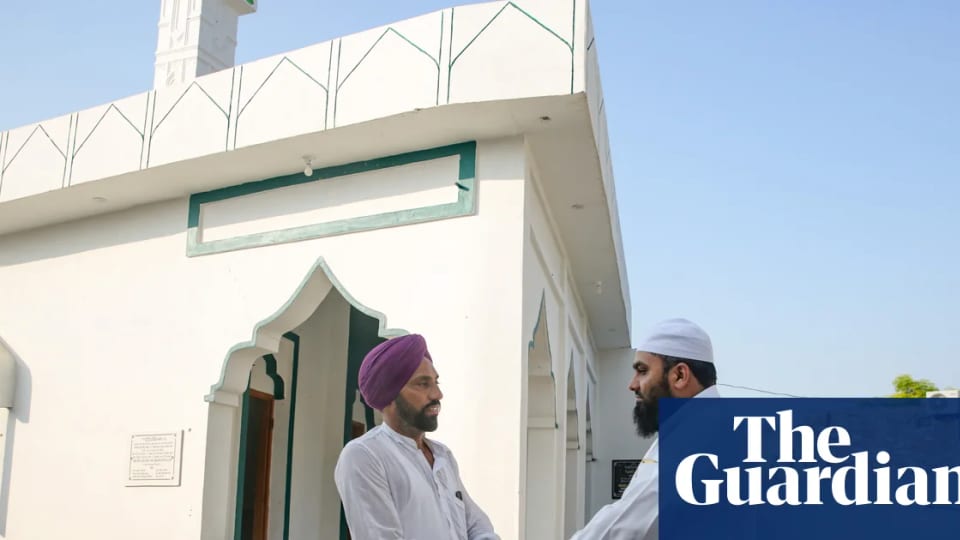
Sikh and Hindu villagers in Punjab are giving land and bricks to rebuild mosques lost after partition

A Guardian picture essay visited villages in India's Punjab, where hundreds of mosques were abandoned or turned into cattle sheds after the violence of partition in 1947. In Jakhiwal, 77-year-old Sikh Bibi Rajinder Kaur persuaded her grandson to donate farmland for a mosque for the village's 18 Muslim families, funded almost entirely by Sikh and Hindu neighbours. Gajju Khan, 87, whom Sikhs hid from attackers as a boy, hopes to hear the call to prayer there again. In Punawal, Jaspal Sharma, from a family of Hindu priests, gave land for a mosque and threw a feast for the village when it opened in February. In Umarpura, Sikh brothers restored an old shrine.

Neighbours are mending, brick by brick, a wound their grandparents lived through.

These are a handful of villages; the essay notes that several communities have done this over the past decade, not that it is happening everywhere.

The Guardian ↗· Oct 28, 2026

Image: Smithsonian Magazine
NatureNew3

A venomous little primate feared extinct for nearly a century has been living on its Indonesian island all along

Smithsonian Magazine reported that the Bangka slow loris, a big-eyed nocturnal primate last described by scientists in the 1930s and listed by the IUCN as possibly extinct, is still very much around. A study in the journal Spixiana drew on records from the Alobi Wildlife Rescue Center on Bangka Island, east of Sumatra, which rescued more than 90 of the lorises between 2015 and 2025 and released 86. Animals turned up in homes, gardens, roads and palm oil plantations, including in the island's largest city. The authors recommend removing the 'possibly extinct' label. Like some relatives, the loris can make a venomous bite by licking glands on its arms.

Patient record-keeping by a small rescue centre put a lost species back on the map.

Not extinct is not the same as safe: the lorises still face habitat loss, power lines, dogs and the wildlife trade, and the species remains critically endangered.

Image: ScienceDaily (NASA's Jet Propulsion Laboratory)

Voyager 1 is about to become the first human-made object one light-day from Earth

ScienceDaily carried a NASA Jet Propulsion Laboratory release saying Voyager 1, launched in 1977, should reach 16.09 billion miles from Earth on 18 November, a full light-day away, so a radio command will take 24 hours to arrive. No other spacecraft has gone so far. In September engineers finished a months-in-the-making swap, nicknamed the 'Big Bang', replacing three heating devices with ones that use less power, which should keep its remaining instruments running longer. The probe also gave the team a scare: its signal went missing on 18 and 19 October, then came back on 20 October after it switched itself to backup thrusters.

A machine built almost 50 years ago is still sending home news from interstellar space.

Voyager 1's power drops about 4 watts a year, engineers have not yet explained the October blackout, and more instruments will eventually have to be switched off.

Image: InkFreeNews
SpacesNew5

Atwood, Indiana, opens its first community park on six acres behind the community building

InkFreeNews reported that Atwood, a small community in Kosciusko County, Indiana, celebrated the opening of Atwood Community Park on Sunday, 1 November, with a ribbon cutting, games and free food. Atwood had no community park before. What was a grassy lot with a gravel path now has a pavilion with picnic tables, a court for basketball and pickleball, a playground for children from six months old, and a paved walking loop of about half a mile. The park meets accessibility rules. It was paid for by local churches, families, businesses, the Lions Club and a county matching grant.

A community that never had a park now has a place to gather, built mostly by its own neighbours.

InkFreeNews ↗· Nov 1, 2026

Image: The Optimist Daily

Fifteen Sardinian restaurants ask families to put phones away and hand them a box of games instead

The Optimist Daily reported on 'A tavola senza schermi', or 'at the table without screens', a one-month pilot in 15 restaurants across Sardinia. Families who join are asked to set their phones aside, and staff bring a 'reunion kit' designed with Italian paediatricians, a box of games, drawing and conversation prompts for parents and children. The idea came from Anna Cau, the island's children's ombudsman, working with the regional restaurant federation, whose president said tables of families often fall silent behind their devices within minutes. Cau said the aim is not to scold parents but to make everyday places help them. Restaurants joined voluntarily, and organisers hope to expand.

A small box of games can turn a quiet dinner back into a real conversation.

It is a short voluntary pilot, and no results on how families respond have been published yet.

Image: Good News Network

A Texas mother whose daughter died in a crash now funds scholarships for people who run toward danger

Good News Network reported that five years ago 18-year-old Kenli Riney's car caught fire after a head-on collision on a Texas highway. Mike Argote and three other men pulled her out, and Argote, though burned, began CPR, with his 14-year-old daughter Ema taking over when he tired. Kenli did not survive. Her parents later found the Argotes, and the two families stayed close. Through the Kenli Foundation in Kerrville, they have since given $67,000 in scholarships to 67 young people who showed courage and compassion. This year 451 applied. Ema, now at the University of Texas at San Antonio, received one, and a new Argote Award honours her family.

A family's grief became a way to thank strangers who did not look away.

The figures come from the foundation, and the story begins with a death, so it is a bittersweet one.

Good News Network ↗· Nov 2, 2026

Image: The Better India

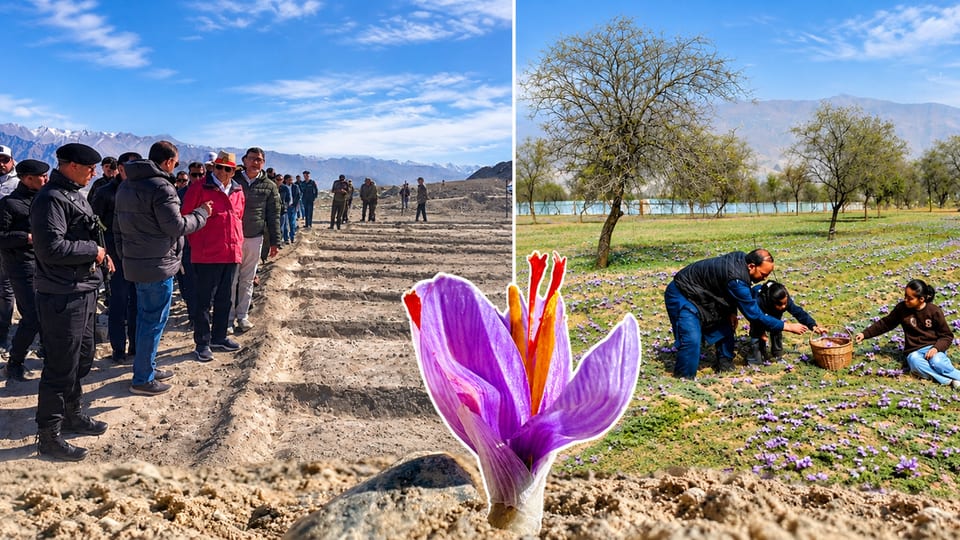
Saffron bloomed in under a month on restored land in Leh, a first trial in Ladakh's cold desert

The Better India reported that Ladakh's administration planted about 90,000 saffron corms, nearly 800 kg, on a 4,000 square metre plot of restored, once-degraded land in Leh on 1 October, to test whether the spice can grow at that altitude and cold. Flowers appeared within about a month, faster than the usual two. When Lieutenant Governor VK Saxena visited on 1 November, the field was averaging 20 to 25 blooms a day and had its best morning yet with 72; about 22 grams of saffron were gathered over four days. Officials hope the crop could add income for farmers and young people in the region.

Purple flowers on once-barren ground hint at a new livelihood in a hard place to farm.

This is a small government pilot reported from official figures; further seasons are needed to show saffron can grow reliably and profitably there.

The Better India ↗· Nov 2, 2026