← Archive

2026-10-26

October 26, 2026

Published this day

Image: Good News Network

A Queens commuter filled ten bags under a Crown Heights bridge the city had left

Joshua Service, riding the train from Queens, filmed a pile of dumped rubbish under a metro bridge in Crown Heights, near Atlantic Avenue, and reported it to 311. Sanitation told him the site might be a homeless encampment, and that social services would have to visit for seven days before a crew could clear it. Comments on his video told him to stop filming and pick it up himself. He did. With gloves and a rake he filled ten bags in about two hours, and he came away thinking the spot had become a dump even if someone had slept nearby. Haile Ali, who lives in Crown Heights, called the cleanup a step that counts. The Department of Homeless Services later said it had met a homeless resident in that immediate area and found the person a shelter bed. While Service worked, passers-by asked if he was on a city crew. He said he was a New Yorker who was worried about the block. Councilmember Chi Ossé planned to honour him at the same spot last Friday.

Two hours with a rake made a corner usable again, and the same visit put a person indoors before the cold settled in.

The bag count, the two hours, and the conversation with sanitation are Service's account, as he told CBS and as Good News Network retells it. The shelter placement is what the article says the Department of Homeless Services reported. The story does not say the dumping has stayed gone.
Good News Network ↗· Oct 26, 2026

Image: The Guardian

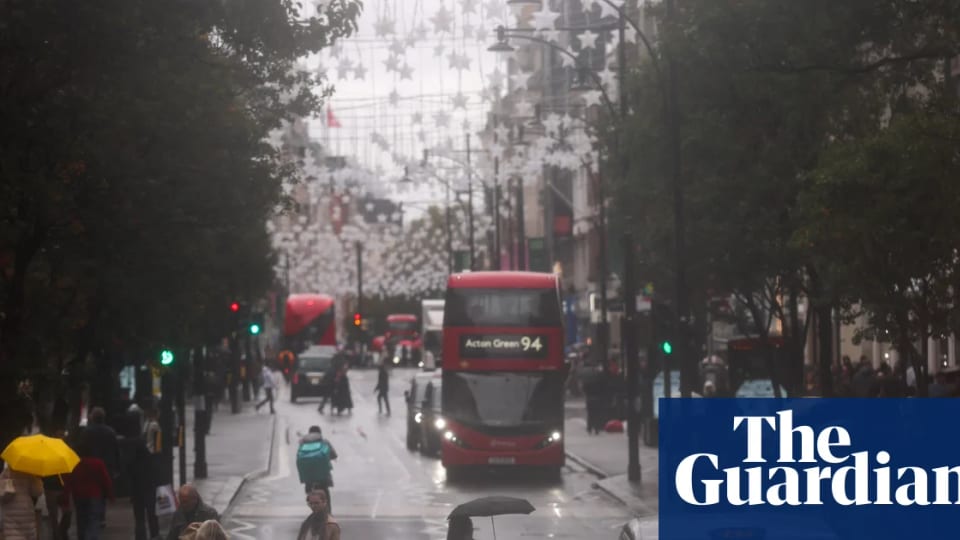
Nearly a kilometre of Oxford Street closed to traffic so people can walk the shops

From 7am on 26 October, the stretch of Oxford Street from Orchard Street, near Marble Arch, to Great Portland Street is closed to traffic between 7am and midnight, every day. That is nearly 0.6 miles, almost a kilometre, and about half of the 1.2-mile street, taking in Selfridges and John Lewis. Private cars were already barred from 7am to 7pm. The new rule runs all day and also keeps out buses, black cabs, and bicycles. North-south traffic can still cross, including at Oxford Circus and New Bond Street. Bus routes 7, 98, and 390 shift onto Wigmore Street, which runs parallel. Taxi ranks sit within 100 metres. Shops can take deliveries outside the closed hours, on set routes, but vehicles cannot drive the length of the street. Mayor Sadiq Khan has wanted the change for years as part of clean-air plans. Central government backed him over local council objections. The wider scheme is put at £150 million. London looked at central Sydney and talked with Barcelona, whose La Rambla is the comparison planners keep making.

The pavement on a street this crowded was never really a place to walk. A morning without buses in the roadway is the start of one.

This is the first stretch, not the whole of Oxford Street. Buses, cabs, and bikes are pushed onto neighbouring roads, which is the objection the councils raised. The Guardian's account was filed as the closure began. It does not describe the trees, seats, or squares planned for later phases.

The Guardian ↗· Oct 26, 2026

Image: Positive News

A free tool has walked more than 60,000 young men through how to take responsibility

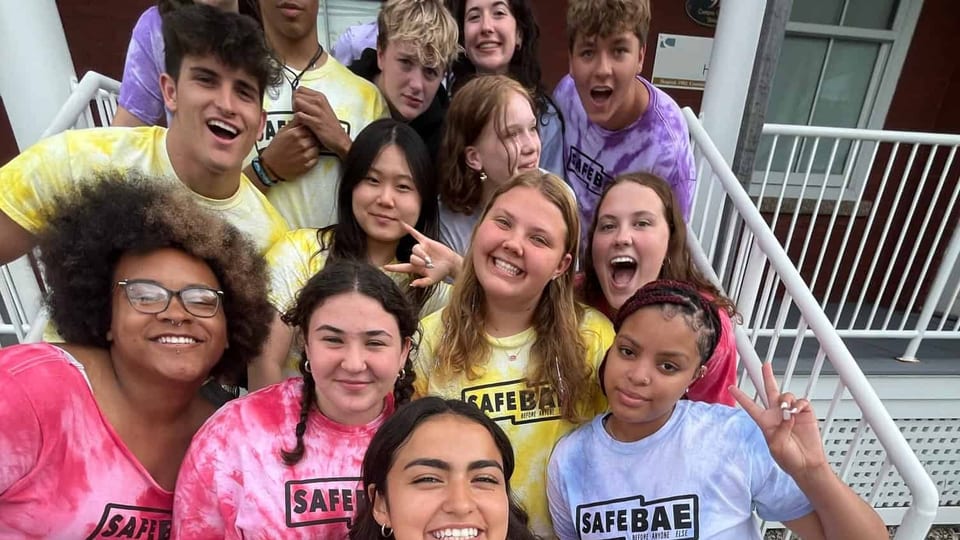
SafeBae, a sexual-violence charity in the United States, built a free site called Vibe Check for young men who think they may have crossed a line and do not know what to do next. Drew Davis, the charity's director of strategic initiatives, says the replies those questions usually get online split in two: total condemnation, or a private chat that says nobody was hurt. Vibe Check is a decision tree, not a chatbot. It walks someone through situations where consent may have failed, uses short exercises drawn from cognitive behavioural therapy, and offers language for a boundary and an apology. Davis says it can also make a school or workplace process less of a fight, which matters for the person who was harmed. Positive News reports that more than 60,000 people have used it since the launch in April, and that the largest audience outside the United States is in Britain. Davis calls the feedback overwhelmingly positive on the practical skills: how to apologise, how to own what happened, how to walk into a disciplinary meeting. The charity's next adaptation is for young people caught in sextortion, who often assume they are the ones in trouble.

A quiet set of questions can be the difference between owning a mistake and being talked out of it.

The 60,000 users and the description of the feedback come from SafeBae. The tool launched in April. This is a six-month account, not a study showing that harm went down. Positive News does not report an independent evaluation.

Positive News ↗· Oct 26, 2026

Image: Good Good Good

Three rescued sea otters at the Oregon Zoo are dunking mini pumpkins

On 24 October the Oregon Zoo shared a short video of three rescued sea otters, Juno, Lincoln, and Uni Sushi, swimming with mini pumpkins and lifting them into a hoop in the Steller Cove pool. The three already play basketball there. Around Halloween the rubber ball comes out and the pumpkins go in. The zoo said this kind of training matters for the animals' wellbeing, and that a new object keeps the session from going stale. Senior marine-life keeper Nicole Nicassio-Hiskey has said Juno loves the game, gets excited when the ball appears, and swims with it before she dunks. The hoop started with Eddie, a rescued otter whose keepers used it to work an arthritic elbow. He died in 2018 at nearly 21, among the oldest sea otters the zoo had known. Juno and Lincoln were found as orphaned pups on the California coast in 2013 and 2017. Uni Sushi stranded near Santa Cruz in December 2018, was judged unable to return to the wild, and joined them in May 2019.

A pumpkin and a hoop are a small autumn ritual for three otters who cannot go back to the ocean.

The pumpkin clip is a social video, not a show the zoo has scheduled for visitors. The basketball routine itself is years old. The keeper's line about Juno comes from a zoo release the article cites, and the piece does not say when that release was written.

Good Good Good ↗· Oct 26, 2026

Image: Virginia Institute of Marine Science

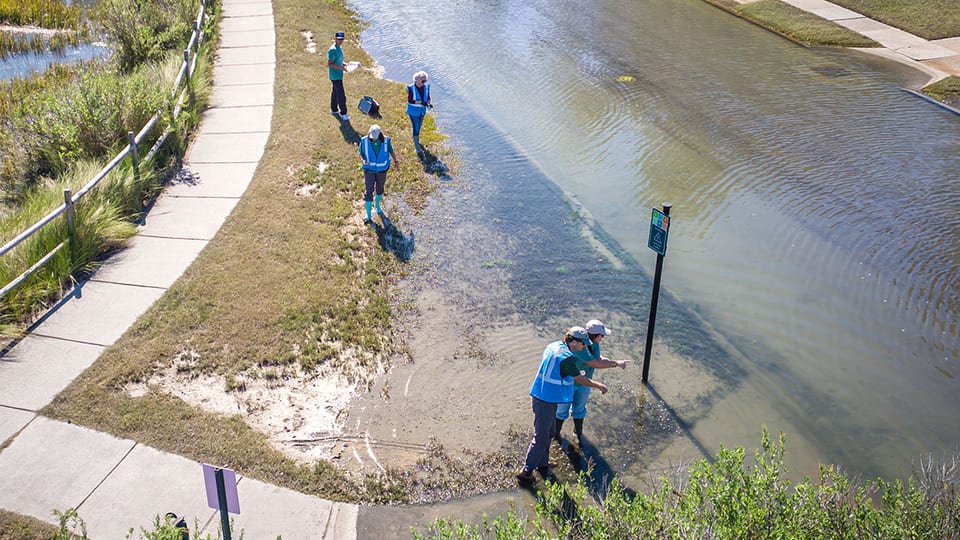
Virginia volunteers logged 25,000 king-tide marks, and a new berm held the water back

Catch the King, a volunteer flood survey along the Virginia coast, marked its tenth year in a writeup published on 26 October. Over the rainy weekend of 9–11 October, 184 people recorded more than 25,000 GPS points of high-tide flooding and 464 photos in the Sea Level Rise app. The project now holds 282,399 points, which researchers at William & Mary's Virginia Institute of Marine Science use to check flood forecasts. Derek Loftis, an assistant professor at VIMS and the Batten School and a co-founder of the event, said the value is mapping the same shores year after year. Volunteers filled in six of 43 zones that had never been mapped. In Norfolk's Larchmont and Edgewater neighborhoods, Loftis said new berms about 4 feet high along the Lafayette River kept the tide out of streets that used to flood. He said the berms have stopped more than a dozen tidal floods since last year's king tide, and that each one spared nearly 100 curbside parking spaces from salt water. The survey is run with Wetlands Watch and Old Dominion University.

A person with a phone on a flooded curb is helping the next forecast, and this year one of those curbs stayed dry.

The counts are VIMS's, from the 9–11 October weekend, not from a survey on the day of the article. The dry streets are Loftis's account of two Norfolk neighborhoods. The article does not say flooding has stopped elsewhere on the coast.

Jumping spiders in a Bonn lab sleep in two stages, one of them twitchy and REM-like

Biologists at the University of Bonn say the Australian jumping spider Portia fimbriata really sleeps, and that the sleep comes in two stages. One of those stages looks like REM sleep: the eyes move and the muscles twitch. Nadja Geiger, Daniela Rößler, and colleagues filmed the spiders for days and nights in plastic dishes about 12 centimeters across, using infrared cameras after dark. They checked that the animals were actually asleep by playing a sound and timing how long a spider took to respond. They also kept the spiders up and watched them sleep longer afterward, the rebound people know from a short night. The release, put out on 26 October, calls this the first full experimental case that a spider's stillness is regulated sleep. Portia is a spider that hunts other spiders, about the size of a one-euro coin, and the team picked it because that hunting looks like learning. They did not record brain activity. Rößler and Geiger say the hard part was finding a sound the spiders would answer, and not reading too much into the twitches. The work is published in PNAS and was backed by the German Research Foundation.

A spider hanging still under its silk may be asleep in a way that is closer to ours than the stillness suggests.

The release is careful: the REM-like stage is judged from behavior, not from brain recordings, and only this species was tested, in dishes in a lab. The researchers say the twitches should not be overread. The piece does not claim the spiders dream.

A buyback of surplus farmed oysters has replanted reefs at 35 sites since 2020

On 26 October The Pew Charitable Trusts published an account of Supporting Oyster Aquaculture and Restoration, a program it runs with The Nature Conservancy. SOAR buys oysters that farms cannot sell and puts them back on native reefs. Since 2020 it has bought more than 7 million oysters from more than 150 growers, including 1.4 million clusters of baby oysters grown on shell, and sent oysters and shell to 35 restoration sites in eight states. Pew says that work has helped regenerate more than 60 acres of reef and supported more than 1,000 aquaculture and related jobs. Reefs filter water and take the edge off waves. The same piece points to a new handbook, Partnering With Oyster Growers to Rebuild Reefs, written so other coasts can copy the arrangement. Extra money came from Builders Vision and the National Fish and Wildlife Foundation. The program began as an emergency buy during the pandemic and stayed on as a way to keep both farms and reefs going.

An oyster that a restaurant did not need can still be a living brick in a reef.

The totals are Pew's, for the whole program since 2020, not a count from this month. The article does not report how many of the replanted oysters are still alive, or how much cleaner the water is at the 35 sites.

Image: Simon Fraser University

Happiness researchers say the evidence sent them home to the people they love

Simon Fraser University psychologist Lara Aknin says that if she had to name one thing that makes a life happier, it would be relationships. In a paper in the Journal of Happiness Studies, she, Säde Stenlund of Harvard, and Kelsey O'Connor of Luxembourg's statistics institute write up a Zoom with 12 other longtime wellbeing researchers. The university's 26 October release says the group counted something like 600 years of research among them. Several said that after years of studying happiness they had started spending more time with the people they love. Aknin says one person you can count on already matters, and that more relationships and more communities add to that. The group also talked about meaningful work, gratitude, savouring, listening, and volunteering. Aknin says leading models put about 10 percent of happiness down to circumstances that are hard to change, and as much as 40 percent down to how a person chooses to spend the day. She says feeling well is not a private luxury: it is part of what moves people to look after someone else. Generosity, she says, is not zero-sum.

The people who study happiness for a living are rearranging their own evenings around the people they already have.

This is a perspective gathered from a conversation among researchers, not a new experiment. The paper appeared online on 25 August 2026; the university wrote about it on 26 October. The 10 percent and 40 percent figures are models Aknin describes, not measurements taken for this paper. The 600 years is the release's way of adding up careers.

Image: Reasons to be Cheerful

Neighbors in Akron are paid to write up the school board so the rest of the city can read it

Reasons to be Cheerful reported on 26 October on Documenters, a program that pays residents a stipend to sit in on public meetings and write a summary anyone can read. In Akron, Ohio, Jackie Jantzi takes notes at school board meetings for the local site Signal Akron. She is not one of its six reporters. She is part of a pool of more than 400 trained Documenters. Community editor Kevin Dilley said the newsroom assigns about a dozen meetings a week and pays about $90 a meeting. The writers range in age from 19 to 84, and every zip code in greater Akron is represented. Dilley said the idea is that people trust their neighbors. The model began at City Bureau in Chicago, when editors asked residents to help read a large police file, and it now runs in 25 communities, each hosted by a local news or civic group. Max Resnik, who is helping that network grow, calls the work a civic side hustle. The article also cites research by Johanna Dunaway of Syracuse University: about 40 local journalists for every 100,000 Americans in 2002, and about 7.8 now; nearly 40 percent of local newspapers closed since 2005; about one in seven Americans lives in a county with one local news source or none.

A neighbor's notes from a Tuesday night meeting are a way back into decisions that actually change a block.

The journalist counts and the newspaper closures are from the research the article cites, not a new count of Akron. The pay, the ages, and the number of meetings are Signal Akron's, as the magazine reports them. The piece does not claim Documenters has narrowed political division.

A Sheffield technician remakes the colour-changing glass of a 1,600-year-old Roman cup

The University of Sheffield said on 26 October that technician Lisa Hollands has reproduced, in quantity, the dichroic glass of the Lycurgus Cup, a fourth-century Roman cup in the British Museum that looks jade green in reflected light and ruby red when lit from behind. Working with Roman glass expert Caroline Jackson, she built a base glass like the Romans might have used, then spent many trials adjusting furnaces, starting materials, oxygen levels, and even adding sugar, to get tiny particles of gold and silver to form the right way. Glass artist Elliot Walker used the recipe to blow a new sculpture that blends the Lycurgus story with the Farnese Atlas, a cup in place of the globe. It will be shown at the Millennium Gallery during the Festival of the Mind, 6 to 15 November, and then kept at the university's Turner Museum of Glass.

A patient bench experiment lets anyone in Sheffield see an ancient trick of light, not only those who visit one museum case.

The university calls this the first reproduction in quantity; people have made dichroic glass before with mixed success. Nobody knows exactly how the Romans did it, so the recipe is a modern route to the same effect, not a recovered Roman method.

Image: Greater Good Magazine

Researchers find people who show more love day to day also tend to feel more loved

In Greater Good Magazine, Zita Oravecz of Penn State and Joachim Vandekerckhove of UC Irvine wrote about their research on felt love, the warm sense of being cared for. When they asked 495 Americans which situations would make most people feel loved, being shown compassion in a hard time came out on top, and a pet being happy to see you ranked high too. In a recent study, 52 people reported several times a day for 28 days how loved they felt and how much love they had shown. Those whose warm feeling lasted longer had better mental health, and the more love people expressed, the more loved they tended to feel. The authors also cite a 2024 experiment in which children who had a nine-minute open, personal talk with a parent felt more loved than those who made small talk.

If you are short on warmth, a small act of care for someone else may be one way to feel some yourself.

The authors are describing their own work, and the 28-day study was small. It shows an association, not that expressing love causes the feeling, and the parent and child result still needs to be repeated.

The edition Today's Five, then the rest of the file

This morning's file includes stories published earlier in the week. Headlines open the original article. Open the issue page.

Image: BBC News

Knowsley libraries are passing last year's Halloween costumes on to the next child

Knowsley Council is running a half-term costume swap so a pumpkin-season outfit can be worn again instead of thrown out. Parents leave unwanted children's costumes in recycling bins outside libraries, then pick one up at Halewood, Stockbridge Village, Prescot, or Huyton. Clare Taylorson, the council's waste prevention manager, said Halloween has become an expensive round of new costumes and decorated gardens, and that parents do not want to disappoint their children. The council says about 90 percent of families buy a new costume and about 40 percent of costumes are worn once. Taylorson said the bins have already taken in a Spider-Man and a zombie mermaid, and that any costume is welcome. She wants the swap to come back in later years.

A costume waiting on a library table is a small way through half-term: one less thing to buy, and a costume that already knows how a child moves in it.

The 90 percent and 40 percent figures are the council's. The article does not say how many costumes have been dropped off or collected, or which days each library is handing them out.

BBC News ↗· Oct 24, 2026

Image: The Guardian

Corvo switches off its streetlights so young shearwaters can follow the stars out to sea

Each autumn the smallest island in the Azores goes dark for five nights. Since 2019, Corvo's roughly 450 people have switched off the public lights so fledgling Cory's shearwaters can leave the nest and aim for the ocean by the stars. The young birds spend about three months in the burrow before that first flight. Streetlights pull many of them into the lanes of Vila do Corvo instead. Neighbours have been walking those lanes since 1991, when the deaths became too many to ignore. In 1995 the Azorean government widened the rescue, called SOS Cagarro, to the other islands, and the Portuguese Society for the Study of Birds later joined. Corvo is still the only island that blacks out the public lighting. Household lamps can stay on. Many people turn those off too. A bird that has landed in the street spends the night in a cardboard box and is let go the next day from a cliff above the water. The campaign says more than 30,000 fledglings have been picked up across the Azores since 2015, about 6,000 of them on Corvo.

A dark village and a cardboard box are enough to give a lost chick a second try at the sea.

The rescue totals are the campaign's. The photo essay documents a blackout the island has repeated every autumn since 2019. It does not give this year's count. Cats still hunt chicks, and the story does not claim the lights-out nights have ended those deaths.

The Guardian ↗· Oct 25, 2026

Image: Good News Network

A Queens commuter filled ten bags under a Crown Heights bridge the city had left

Joshua Service, riding the train from Queens, filmed a pile of dumped rubbish under a metro bridge in Crown Heights, near Atlantic Avenue, and reported it to 311. Sanitation told him the site might be a homeless encampment, and that social services would have to visit for seven days before a crew could clear it. Comments on his video told him to stop filming and pick it up himself. He did. With gloves and a rake he filled ten bags in about two hours, and he came away thinking the spot had become a dump even if someone had slept nearby. Haile Ali, who lives in Crown Heights, called the cleanup a step that counts. The Department of Homeless Services later said it had met a homeless resident in that immediate area and found the person a shelter bed. While Service worked, passers-by asked if he was on a city crew. He said he was a New Yorker who was worried about the block. Councilmember Chi Ossé planned to honour him at the same spot last Friday.

Two hours with a rake made a corner usable again, and the same visit put a person indoors before the cold settled in.

The bag count, the two hours, and the conversation with sanitation are Service's account, as he told CBS and as Good News Network retells it. The shelter placement is what the article says the Department of Homeless Services reported. The story does not say the dumping has stayed gone.

Good News Network ↗· Oct 26, 2026

Image: Science News

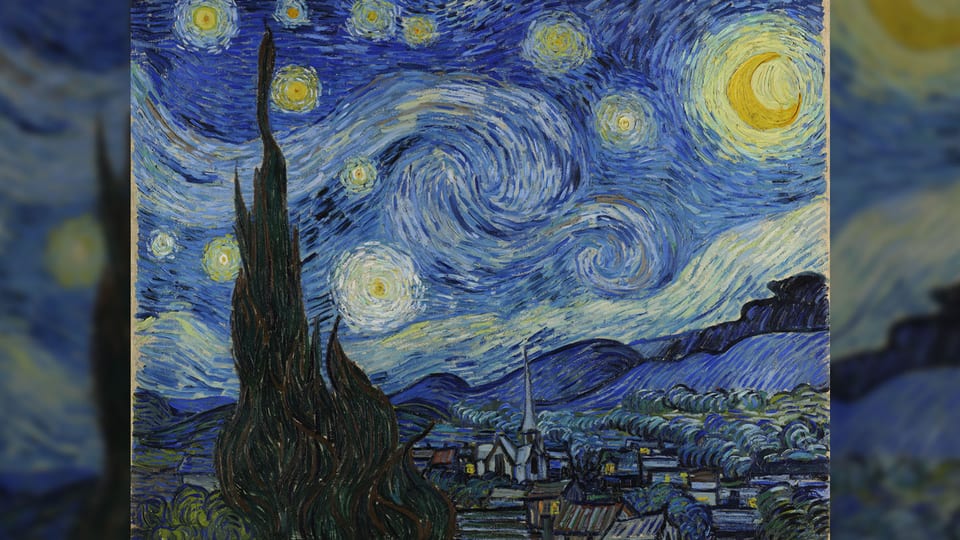
A new study lines the stars in The Starry Night up with a July dawn in 1889

Astronomer Elijah Jeong-hyun Kim and colleagues report in Scientific Reports that the sky in Vincent van Gogh's The Starry Night fits the hours just before dawn on 22 July 1889, over Saint-Rémy-de-Provence. They read the painted cluster as the Hyades, the sideways V in Taurus, and used a shape comparison called Procrustes analysis to score that match against other constellations. The moon in the painting is a sharp waning crescent, which does not match the waxing gibbous of 19 June, an earlier candidate. Venus sits in the same narrow view. Kim says he stood at the window in 2019 and saw the moon, the Hyades, and Venus of that July morning fall inside a drawing of the view. Art historians have long dated the canvas to mid-June, because van Gogh wrote his brother Theo on or about 18 June that he had a new study of a starry sky, and because he then fell ill and stopped painting for about six weeks. Donald Olson, an astronomer at Texas State who has worked on skies in paintings, says that letter is still the stronger evidence, and that the window frame the team used may not be the one van Gogh saw.

A painting people treat as pure dream may also be a careful look out of a hospital window, taken down to one morning.

This is one team's reconstruction, published on 22 October, and a specialist in the field disagrees. The June letter is van Gogh's. The fit is described as close, not perfect. The article does not claim the date of the painting is settled.

Science News ↗· Oct 22, 2026

Image: The Guardian

Nearly a kilometre of Oxford Street closed to traffic so people can walk the shops

From 7am on 26 October, the stretch of Oxford Street from Orchard Street, near Marble Arch, to Great Portland Street is closed to traffic between 7am and midnight, every day. That is nearly 0.6 miles, almost a kilometre, and about half of the 1.2-mile street, taking in Selfridges and John Lewis. Private cars were already barred from 7am to 7pm. The new rule runs all day and also keeps out buses, black cabs, and bicycles. North-south traffic can still cross, including at Oxford Circus and New Bond Street. Bus routes 7, 98, and 390 shift onto Wigmore Street, which runs parallel. Taxi ranks sit within 100 metres. Shops can take deliveries outside the closed hours, on set routes, but vehicles cannot drive the length of the street. Mayor Sadiq Khan has wanted the change for years as part of clean-air plans. Central government backed him over local council objections. The wider scheme is put at £150 million. London looked at central Sydney and talked with Barcelona, whose La Rambla is the comparison planners keep making.

The pavement on a street this crowded was never really a place to walk. A morning without buses in the roadway is the start of one.

This is the first stretch, not the whole of Oxford Street. Buses, cabs, and bikes are pushed onto neighbouring roads, which is the objection the councils raised. The Guardian's account was filed as the closure began. It does not describe the trees, seats, or squares planned for later phases.

The Guardian ↗· Oct 26, 2026

Image: The 19th

Pittsburgh nurses win a county vote for 12 weeks of paid leave after a baby comes home

On Tuesday night Allegheny County Council voted 11 to 4 for up to 12 weeks of paid parental leave, which The 19th calls the first policy of its kind passed at county level in the United States. Birthing and non-birthing parents would be covered in the first year after a birth, an adoption, a foster placement, or a stillbirth, with the job and health benefits held. Full-time workers need six months on the job. Part-time workers need at least 625 hours. Employers with 15 or more employees would have to offer it and pay for it themselves, rather than through a statewide insurance fund. An earlier draft had asked for 18 weeks and would have covered smaller employers. The push came from nurses at UPMC Magee-Womens Hospital in Pittsburgh, including neonatal nurse Jean Stone, who watches parents go back to work while a baby is still in intensive care so they can save the unpaid days for when the baby comes home. The nurses, in the middle of a union contract, started the campaign on Mother's Day with other parents and local officials. The chamber was full. One mother described a stillbirth at 41 weeks and a husband who had three weeks off and no paternity leave. Council vice president John Palmiere said the testimony moved him to vote yes.

A parent who can stay while a new baby is still in the hospital does not have to spend those days choosing between the ward and a paycheck.

The article is about the council vote and what the policy would require. It does not say anyone can take the paid weeks yet. Businesses with fewer than 15 employees are exempt, and employers, not a public fund, would pay. The 'first county-level' description is The 19th's. Pennsylvania still has no statewide paid leave program.

The 19th ↗· Oct 21, 2026

Image: Positive News

A free tool has walked more than 60,000 young men through how to take responsibility

SafeBae, a sexual-violence charity in the United States, built a free site called Vibe Check for young men who think they may have crossed a line and do not know what to do next. Drew Davis, the charity's director of strategic initiatives, says the replies those questions usually get online split in two: total condemnation, or a private chat that says nobody was hurt. Vibe Check is a decision tree, not a chatbot. It walks someone through situations where consent may have failed, uses short exercises drawn from cognitive behavioural therapy, and offers language for a boundary and an apology. Davis says it can also make a school or workplace process less of a fight, which matters for the person who was harmed. Positive News reports that more than 60,000 people have used it since the launch in April, and that the largest audience outside the United States is in Britain. Davis calls the feedback overwhelmingly positive on the practical skills: how to apologise, how to own what happened, how to walk into a disciplinary meeting. The charity's next adaptation is for young people caught in sextortion, who often assume they are the ones in trouble.

A quiet set of questions can be the difference between owning a mistake and being talked out of it.

The 60,000 users and the description of the feedback come from SafeBae. The tool launched in April. This is a six-month account, not a study showing that harm went down. Positive News does not report an independent evaluation.

Positive News ↗· Oct 26, 2026

Image: Smithsonian Magazine

Arizona's Wonderland of Rocks is a national park, a century after it became a monument

Chiricahua National Monument in southeastern Arizona is now Chiricahua National Park, the 64th national park in the United States and the first new one in six years, after West Virginia's New River Gorge in 2020. The 12,000-acre site has been a monument since 1924. It sits in the Chiricahua Mountains, a sky island about 120 miles from Tucson where the Rockies, the Sierra Madre, the Sonoran Desert, and the Chihuahuan Desert meet. About 27 million years ago a volcanic eruption laid down ash that hardened into rhyolitic tuff. Wind, rain, and frost have since cut that layer into spires and balanced rocks, the Wonderland of Rocks. The Chiricahua Apache lived across a territory that reached into New Mexico and northern Mexico until the U.S. government forced their removal in the late 19th century. The same ground later held Buffalo Soldiers, homesteaders, and Civilian Conservation Corps crews. Smithsonian Magazine says nearly 200 bird species have been recorded, along with deer, javelina, bears, and coatis, and that the park has 17 miles of trail. In 2025 the monument counted 70,406 visits. Local businesses and outdoor groups hope a national-park name brings more.

A maze of stone that already had a century of protection now has the name that makes a person pull off the highway and walk into it.

The change reported here is a redesignation of land protected since 1924, not a new boundary. The hope of more visitors is a hope. The bird count and the 2025 attendance figure are the ones Smithsonian Magazine cites. The article does not say staffing or the budget changed with the name.