← Archive

2026-10-24

October 24, 2026

Published this day

Image: BBC News

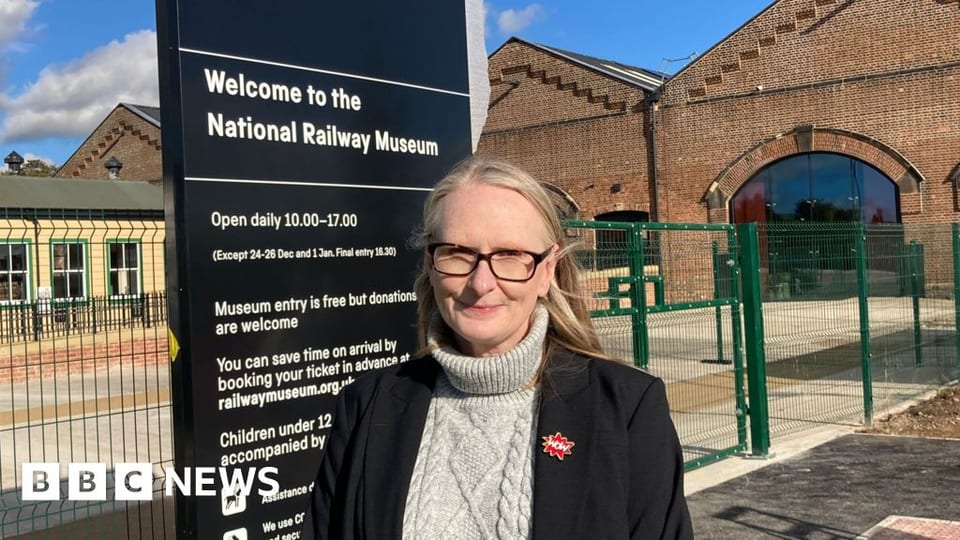
York's railway museum opened a side gate so visitors can skip a long detour

The National Railway Museum in York has opened a temporary entrance on Hudson Boulevard, the walking and cycling route beside Station Hall. While Central Hall is under construction, visitors had been sent the long way around, past Station Hall, to the only door on Leeman Road, a detour of about 400 metres. Sarah Price, head of public programme, said the museum spent eight months on the new way in, and that the old walk feels longer in the rain. People can now use either door. The Leeman Road entrance still reaches the Great Hall. The museum opened in York in 1975 and was the first national museum outside London. When Central Hall opens in 2028 it is meant to become the main entrance, and the first one with level access in the museum's history. This temporary door is the shortcut until then.

A shorter walk from the path to the door is the difference between turning around in the rain and going in.

The entrance is temporary. The article does not say it is step-free. Level access is described as part of the Central Hall plan for 2028, not as a feature of the door that just opened. The 400 metres is the BBC's figure for the detour being replaced.


BBC News ↗· Oct 24, 2026

Image: BBC News

Knowsley libraries are passing last year's Halloween costumes on to the next child

Knowsley Council is running a half-term costume swap so a pumpkin-season outfit can be worn again instead of thrown out. Parents leave unwanted children's costumes in recycling bins outside libraries, then pick one up at Halewood, Stockbridge Village, Prescot, or Huyton. Clare Taylorson, the council's waste prevention manager, said Halloween has become an expensive round of new costumes and decorated gardens, and that parents do not want to disappoint their children. The council says about 90 percent of families buy a new costume and about 40 percent of costumes are worn once. Taylorson said the bins have already taken in a Spider-Man and a zombie mermaid, and that any costume is welcome. She wants the swap to come back in later years.

A costume waiting on a library table is a small way through half-term: one less thing to buy, and a costume that already knows how a child moves in it.

The 90 percent and 40 percent figures are the council's. The article does not say how many costumes have been dropped off or collected, or which days each library is handing them out.

BBC News ↗· Oct 24, 2026

Image: Local 12

A wrong turn put a stranger at a burning Georgia house in time to wake a family of 14

James and Larita Burke, their 11 foster children, and a grandchild were asleep in Chattooga County, Georgia, on a Saturday night when a passerby the family knows as Mr. Casey walked into the living room and said the house was on fire. Casey had been driving home to Alabama with his son. A GPS route put him on a road he did not know, and from the top of a hill he saw the flames. James Burke said he had fallen asleep in a recliner. The Burkes said Casey helped get all 12 children out and helped firefighters reach the property. No one was hurt. Larita Burke said another five minutes would have been a different story. The family lost its belongings. Neighbours started asking how to help. Their youngest still asks when they can go home, and Larita tells the children the house is still theirs and only needs fixing. The couple said they have fostered more than 500 children over 15 years and hope to foster again once the house is rebuilt. The cause of the fire is still under investigation.

A stranger who stopped on the wrong road gave a whole household the minutes they needed to get out.

This is Local 12's account of reporting by WRCB. It says Saturday night and does not give the calendar date or the road. The count of children fostered is the family's. The piece says no one was hurt and that the home and belongings were lost. It does not say where the family is staying now.

Local 12 ↗· Oct 24, 2026

Image: WPXI

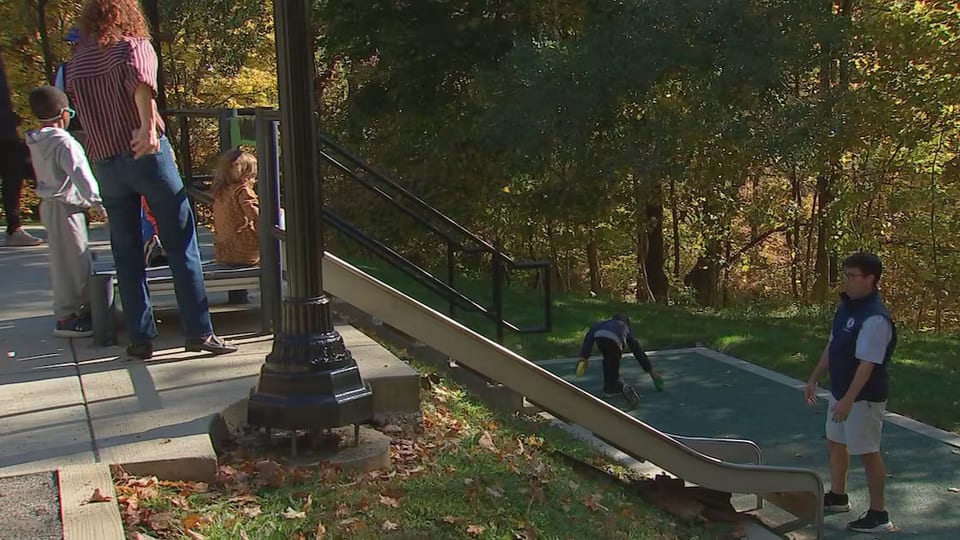
Pittsburgh opens a shaded grove on the ballfield neighbors once built by hand

The City of Pittsburgh and the Pittsburgh Parks Conservancy opened the McKinley Park Community Grove on 24 October, a nearly $700,000 remaking of the Chicken Hill section just below Michigan Street. The ground used to be a baseball field that residents built themselves, a place to gather when Beltzhoover and Knoxville neighbors were not welcomed at other parks. Councilman Bob Charland said the new grove was shaped by the people who live there and brings that gathering spot back. What is there now is a 20-foot hexagonal shade pavilion with a seat wall, open lawn, an outdoor classroom, picnic use, rebuilt stairs, paths, and trail links, plus drainage meant to slow erosion on the hill. Old baseball backstop posts stay, kept for a later community art project. Mayor O'Connor called it a place for families to play and meet. The grove is open. WPXI says the plantings are due to fill in next spring, in 2027.

A hill that neighbors claimed for themselves is a place to sit in the shade again, with the old backstop still standing.

The cost is the figure WPXI reports for the project. The story describes the opening day, not how many people have used the grove since. The landscape is not finished growing. Spring 2027 is when the plantings are expected to fill in.

WPXI ↗· Oct 24, 2026

Image: AuroraToday

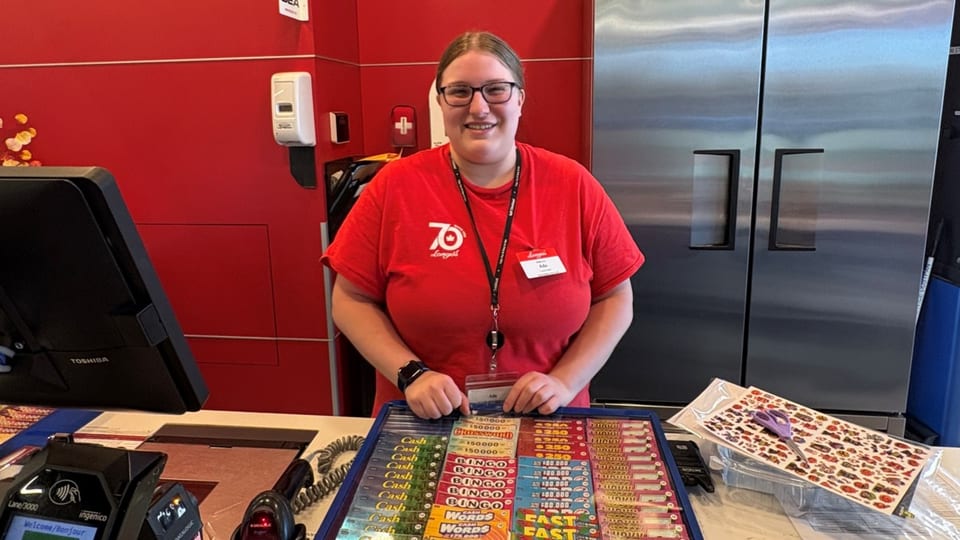
A Longo's cashier in East Gwillimbury paid about $150 so a mother and her toddler could take the groceries

AuroraToday reported on 24 October that Gina Coleman and her toddler, staying at a Yellow Brick House shelter, took gift cards to the Longo's at 18319 Yonge Street in East Gwillimbury, on Newmarket's border. At the till, cashier Ada Everingham, who lives in Newmarket, had to say the cards were for a different grocer and the store could not take them. Coleman told reporter Alex Hunt she felt embarrassed and did not have the money. Everingham then paid about $150 on her own debit card. Coleman called it a miracle and cried. She said the moment mattered past the total, because hardship can make a person wonder what they are worth. Everingham said she and her mother had been short of food when she was younger and had used gift cards themselves, and that she would have wanted someone to do the same. She said one good deed is not the end of the world, and that Coleman's reaction made her cry too. Coleman later left a message with the store's guest care team. She and her daughter have also been given a townhouse through a transitional housing programme and are preparing to move to Belleville on 16 November. Coleman said the two of them had always had to sleep together, and that her daughter will now have her own bed.

A bill paid at the belt means dinner comes home, and a hard afternoon does not end in an empty bag.

The checkout story is Coleman's and Everingham's, as Hunt reported it on 24 October. The paper does not give the day of the shop itself, or a receipt. The townhouse and the 16 November move are separate news Coleman shared. The article does not say the $150 caused the housing.

AuroraToday ↗· Oct 24, 2026

An Austin man who once wished for a special costume now gives thousands away free

Woman's World profiled Christophe Waggoner of Austin, Texas, who noticed children arriving at his door in cut-up sheets while others wore shop-bought costumes, and remembered growing up without money for one himself. In 2017 he started October's Child, buying costumes mostly from resale shops and holding a free giveaway each October. The collection outgrew his garage and now fills several storage units, helped by donations from people and businesses. He has given away close to 8,000 costumes, and this year expected to hand out more than 4,000 for children, adults, babies, and pets, at a free event in a field beside a school. He told the magazine he loves that children never have to ask whether they can afford the one they want.

On a night built around dressing up, a free rack of costumes means no child has to sit out the fun.

The totals are Waggoner's own figures, and the 4,000 is what he expected to give this year, not a final count. The article does not give the date of this year's giveaway.

Woman's World ↗· Oct 24, 2026

The edition Today's Five, then the rest of the file

This morning's file includes stories published earlier in the week. Headlines open the original article. Open the issue page.

Image: BBC News

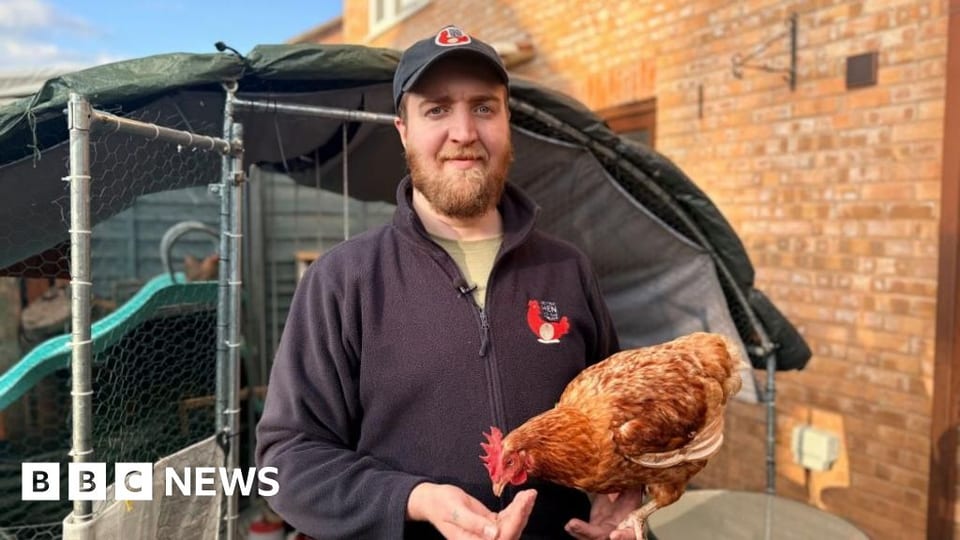
Retired hens in Hereford are heading for garden homes, and one street already sells their eggs

The British Hen Welfare Trust is holding an adoption day on Sunday at Rotherwas Industrial Estate in Hereford, one of about 50 similar events across the UK. Fifty-seven hens there are looking for gardens. The birds leave commercial egg farms at about 18 months, when laying slows, an age when many used to go for slaughter. Since 2005 the trust says it has rehomed more than a million hens, including 40,682 this year, and it estimates the year will finish above 50,000. James Bartlett, a volunteer in Belmont, and his wife Charlie already keep eight. Charlie sells the eggs from a stall in the front garden for a donation, and she says children knock to ask for them. Carol Wall, in Tenbury Wells, calls hers pets and says she can lose hours watching them scratch. Would-be adopters are asked to register ahead. The trust says the scheme depends on farmers, planning, and biosecurity.

A hen that would have been culled at a year and a half can spend the rest of her life scratching in a garden, and the eggs become a reason for neighbors to stop and talk.

Sunday's Hereford event has not happened yet. The figure of hundreds of hens finding homes this weekend is the scale of the national round of events, not a count of birds already placed. The million-hen total, this year's 40,682, and the year-end estimate above 50,000 are the trust's figures.

BBC News ↗· Oct 23, 2026

Image: BBC News

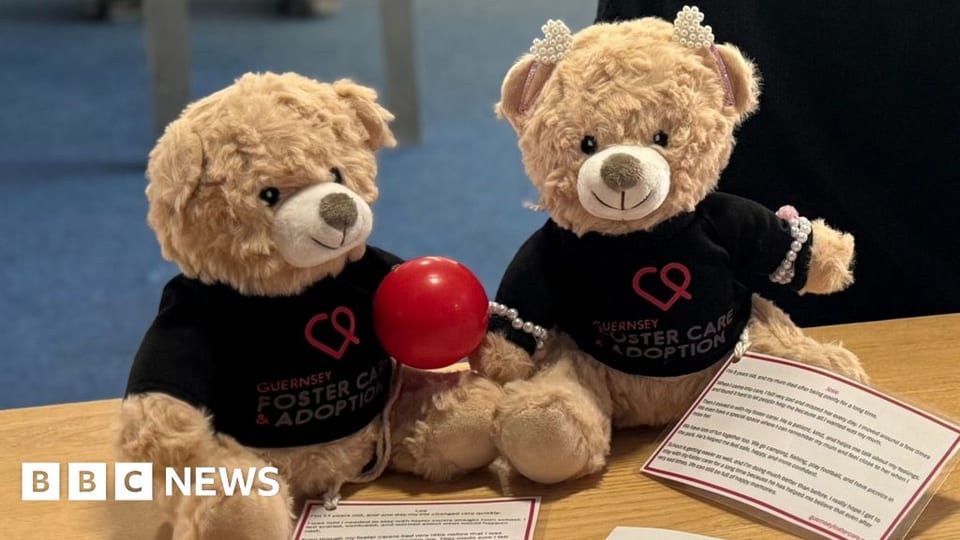
Fifteen teddy bears are hidden around Guernsey to start conversations about fostering

Guernsey's Family Placement Service has put 15 teddy bears in businesses around the island for a hunt called Hidden Bears Hidden Heroes, starting Saturday. Each bear carries a card with a short story and information about fostering. People are asked to find them, photograph them, and tag Guernsey Foster Care and Adoption. Clue sheets are at Beau Sejour, the Guille-Alles Library, and Mim's Kiosk at Cobo, or on the service's Facebook page. The bears come down on 1 November. Vicky Tellen of the service said the island will keep needing foster carers, and that the cost of living can make people assume it is not for them. She said the point of the hunt is a first phone call, and that some form of care could fit more households than people expect.

A bear in a shop window is a small way to let someone ask about fostering before they have decided it is too hard.

This is the start of an awareness hunt, not a report of new carers approved. The article does not say how many children on Guernsey are waiting for a placement.

BBC News ↗· Oct 23, 2026

A mother cougar and three kittens are leaving tracks again in northern Minnesota

Minnesota Star Tribune reporter Greg Stanley went into the woods north of Orr with Tom Gable of the University of Minnesota's Voyageurs Wolf Project. In late March a GPS-collared deer turned up cached under leaves, the way a cat hides a kill. Cameras over the carcass recorded about four hours of a female cougar and three kittens eating, growling, and being groomed. John Erb of the state Department of Natural Resources estimated the kittens at seven to nine months, born in late summer 2025, so they had already lived through a winter. The project and the department then set about 100 more cameras around that site. After a quiet stretch, July footage showed the family again, with a male of more than 120 pounds nearby. DNA from scat pointed to a father related to Black Hills cougars in South Dakota and a mother related to a small population in northwestern Nebraska. Mark Elbroch of Panthera put each journey at more than 700 miles. Two of the three kittens tested as male. On the August trip the paper describes, after a long day of empty cameras, one animal too small to be the adult male walked the road, and a clear print sat in mud from the night's rain.

A cat that was hunted out of the state can find enough deer and quiet woods to raise young, without anyone trucking animals in.

The Minnesota DNR first released the March footage on April 30. This October feature adds the genetics and later sightings. It is one family, not a counted population. Erb has said the kittens might still be lost, and the state has not yet set out how it will handle livestock conflicts. Cougars are protected in Minnesota, and ranchers may not shoot one that threatens stock.

An experimental drug stalled most treatment-resistant solid tumors in an early trial

The first human trial of invikafusp alfa, called invika, is reported in Nature Medicine by researchers at the National Cancer Institute, Mass General Brigham, and Memorial Sloan Kettering. The protein is built to stir only two narrow groups of tumor-infiltrating T cells, rather than T cells across the board. Most of the people enrolled had solid tumors that had already done poorly on immune checkpoint drugs such as pembrolizumab. In phase 1 the team varied the dose, given every two weeks. Flu-like side effects showed up and were generally handled with extra medicine and supportive care. At the dose they then carried into phase 2, 16 of 27 people had no further progression, and 4 of the 27 saw targeted tumors shrink by more than 30 percent. Two of those four had metastatic colorectal cancer and were on invika as a seventh treatment. Another had stage 4 non-small cell lung cancer that had already turned away several drugs. People on lower doses did not show a clear benefit. The authors tied the four shrinkages to the biggest shifts in the T cells the drug is meant to reach, and they note that immune activity did not always become a measurable change in the cancer. The sponsor, Marengo Therapeutics, has an FDA Fast Track designation for the drug in certain solid tumors after checkpoint therapy. The trial is still enrolling.

For someone whose tumor has already outlasted standard immunotherapy, a drug aimed at a smaller set of T cells is another thing to test, with the side effects so far looking more like a flu than a broad immune collapse.

These are early phase 1 and phase 2 results in 27 people at one dose, not a cure rate. Sixteen without progression is not the same as sixteen in remission. The trial is ongoing, and the authors say the next questions include combining invika with other treatments.

Image: York Press

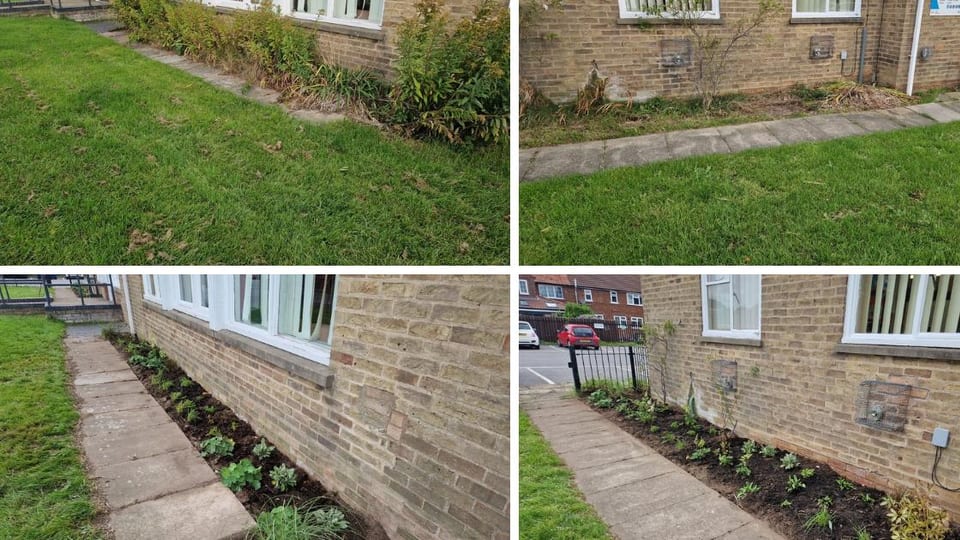
A dozen volunteers planted a sensory garden in front of a York library in a day

Two long beds in front of Huntington Library on Garth Road in York had been left to grow over. Library manager Lee Barlow said last week's turnout turned them into a garden meant to greet visitors and feed wildlife. About a dozen people from GoodGym York, the library's own team, and the neighborhood worked with Rooted Gardening York. The planting plan is Kate Mathews's: purples, oranges, pinks, and white, chosen for sight, sound, smell, texture, and taste, and for pollinators, on clay that has to take both dry summers and wet winters. She said they kept plants they could and bought within a small budget. The money came from a Neighbourly grant that former manager Jo Shanks had secured. The library sits by a playground and across from a primary school. Barlow pointed to the crafts, reading groups, and Knit and Natter already inside, and the library is asking for volunteers to keep the beds going.

A neglected strip by the door is now a place to pause on the way in, between a school, a playground, and the books.

The article describes one work day and the planting plan. It does not say how the beds will look once a season has passed, or how many of the saved plants took. "Last week" is the library manager's timing, in a report published on October 22.

York Press ↗· Oct 22, 2026

Image: Roger Williams Park Zoo

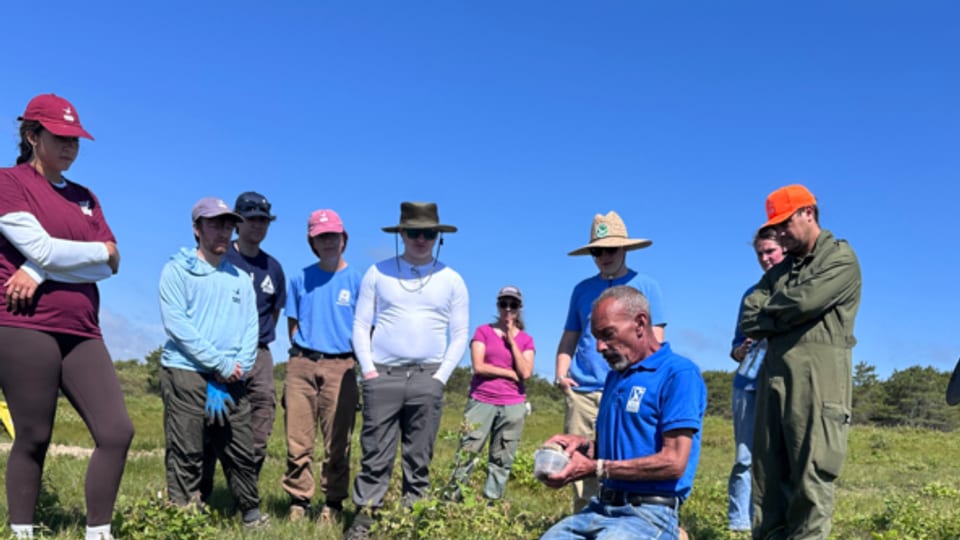
Nantucket's reintroduced burying beetles produced a record late-summer count

Roger Williams Park Zoo in Providence says this is the fifth year it has sent American burying beetles from its breeding program back to Nantucket. With wild beetles trapped for the work as well, the team provisioned 320 animals with carrion so they had a carcass to bury and raise young on. When researchers dug up 30 percent of those pairs, they counted 1,274 larvae. Later in the summer, over four nights, they processed 490 newly emerged beetles and 191 they had seen before, which the zoo calls a record for the project. Partners include the U.S. Fish and Wildlife Service, the Nantucket Conservation Foundation, and The Nature Conservancy's Block Island office, which supplies wild founders. Volunteers came from the Nantucket Land Bank, the Maria Mitchell Association, and the Linda Loring Nature Foundation. The beetle is federally protected. It buries small dead animals, which the zoo describes as returning nutrients to the soil and keeping flies and ants from taking every carcass. The same season includes new research on how much carrion is available and how climate affects breeding. The stated aim is a population that can continue without being restocked.

A beetle that buries the dead is a sign the island still has the quiet food chain those beetles need.

The counts and the word "record" come from the zoo that runs the breeding. The larvae figure is from 30 percent of the provisioned pairs, not every nest. The release does not show that the island population can hold without further releases.

A photograph of pin mould and hibernating bats wins Europe's wildlife photo prize

Hungarian photographer Imre Potyó is European Wildlife Photographer of the Year 2026, named by the German Society for Nature Photography from more than 26,000 entries in the 26th year of the contest. His picture, Hidden Worlds, was made in a restricted mine tunnel in Hungary's Börzsöny Mountains during a controlled count of lesser horseshoe bats. He has been photographing hibernating bats in those tunnels for 13 years. The bats sometimes wake, hunt insects that come into the dark, and leave droppings that build into a dark layer. In a torch beam a whitish pin mould shows on that layer. Potyó put the mould in sharp focus with a macro lens and left the bats soft behind it. He says the long exposure, with a shift of focus, was made without disturbing the animals. Jury member Tom Gilks said the frame holds a relationship most people never see, among bats, fungi, and the smaller life around them. The same announcement includes the category winners, among them a nighttime portrait of urban beavers by Jan Wieczorek that also took the Rewilding Europe award.

A prize for mould on a cave floor is a reminder that a careful look, taken without waking the bats, can make a hidden place matter to people who will never go in.

PetaPixel's introduction calls the mould bioluminescent. Potyó's own account, quoted in the same article, describes a whitish pin mould seen by torchlight during a controlled count. The entry total is the competition's figure.

PetaPixel ↗· Oct 23, 2026

Image: Good News Network

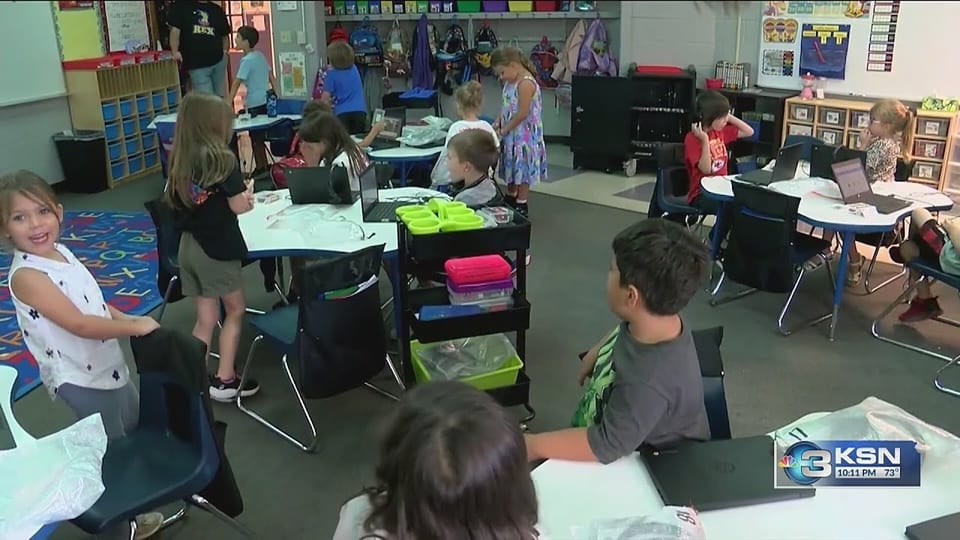
A Haysville first grade ends the day by saying they are kind and can do hard things

At Rex Elementary in Haysville, Kansas, first-grade teacher Tyler Richards has his class say a few plain sentences before they leave, including "I am kind" and "I can do hard things." Principal Shane Paulus, speaking to KSN News 3 in an account carried by Good News Network, said he loves the practice because the children leave feeling welcomed. Richards said the hope is that the day ends in a safe, positive place, whether the next stop is home or another activity. Paulus said other teachers have started versions of their own, and that children are offering ideas for how to keep it going. Richards said it is one way the students feel more connected to the adults at school.

A few sentences at the door can send a child out of the building with a kinder line to take home.

This is Good News Network's report of a local television interview. It does not say how many classrooms joined, how long the practice has run, or whether anyone measured a change in how the children feel.

Good News Network ↗· Oct 23, 2026