← Archive

2026-11-02

November 2, 2026

Published this day

Image: The Better India

Tigers are raising cubs again in a Rajasthan sanctuary next to Ranthambore after about 30 years

The Better India reported on a study by WWF-India and the Rajasthan Forest Department, released in Jaipur on 16 October, on Kailadevi Wildlife Sanctuary, 674 sq km of forest, rocky hills and ravines north of Ranthambore Tiger Reserve. For nearly three decades it had no recorded tiger breeding. Over the past five years, eight cubs and three adult tigers have been recorded there. Camera traps at 186 stations also logged 27 mammal species, including 29 individual leopards, striped hyenas, wolves and caracals. The state's chief wildlife warden said Kailadevi could support a second breeding population alongside Ranthambore, as long as the forest corridors between them stay connected.

Cubs are the clearest sign that a forest has become a home for tigers, not just a place they pass through.

Eight cubs over five years is a small number, and the camera survey ran from late 2023 to early 2024. Roads and growing settlements still threaten the routes young tigers need.

The Better India ↗· Nov 2, 2026

Image: ScienceDaily (University of Vienna)

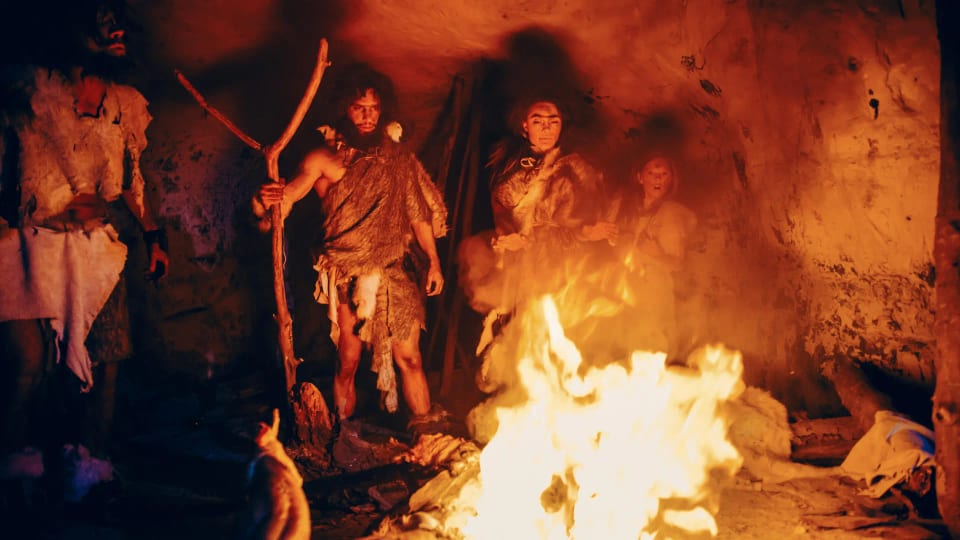
A 30,000-year-old woman's DNA shows Ice Age Europeans were more connected than thought

ScienceDaily carried a University of Vienna release on a study in Science Advances. Researchers analysed ancient DNA from rare human remains and from human genetic traces left in cave sediments, from people of the Gravettian culture that spread across Europe roughly 34,000 to 25,000 years ago. Earlier genetic work suggested eastern and western groups stayed largely apart. But a woman who lived about 30,000 years ago at Isturitz Cave in southwestern France carried ancestry from central and eastern Europe as well as the west, from mixing the team dates to around 32,500 years ago. The researchers say Isturitz may have been a place where different groups met.

Even in the Ice Age, people crossed a continent and met one another.

Only a couple of dozen Gravettian individuals have yielded broad genetic data, so the picture rests on a small sample. The meeting-place idea is a suggestion, not a finding.

Image: Positive News

Free boxing classes help abuse survivors in London, and new all-women fight nights will help pay for them

Positive News reported on Fight Forward, a not-for-profit started by former Team GB boxer and European gold medallist Lesley Sackey, which offers free boxing classes to women affected by domestic abuse at a gym in Aldgate, east London. No one has to spar; women train at their own pace, and just under 40 have finished the structured programme. One told the magazine it saved her life. To grow, Sackey, three-time national champion Shelly Sweeney and Poppy Mason-Watts have set up Fight Back Promotions, staging ticketed all-female fight nights, with a quarter of profits going to the classes. The first is on 28 November at Ladbroke Hall, and they hope it funds 40 to 60 more places.

A gym where you choose every step can help someone feel strong and in charge again.

The benefits come from participants' own accounts; the organisers collect feedback but have not published results, and the fight nights depend on ticket sales and sponsors.

Positive News ↗· Nov 2, 2026

The edition Today's Five, then the rest of the file

This morning's file includes stories published earlier in the week. Headlines open the original article. Open today on the home page.

Image: Good News Network
JoyNew1

Two widowed 88-year-olds met at their retirement village gym, and now they do almost everything together

Good News Network reported that Barbara Thompson, who moved into the Oscott Retirement Village in Birmingham after her husband died of cancer, first went to the village gym to keep a friend company. Fred Jenkins, a former Army physical training instructor whose wife died three years ago, began coaching them. The friend stopped coming, but Barbara kept turning up every Monday, Wednesday and Friday, and the two started laughing more than lifting. Now they train three times a week, play darts and dominoes, garden, dance whenever music comes on, and recently took their first holiday together. They have no plans to marry or move in, and each keeps their own flat.

A thrice-weekly workout turned into the company neither of them expected to find again.

The story comes from the couple's own account via the SWNS news agency, with photos from the charity that runs the village; it has not been independently reported.

Good News Network ↗· Oct 31, 2026

Image: The Guardian
SpacesNew2

Tree rings point to a Somerset inn built by monks as England's oldest pub still pouring

The Guardian reported that buildings archaeologist James Wright, working for Historic England, checked more than two dozen English pubs that claim to be the oldest in the land. Using dendrochronology, the dating of timbers by their growth rings, alongside old records, he named the George Inn at Norton St Philip in Somerset. The monks of nearby Hinton Priory built its stone walls in the late 14th century and added a timber frame from oak felled in 1430 to 1432, and it has served travellers ever since. Several famous rivals fared worse: one began as a monastic dovecote, and Wright notes that no pub appears in the Domesday Book at all.

Six centuries of fires, beams and pints in one building is a lovely kind of continuity.

Wright's ranking uses his own test: built as an inn, in continuous use, with original fabric surviving. Other buildings may have sold drink earlier, and Guinness stopped judging the title in 2000.

The Guardian ↗· Oct 23, 2026

Image: The Better India
NatureNew3

Tigers are raising cubs again in a Rajasthan sanctuary next to Ranthambore after about 30 years

The Better India reported on a study by WWF-India and the Rajasthan Forest Department, released in Jaipur on 16 October, on Kailadevi Wildlife Sanctuary, 674 sq km of forest, rocky hills and ravines north of Ranthambore Tiger Reserve. For nearly three decades it had no recorded tiger breeding. Over the past five years, eight cubs and three adult tigers have been recorded there. Camera traps at 186 stations also logged 27 mammal species, including 29 individual leopards, striped hyenas, wolves and caracals. The state's chief wildlife warden said Kailadevi could support a second breeding population alongside Ranthambore, as long as the forest corridors between them stay connected.

Cubs are the clearest sign that a forest has become a home for tigers, not just a place they pass through.

Eight cubs over five years is a small number, and the camera survey ran from late 2023 to early 2024. Roads and growing settlements still threaten the routes young tigers need.

The Better India ↗· Nov 2, 2026

Image: Good News Network

New Jersey students covered a football field end to end with bags of food for 30 food banks

Good News Network reported that hundreds of New Jersey students collected more than a quarter of a million pounds of food for the second 100-Yard Food Drive Challenge, run by the nonprofit Dermer Dreams. Thousands of yellow donation bags filled Howell High School's football field from one end zone to the other, the biggest drive in the group's history. The school's football team helped carry the bags to rented trucks, and the food went to 30 food banks across the state, including Lunch Break, Fulfill and the Howell Food Bank. The challenge grew out of a programme that lets high schoolers earn service hours by collecting food in their own neighbourhoods.

Each bag on that field was one teenager's knock on a neighbour's door.

The totals come from Dermer Dreams, the organiser, and have not been independently counted.

Good News Network ↗· Nov 1, 2026

Image: Smithsonian Magazine

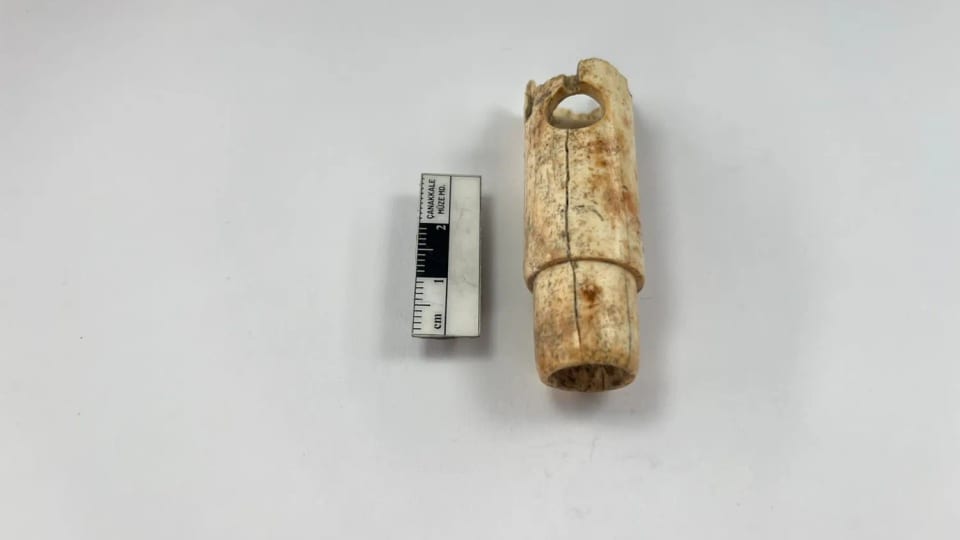
Archaeologists at Troy find a 2,800-year-old bone flute, the first instrument ever dug up there

Smithsonian Magazine reported that this year's excavations at Troy, in northwestern Turkey, turned up a bone flute about 2,800 years old, in a layer from the eighth century BCE, around when Homer is thought to have composed the Iliad and the Odyssey. Turkey's culture minister announced it as the first and only musical instrument found in more than 150 years of digging at the site, and the first direct evidence of music in the city. Excavation head Rüstem Aslan called the timing a nice coincidence, in a year when a replica ancient wind instrument supplied the sirens' song for a big Odyssey film. The team also found the 4,500-year-old head of a small human-shaped figure near an early city gate.

Somebody in Troy once played this, and now we can almost imagine the tune.

The find was announced on social media and to the press; no detailed study has been published yet, and nobody knows what music was played on it.

Image: Grist

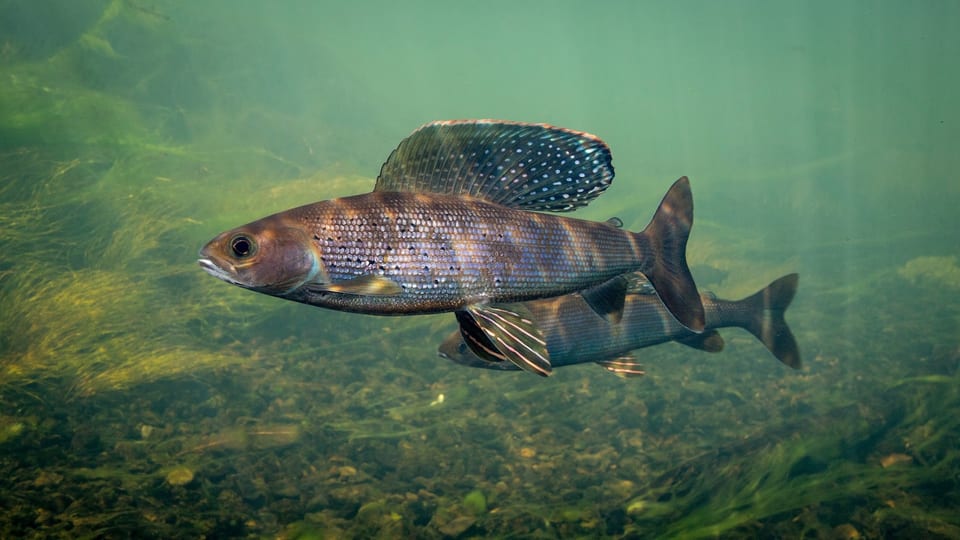
Three Michigan tribes release thousands of Arctic grayling, a fish gone from the state for a century

Grist, with Interlochen Public Radio, reported on the second season of a plan to bring Arctic grayling back to northern Michigan, where logging, overfishing and competing fish wiped them out by the 1930s. Using eggs from a state hatchery, originally from Alaska's Chena River, the Grand Traverse Band raised about 8,000 young grayling this summer and released them into the Boardman-Ottaway River, four times as many as last year and bigger on average. The Little River Band placed 391,000 eggs in streamside incubators on the Manistee, and watched tens of thousands of tiny fry swim out. The Little Traverse Bay Bands are also stocking fish. A tribal leader said helping the fish return also helps the tribes restore their own traditions.

Bringing back a fish that vanished a hundred years ago takes patience, and these tribes are planning in decades.

No released grayling has yet been found in the wild, floods have made surveys hard, and biologists say it will take six to eight years to know whether the fish have taken hold.

Grist ↗· Oct 21, 2026

Image: ScienceDaily (University of Vienna)

A 30,000-year-old woman's DNA shows Ice Age Europeans were more connected than thought

ScienceDaily carried a University of Vienna release on a study in Science Advances. Researchers analysed ancient DNA from rare human remains and from human genetic traces left in cave sediments, from people of the Gravettian culture that spread across Europe roughly 34,000 to 25,000 years ago. Earlier genetic work suggested eastern and western groups stayed largely apart. But a woman who lived about 30,000 years ago at Isturitz Cave in southwestern France carried ancestry from central and eastern Europe as well as the west, from mixing the team dates to around 32,500 years ago. The researchers say Isturitz may have been a place where different groups met.

Even in the Ice Age, people crossed a continent and met one another.

Only a couple of dozen Gravettian individuals have yielded broad genetic data, so the picture rests on a small sample. The meeting-place idea is a suggestion, not a finding.

Image: Positive News

Free boxing classes help abuse survivors in London, and new all-women fight nights will help pay for them

Positive News reported on Fight Forward, a not-for-profit started by former Team GB boxer and European gold medallist Lesley Sackey, which offers free boxing classes to women affected by domestic abuse at a gym in Aldgate, east London. No one has to spar; women train at their own pace, and just under 40 have finished the structured programme. One told the magazine it saved her life. To grow, Sackey, three-time national champion Shelly Sweeney and Poppy Mason-Watts have set up Fight Back Promotions, staging ticketed all-female fight nights, with a quarter of profits going to the classes. The first is on 28 November at Ladbroke Hall, and they hope it funds 40 to 60 more places.

A gym where you choose every step can help someone feel strong and in charge again.

The benefits come from participants' own accounts; the organisers collect feedback but have not published results, and the fight nights depend on ticket sales and sponsors.

Positive News ↗· Nov 2, 2026